
Key Events at a Glance
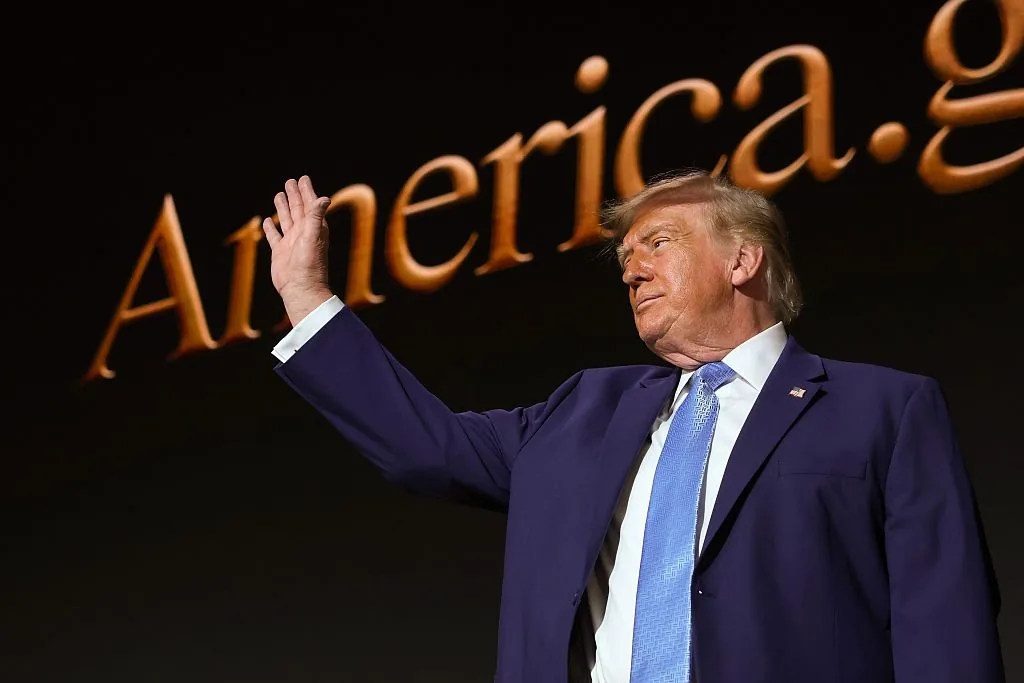
According to Time magazine, in December 2025, on the eve of the controversial Venezuelan military operation (which was ultimately carried out on January 3, 2026), Donald Trump held a closed-door meeting with Elon Musk and spent several hours conversing with Grok, the AI chatbot developed by Musk. According to people familiar with the matter who confirmed to Time, Trump asked Grok about “the reaction of the Venezuelan people to the arrest of President Nicolás Maduro.”
The key hard facts are as follows:
- Meeting time: December 2025 (about one month before the operation);
- AI model: Grok (developed by Musk’s xAI team, integrated with real-time data from X);
- Decision-making context: involving foreign military intervention and regime change;
- Outcome feedback: On January 3, 2026, U.S. forces entered Venezuela and detained Maduro;
- Aftermath: The intelligence community confirmed that Grok’s prediction aligned with subsequent public reaction trends;
- Access status: Non-public release version, a government-internal customized channel.
Factual Details: From Advisory Recommendations to “Military Decision-Making Reference”

The background dates back to September 2025, when Trump had authorized multiple airstrikes on Venezuelan vessels suspected of drug trafficking. Around the same time, The Atlantic reported that the public frequently consulted Grok on X about the situation in Venezuela, prompting a systematic assessment of the Maduro regime.
According to Time’s sources, Grok’s core conclusion at the time was: “Maduro is a deeply unpopular dictator, and most Venezuelans would likely applaud his downfall.” When footage of street celebrations did emerge after the U.S. military operation in January 2026, Trump reportedly considered Grok “genius.”
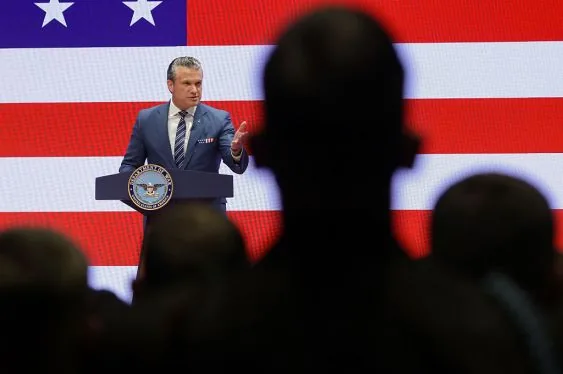
More notably, in June 2026, the U.S. Department of Defense’s AI chief publicly acknowledged that during the concurrently occurring Iran conflict, the military had actually deployed Gov-Grok (government-customized version) to assist with targeting and strike decisions—meaning Grok had upgraded from a “political advisory tool” to a “combat support model.”
A notable contrast is that: Although Grok has won the military’s favor, its training data sources (mainly relying on public statements on X and news aggregation) have not been independently verified; compared with OpenAI (through commercial agreements), which has long cooperated with the Pentagon, and Anthropic (still in compliance negotiations), Grok lacks the traditional multi-round military ethics review process of more than six months.
It is worth noting that The Washington Post earlier also disclosed that the military version of Grok had been connected to some intelligence databases through the “DOGE” (Department of Government Efficiency, an agency where Musk once served as an advisor) interface—but its permission boundaries remain an unresolved mystery.
Comparison of Grok’s Evolving Military Cooperation
| Model | Developer | Military application scenarios | Review status | Public release availability |
|---|---|---|---|---|
| Grok | xAI (Musk) | Political opinion assessment → operational target recommendations | No complete public audit report yet | No (government-exclusive version) |
| WH-GPT | OpenAI | Intelligence summaries, policy briefing generation | Non-disclosure agreement signed | No |
| Claude | Anthropic | Military AI coordination and combat simulations | Ongoing compliance negotiations | Yes (restricted-access version) |
(Note: The information in the table above is based only on the compiled original text; no additional inferential data is included.)
Who Should Try It Immediately? Who Should Wait and See?
- Suitable for immediate use: Policy research institutions engaged in international affairs analysis and political risk modeling; geopolitical news teams highly sensitive to public X platform data.
- Recommended to observe further: Government contractors involved in high-risk military deployments; AI procurement departments that value data explainability and ethical review.
- Evaluate with caution: Enterprise users—although Grok has the advantage of real-time data integration, the government-customized version and the public version have already diverged in functionality; ordinary developers who need the same interface still have to wait for a public enterprise-grade API solution (no clear timeline yet).
Final Thoughts
This incident highlights the rapid leap in AI’s role in geopolitical strategic decision-making, taking only about six months to go from a public opinion prediction tool to a real-time combat interface. But behind it, the gap between technical reliability and democratic accountability mechanisms is becoming a new challenge for arms control in various countries.
(The events and statements described in this article are all sourced from Time magazine and public statements by the Department of Defense, with no subjective speculation.)