
SynthID Named to TIME’s Best Inventions of 2026
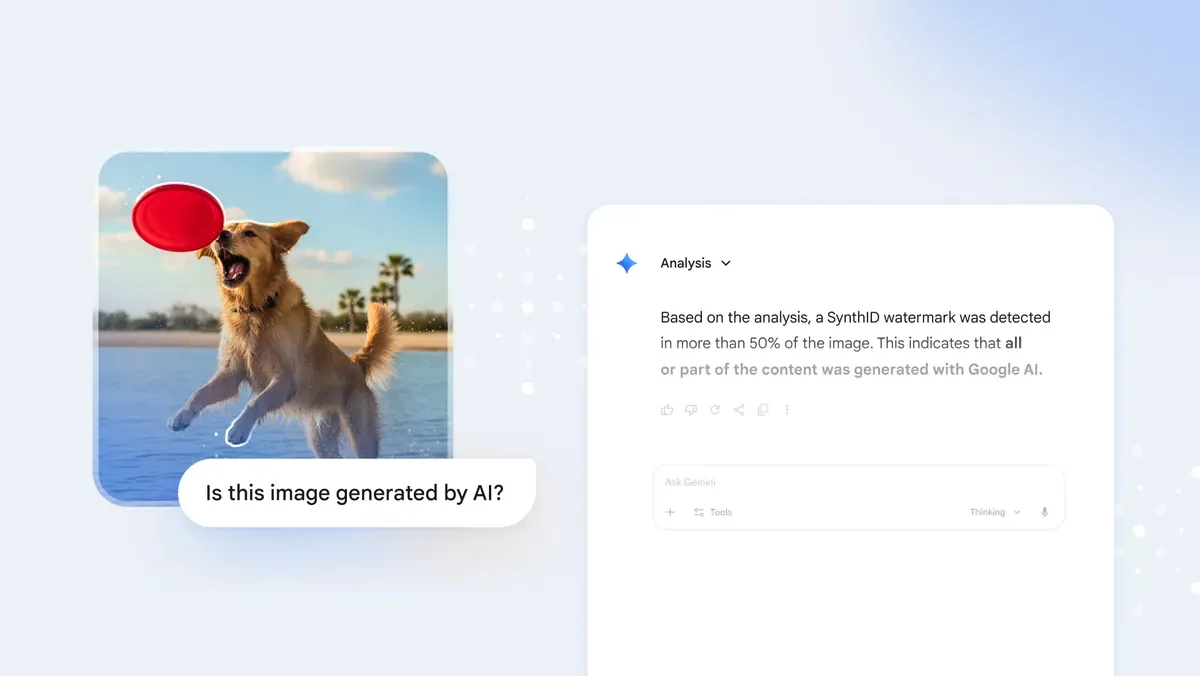
TIME has named Google’s SynthID to its 2026 Best Inventions list, citing its pioneering approach to AI watermarking and content verification. First, the hard facts:
- What made the list: Google SynthID, developed by Google DeepMind
- List and year: TIME Best Inventions, 2026
- Modalities covered: images, audio, video, and text
- Scale to date: more than 180 billion images and videos watermarked, plus 240,000 years’ worth of audio
- Verification entry points: Google Search, the Gemini app, Chrome, and SynthID Detector
- New direction: SynthID Bio, which extends this watermarking technology to synthetic biology
- Pricing and openness: the source material does not mention pricing, version numbers, open-source, or licensing information
Watermarks Are Embedded the Moment Content Is Generated
A digital watermark can be thought of as an invisible signature hidden inside a file: invisible to the eye, inaudible to the ear, but readable by detection tools to help determine whether content is AI-generated.
The key to SynthID is when the watermark is written. According to Google, it embeds an invisible, durable watermark into images, audio, video, and text the moment content is generated, without altering the quality of the content itself—not a detection layer bolted on afterward, and not a trade-off of image or audio quality for traceability. As generative content becomes harder and harder to distinguish from real footage, “where did this come from?” becomes valuable information in its own right.
What is truly striking is the scale: more than 180 billion images and videos watermarked, and 240,000 years’ worth of audio. What does 240,000 years mean? From the phonograph to today, the history of playable recorded audio spans only about a century and a half; the amount of audio SynthID has processed is more than a thousand times that. Measuring audio in years rather than hours shows that the technology has moved from a lab demo to a default part of the production pipeline.
Verification Is Built into Everyday Entry Points
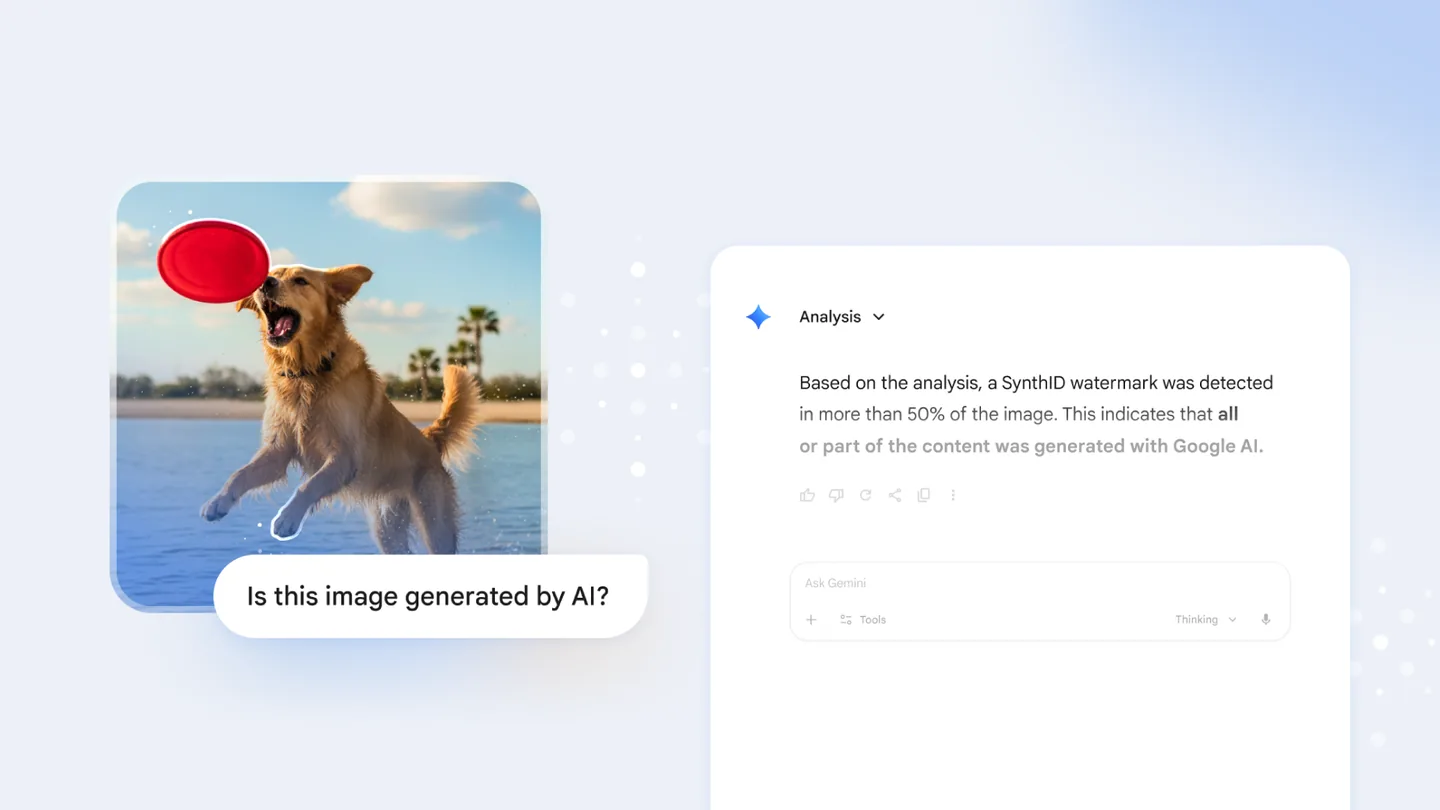
For watermarks to be useful, ordinary people need to be able to check them. Google’s approach is to build verification tools directly into Google Search, the Gemini app, and Chrome, while also offering SynthID Detector to check content from Google and its partners.
For ordinary users, that means getting more context about where content comes from in search and browsing—without installing an extra plug-in. But be mindful of the coverage: Detector currently targets content from Google and its partners; whether other vendors’ generative tools carry similar watermarks, and whether those watermarks can be read, is another matter.
Who Should Use It, and Who Can Wait
- Who should pay attention: Teams working on content moderation, media verification, and platform compliance, as well as ordinary users who want to quickly judge whether something is AI-generated, can treat the built-in verification in Google Search, Gemini, and Chrome as a first reference point.
- Who can wait: Those whose workflows don’t depend on the Google ecosystem and who need a cross-vendor, unified detection standard don’t need to rush to rework their processes around a single watermarking system; SynthID Bio has just been announced, and more information is needed on how well it actually works in synthetic biology scenarios.
Final Thoughts
This recognition is more of an industry signal: provenance labeling for AI content is moving from optional to part of the infrastructure. Watermarking itself is not a master key; its reach depends on how many vendors are willing to adopt it. Whoever can make verification work across platforms will have a decisive voice in the next phase of content credibility.