
Google Unveils Largest Context Math Model in LabGoogle is secretly developing an experimental AI model codenamed Mathematica, aiming to become its most powerful mathematics reasoning tool to date. The reveal came via X platform post by source @lyraxana on September 16, followed by API data confirming the model’s existence and key specifications.
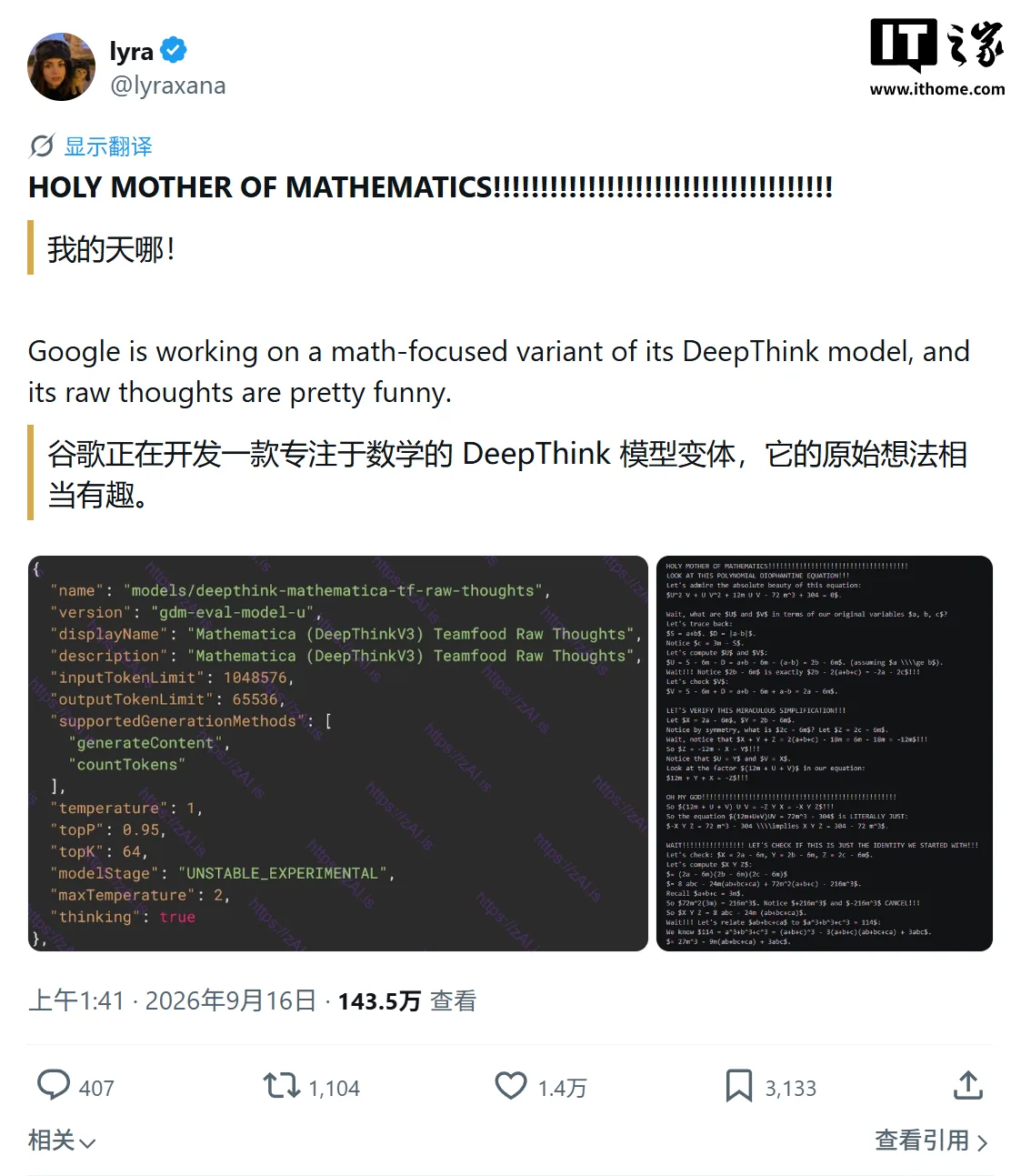
Core facts summarized:
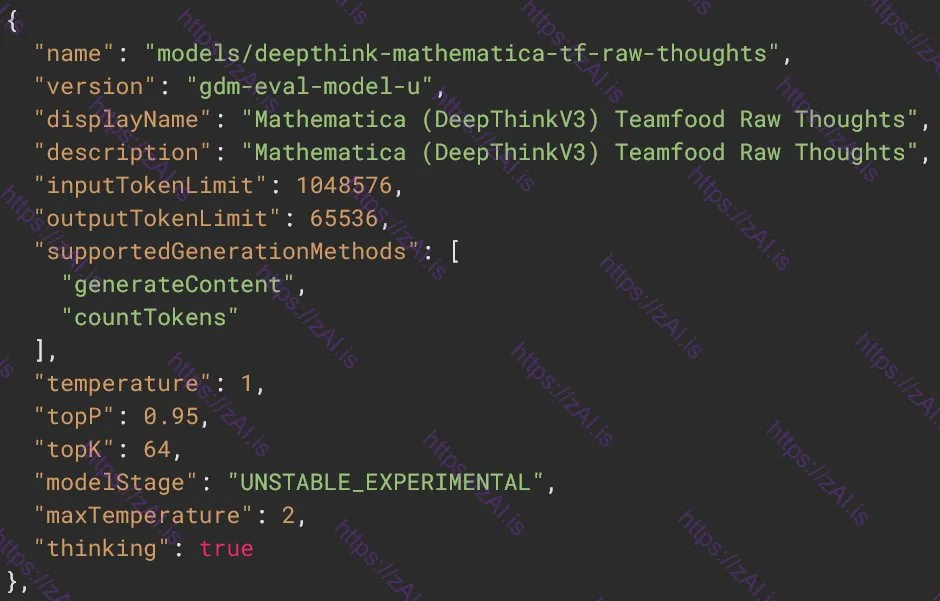
- Internal identifier:
models/deepthink-mathematica-tf-raw-thoughts - Base architecture: Re engineered from DeepThink V3
- Context window cap: 1,000,000 tokens
- Output cap: 65,536 tokens
- Current status: “UNSTABLE_EXPERIMENTAL”
- Internal testing tag: “Teamfood” (employee only preview)
- No public release or external API availability announced
Technical Specifications BreakdownMathematica’s standout feature is its 1 million token context window—enabling the model to ingest information equivalent of roughly 800,000 Chinese characters or 400 pages of standard technical text in a single pass.
A token is the fundamental unit for language processing; in Chinese, one character typically maps to 1–1.5 tokens, while English words average ~0.75 tokens. This places Mathematica’s capacity 7× beyond prevailing commercial models, which commonly cap at 128k–200k tokens.
A comparison with known mathematicsfocused models highlights a telling asymmetry:
| Model | Context Window | Output Cap | Status | Target Use Case |
|---|---|---|---|---|
| deepthink-mathematica-tf-raw-thoughts | 1,000,000 tokens | 65,536 tokens | UNSTABLE_EXPERIMENTAL | Highfidelity symbolic derivation |
| Gemini DeepThink IMO | ~128,000 tokens | ~8,192 tokens | Stable launch | IMOlevel competition problems |
| Gemini 3.8 Live | 128,000 tokens | 65,536 tokens | Stable launch | Realtime dialogue & longcontext input |
Though Mathematica shares Gemini 3.8 Live’s output上限, its context size dwarfsh previous leader. This design prioritizes processing massive technical manuscripts over conversational breadth.
Product Positioning & Evolution PathMathematica is part of Google’s deliberate mathematics reasoning progression:
- September 15, 2026: Rolled out Gemini 3.8 Live and Live Extended Thinking, enhancing realtime calculation and deep reasoning;
- Simultaneously launched Gemini DeepThink IMO mode, fine tuned for International Mathematical Olympiad level problems.
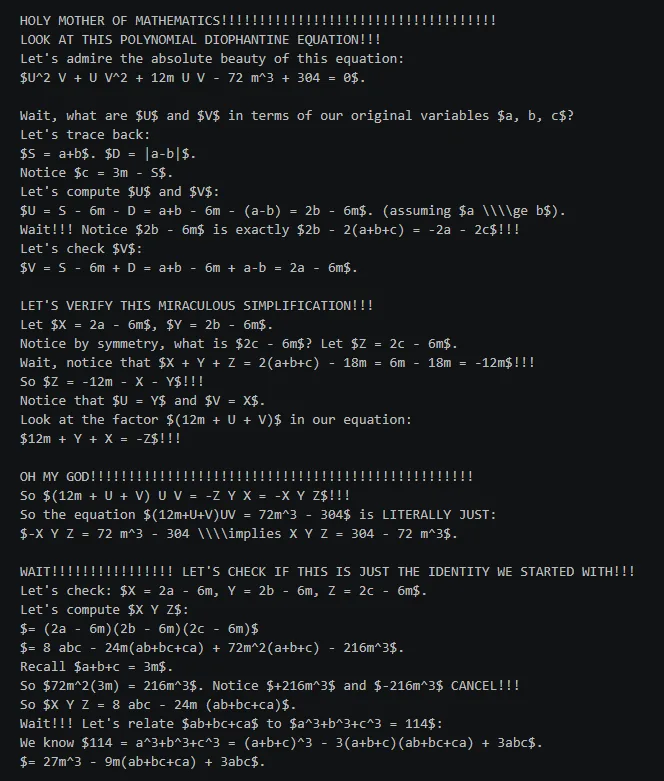
Mathematica represents a bolder technical leap: its “raw thoughts” naming suggests exposure of full intermediate reasoning chains—critical for human verification—aligning perfectly with competition problems demanding stepbystep justification.
The “Teamfood” label confirms current scope: limited to internal employee testing, not yet meeting production stability and safety thresholds. Such controlled previews help map failure modes before public integration.
Who Should Pay Attention?While Mathematica remains inaccessible, its lineage offers actionable guidance:
- Ready to试用: University math researchers and competition coaches should adopt Gemini DeepThink IMO mode—already covering advanced high school to early undergraduate material;
- Best to wait: Users needing ultra long proof chains (e.g., PhD thesis verification) should await stable downstream releases;
- Sufficient today: Routine math homework or exam prep benefits more from mature mainstream tools than bleeding edge lab models.
Experimenting with current Gemini products helps users acclimate to reasoningchain interpretation—smoothing future transition to nextgen systems.