Google Just Released Its Most “Hardcore” Model Tier
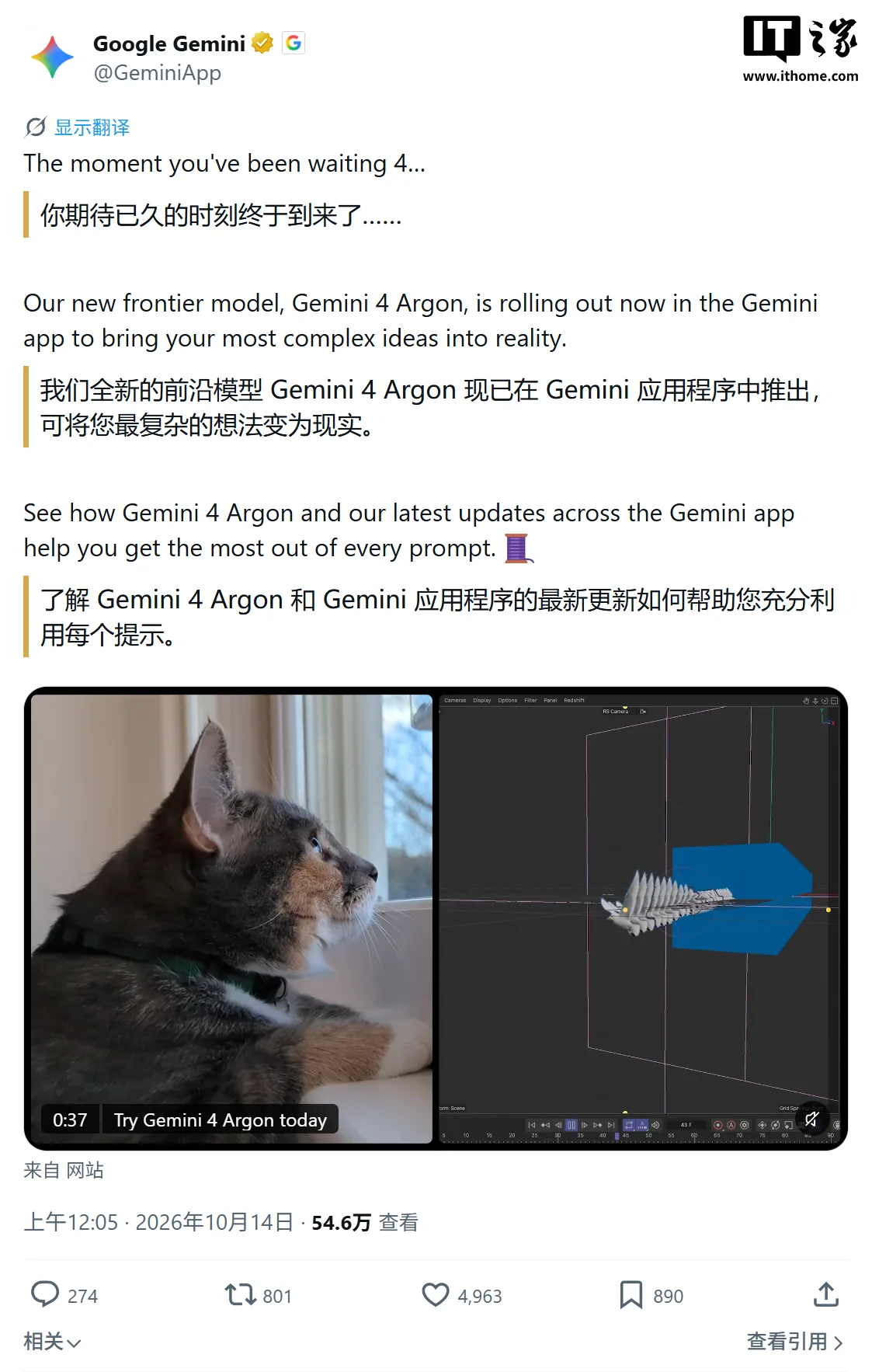
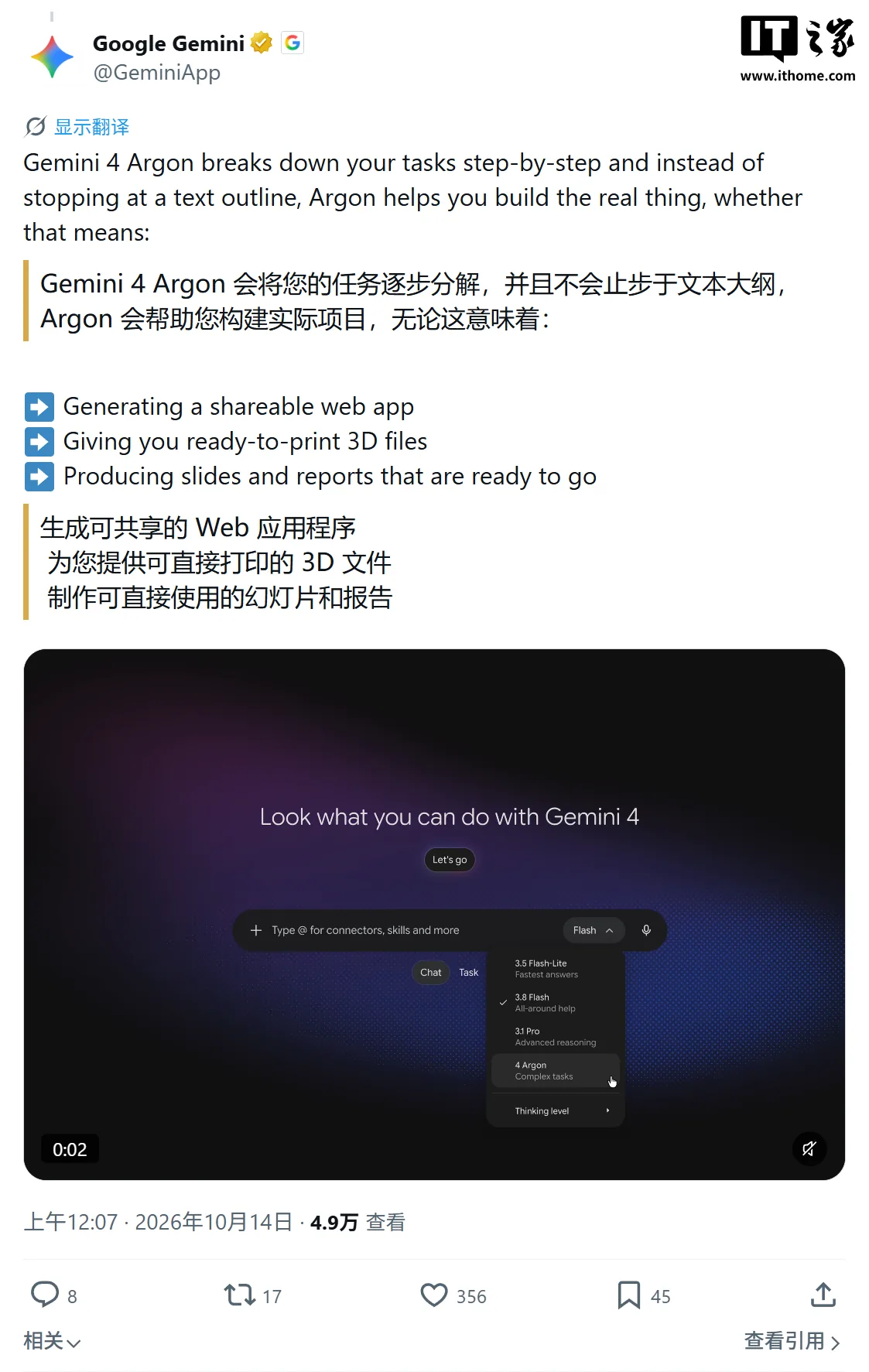
On October 14, Google announced that Gemini 4 Argon is open to developers and enterprises worldwide, positioned as a frontier model for tackling the hardest problems. The key hard facts are as follows:
- Launch date: October 14, globally available at the same time
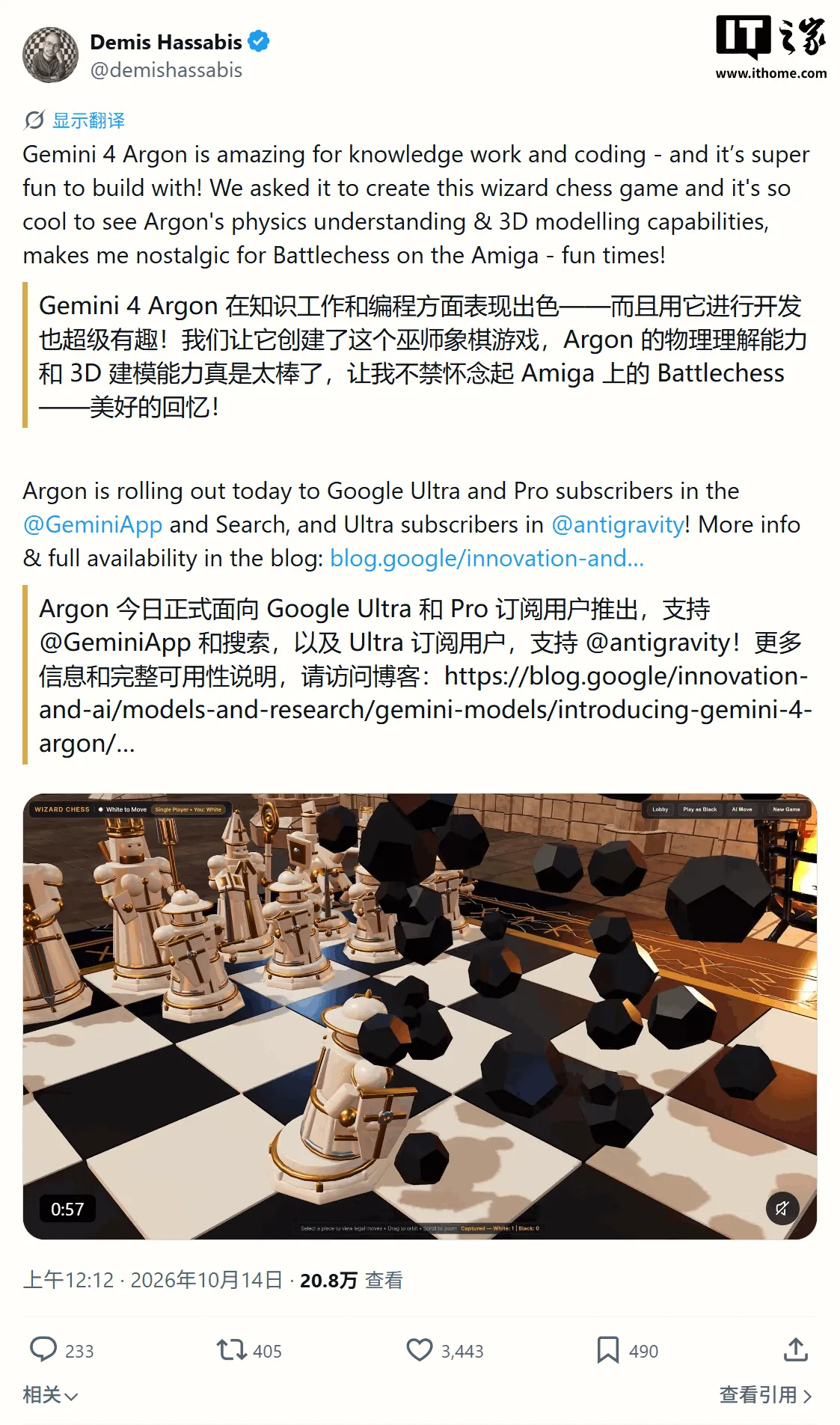
- Access points: AI Studio and the Gemini platform API; Google Antigravity for Google AI Ultra subscribers; Google AI Ultra and Pro subscribers in the Gemini app and AI Mode in Search
- Limited-time pricing: $2 per million input tokens, $10 per million output tokens, $0.1 per million cached input tokens
- When pricing changes: after the introductory promotion ends on November 30, 2026, prices double
- Output ceiling: up to 1,048,576 tokens (about 1 million)
- Weights: the source material does not mention open weights
Two terms first, briefly: a token is the smallest unit of text a model processes, roughly corresponding to one to several characters in Chinese; context window refers to everything the model can “see” at once.
Chrome Refactor of Tens of Millions of Lines: From Months to Weeks
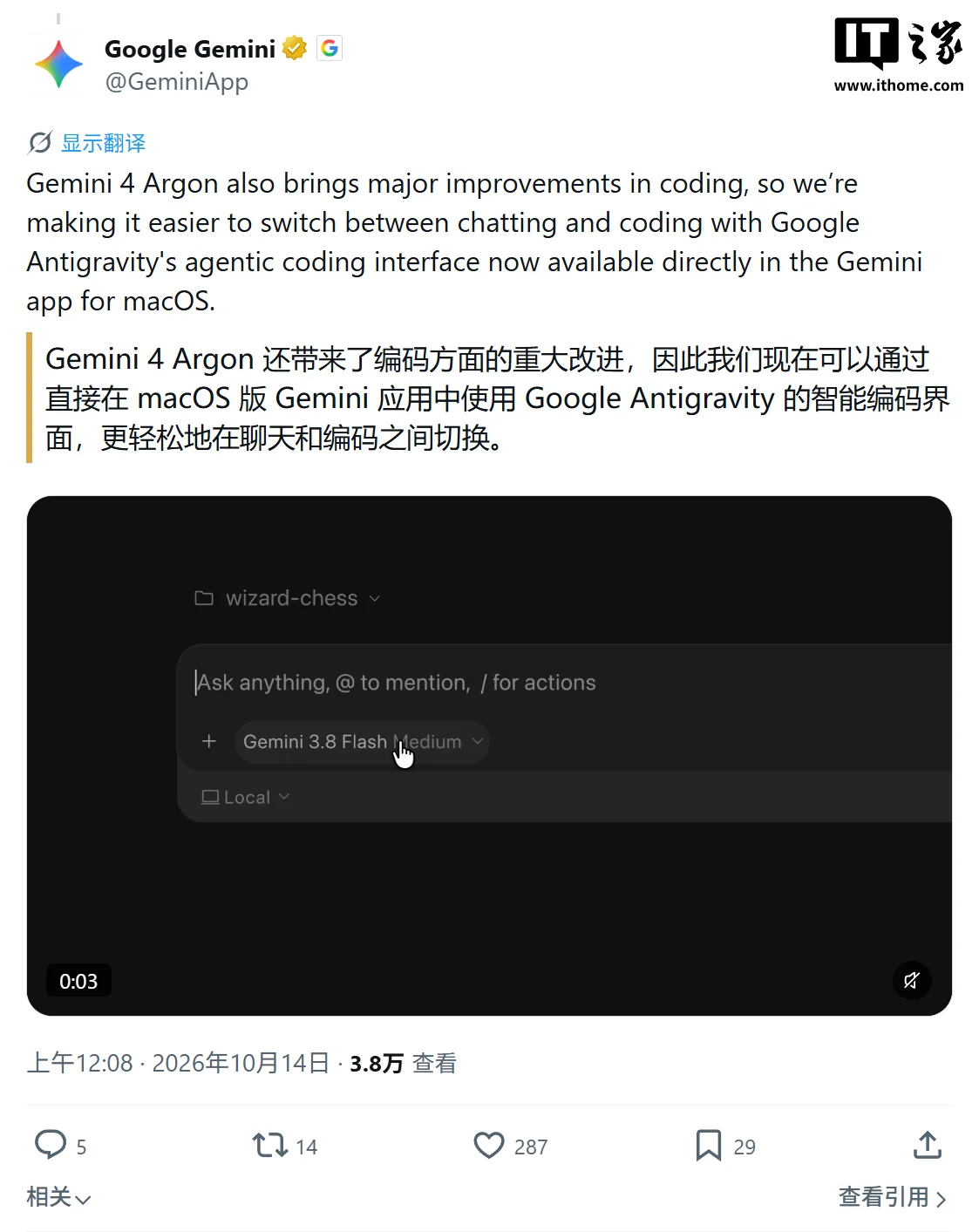
According to Google, Gemini 4 Argon excels at complex real-world tasks in coding, finance, law, cybersecurity, science, and other domains, and surpasses other frontier models in depth and precision on multi-step tasks. It ranks first on the Vals Index, which measures performance in key economic domains such as finance, coding, law, and tax.
Among the deployments already in production, the most significant are on the engineering side:
- The Chrome team used it to complete an architectural refactor of tens of millions of lines of code, compressing work that would have taken months into weeks
- It also autonomously completed a performance optimization for an open-source project overnight: in-memory session preparation time dropped by 40%, and cold import speed improved by 21%
Scientific research and safety efforts are rolling out in parallel: Google is offering 10,000 scientists free access to the highest usage tier of Google Antigravity for six months, and applications are now open. On cybersecurity, Google has expanded the partner network for the Fairwind project, enabling more defenders to use it to find and fix vulnerabilities. For the model’s own safety, Google has deployed multiple layers of defense; jailbreak resistance, prompt injection protection, and agent alignment monitoring have all improved, and the rate of violations for harmful requests is nearly halved compared with the previous Gemini model.
The easiest thing to be misled by in the headlines is that “1 million output”: input, thinking, and output share the same 1 million token context window. This means the output ceiling is not extra space granted on top—the more output consumes, the less room remains for input and thinking. Long decoding capability is real, but it does not mean “stuff 1 million tokens in and spit 1 million tokens out.”
Pricing: Cheap Now, Doubling After November 30
Converted at an exchange rate of roughly $1 ≈ ¥6.7:
| Billing item | Limited-time introductory price | After the promo ends on November 30 |
|---|---|---|
| Input (per million tokens) | $2 (≈ ¥13.4) | $4 (≈ ¥26.8) |
| Output (per million tokens) | $10 (≈ ¥66.9) | $20 (≈ ¥133.8) |
| Cached input (per million tokens) | $0.1 (≈ ¥0.7) | $0.2 (≈ ¥1.3) |
The notable cost-performance design is cached input: $0.1 is only one-twentieth of the input price. For scenarios where the same long document or large codebase is fed repeatedly, putting the stable, unchanging parts into cache can significantly reduce the bill. Conversely, output is priced at 5 times input, so multi-turn long outputs are the real cost driver.
Who Should Use It, and Who Should Wait
Who should get started ASAP: teams with multi-step, long-chain tasks—large codebase refactors, legal and financial document pipelines, vulnerability hunting and remediation. These are exactly the strengths it is marketed for, and getting in now means you can take advantage of the limited-time pricing. Research teams can apply directly for one of those 10,000 free scientist slots; six months of access at the highest tier is a substantial resource.
Who should wait: teams that do only lightweight Q&A and are cost-sensitive don’t need to pay for the word “strongest”; it’s more prudent to wait until the official pricing after November 30 and then reassess. If you have a hard requirement for open weights, there is no corresponding option this time.
Final Thoughts
Gemini 4 Argon’s launch posture is clear: it doesn’t talk about general capabilities, but instead points directly to “hard” work like the Chrome refactor, vulnerability remediation, and scientific breakthroughs as evidence. For ordinary developers, the real barrier isn’t capability but the bill—output is priced at 5 times the input rate, and the promotional price lasts only until November 30. The shared context window design also reminds us that when looking at numbers like the “output ceiling,” it’s better to look at the constraints first.