Google DeepMind published a technical blog on October 15, 2026, describing how Google Antigravity, its agentic development platform, can accelerate the search for antimicrobial peptides. With antimicrobial resistance rising, the platform provides an interactive science workbench that lets biologists combine database search, functional annotation, structural analysis, and literature synthesis in a single collaborative session.
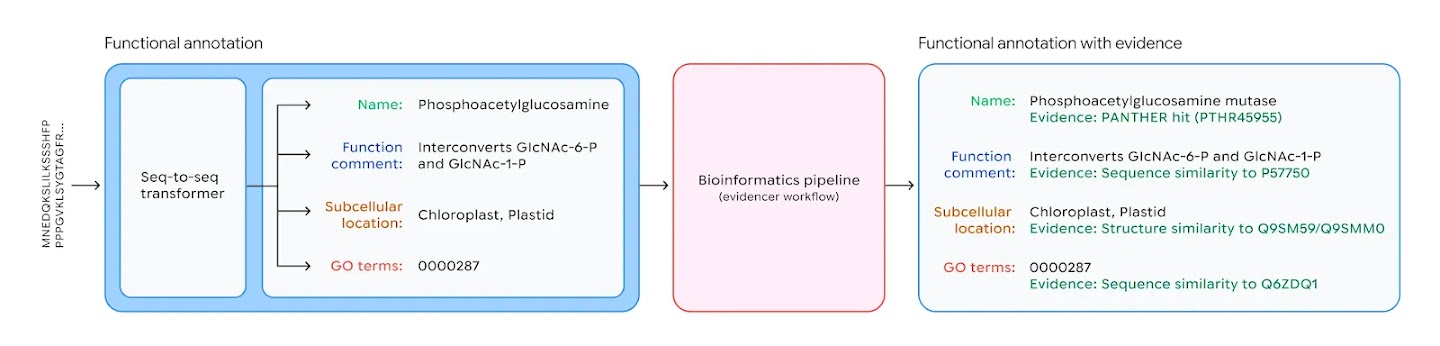
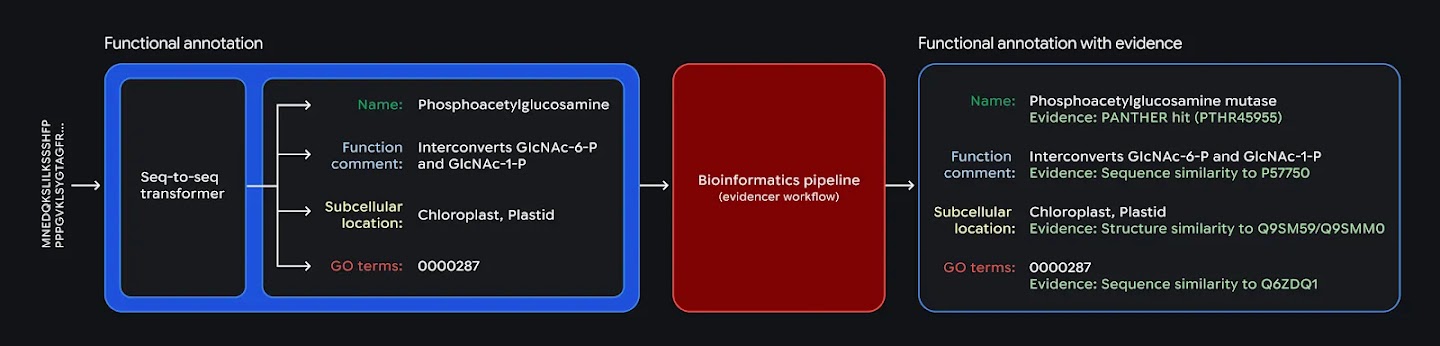
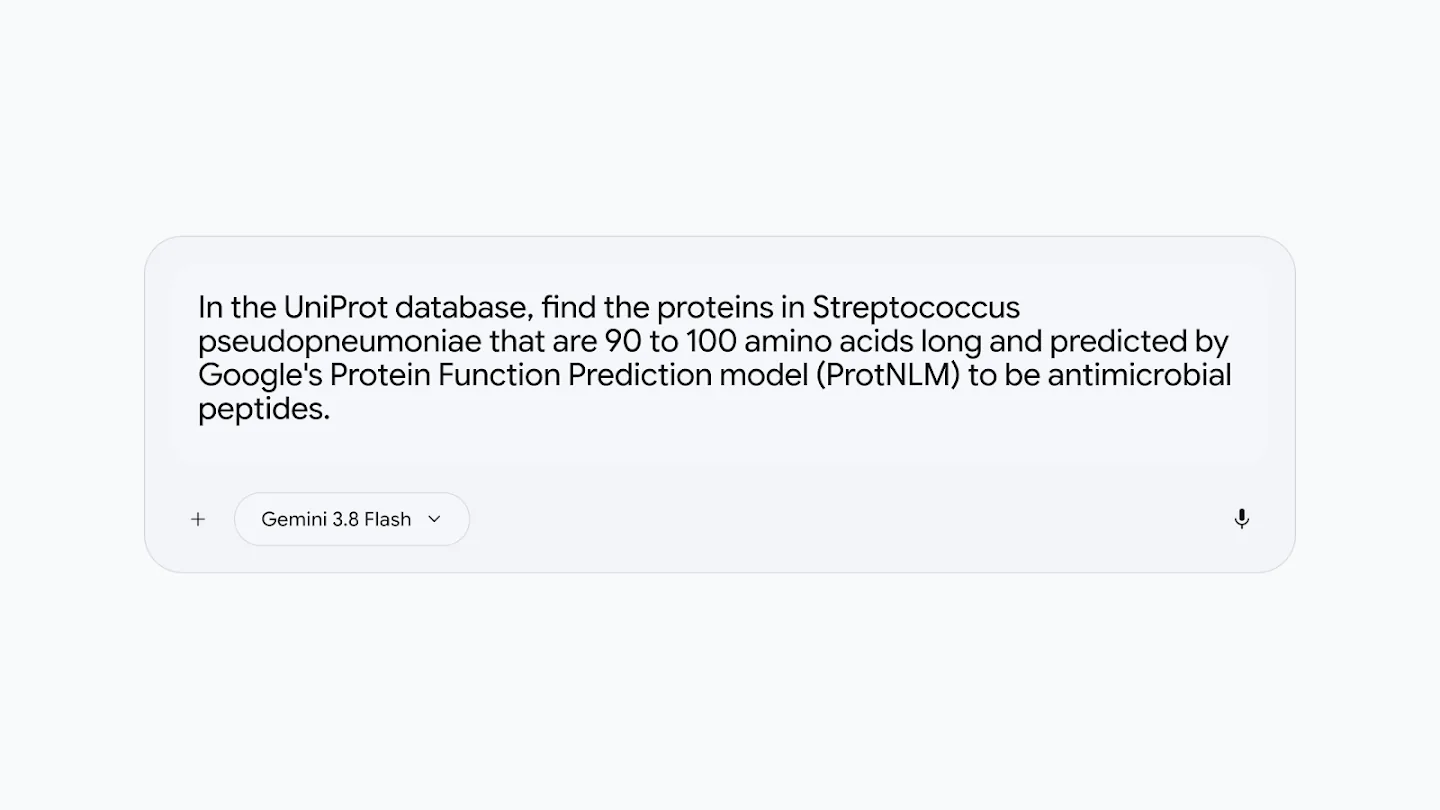
The workflow relies on ProtNLM, a protein language model that predicts biological function from amino acid sequences. By annotating previously uncharacterized entries in UniProt, ProtNLM helps researchers explore protein “dark matter” that lacks similarity to known proteins. In the example, a researcher and an AI agent search Streptococcus pseudopneumoniae for novel antimicrobial peptides and identify a 97-amino-acid bacteriocin candidate from the Lactococcin 972 family, with UniProt ID A0A0U0D591.
The agent then checks the candidate against Swiss-Prot via BLAST to assess novelty, retrieves its AlphaFold structure, and compares the predicted fold with experimentally determined structures. It also examines neighboring genes, finding that the candidate sits upstream of a tightly coupled operon near an ABC transporter permease, an ATP-binding protein, another annotated bacteriocin, and an XRE transcriptional regulator, all consistent with a functional bacteriocin system.
DeepMind notes that the candidate remains a computational lead and must be validated experimentally. The candidate, together with several others discovered through the same pipeline, is now undergoing wet-lab validation. The company argues that this approach can turn days of fragmented database triage into a single session and allow researchers to scale discovery across UniProt and other priority pathogens.