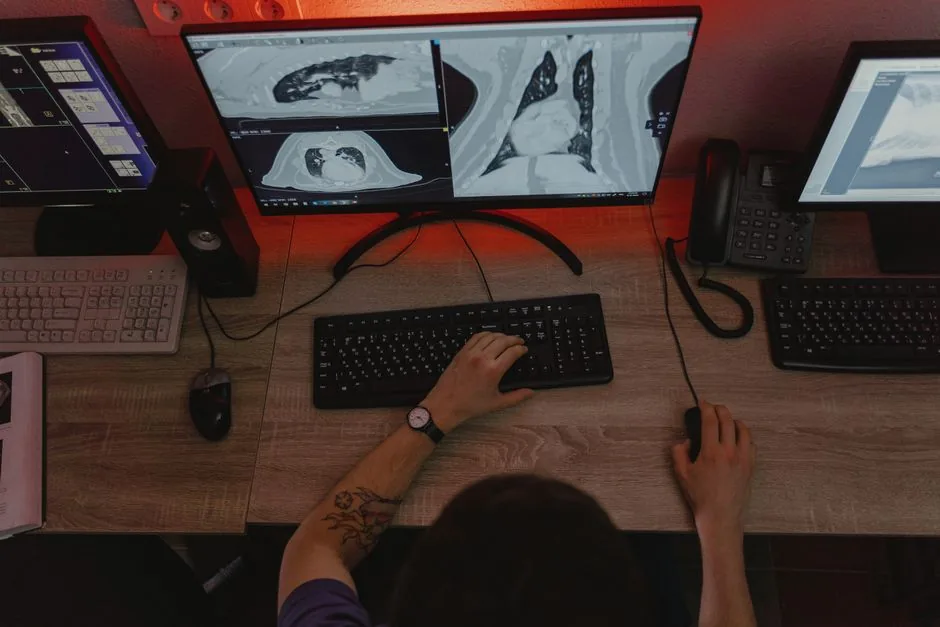
IT Home, October 23 — Japan’s LSTC (Leading-edge Semiconductor Technology Center), Hokkaido University, Fujifilm, GE HealthCare and imec announced on the 20th of this month, local time, that they have accepted a commission from Japan’s NEDO (New Energy and Industrial Technology Development Organization) to jointly develop a low-power AI inference chip for medical imaging based on a 2nm process.
The chip’s designed application scenarios include:
- High-speed reconstruction and decomposition of the massive data volumes produced by photon-counting CT, enabling “real-time imaging diagnostic support”;
- Real-time overlay of ultrasound images with CT / MRI images, enabling “real-time diagnostic and treatment support”;
- Real-time recognition of surgical instruments, anatomical structures and bleeding from intraoperative microscope images, enabling “real-time surgical support”.
The partners plan to first carry out development and optimization work on IBM’s Spyre accelerator, and later migrate to the actual chip. Their development goal is to deliver more than 5x the image-processing speed and more than 10x the energy efficiency of existing GPUs, with clinical application at Hokkaido University Hospital.