Black Forest Labs Unveils New Image Generation Model: FLUX 3 Image
German AI company Black Forest Labs officially released the image generation AI model FLUX 3 Image on October 2, 2026. Centered on high controllability and fine-grained editing capabilities, the model is currently available as a paid service from the company, with an open-weights version expected to be released within weeks.
Key Facts at a Glance:
- Release date: October 2, 2026
- New version: FLUX 3 Image (built on the FLUX 3 base model)
- Pricing model: Currently a paid service
- Open weights: Model version to be publicly released within weeks
- Generation capability: Supports output up to 4K resolution
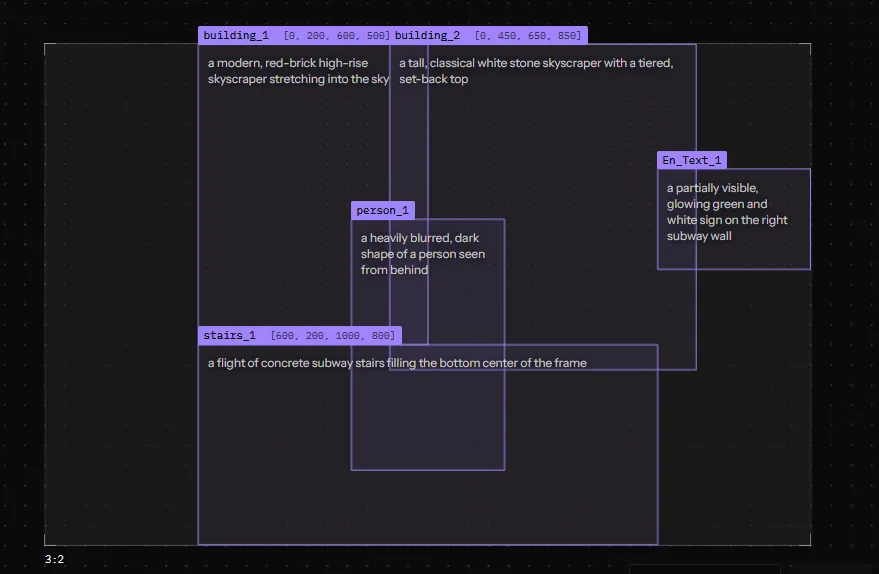
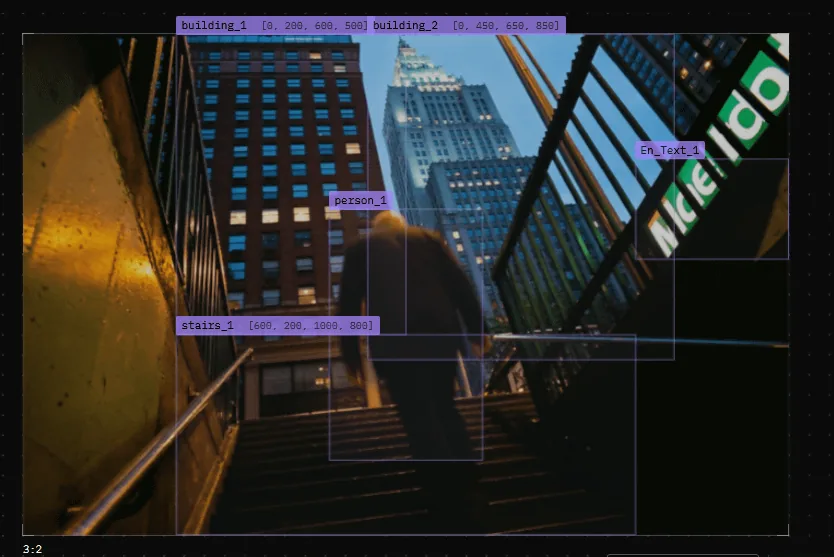
Precise Placement: Coordinate Grids and Bounding Box Control
The standout feature of FLUX 3 Image is its spatial control over image elements. Users can assign a unique ID, descriptive text, and precise bounding box (formatted as [y_min, x_min, y_max, x_max]) to each image element on a normalized 0–1000 coordinate grid. This design enables true pixel-level precise placement within a canvas.
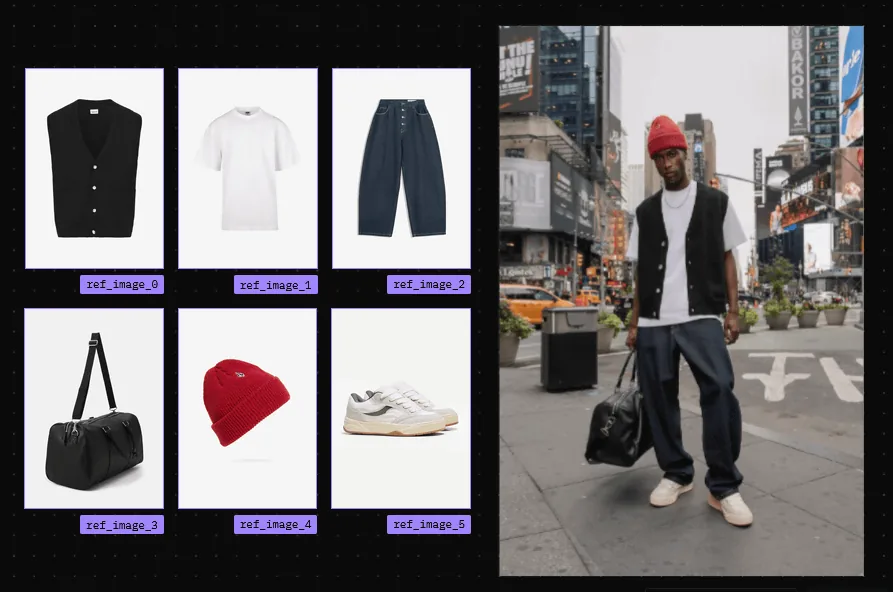
Notably, a single generation can incorporate up to 10 reference images, with the position of each reference object specified within the output — meaning users can organically merge content from multiple images into a new canvas without manual cropping or compositing. In traditional workflows, such multi-image fusion typically relies on post-processing, but FLUX 3 Image brings it forward as a native capability during the generation stage.
The model also supports modifying designated regions while keeping all other pixels unchanged. According to the official claims, it can preserve original image content at the pixel level, enabling precise multi-round editing — making workflows like inpainting and detail refinement far more controllable.
Technical Lineage and Positioning
FLUX 3 Image continues Black Forest Labs’ open-source tradition (previous models such as FLUX 1.1 have all had open weights), though this initial launch opts for a service-based delivery. Combined with its “high controllability” messaging, it’s clear the model isn’t aimed at casual consumers seeking scenic imagery, but rather at professional content creators and designers who have concrete structural requirements for their images.
By contrast, most mainstream image generation models today rely on text prompts to guide overall composition, with element placement control being largely indirect. FLUX 3 Image allows users to input structured coordinates directly, shifting the generation process from “vague prompt — model guesses” to “explicit instruction — model executes,” significantly reducing dependence on prompt engineering skills. This makes it especially well-suited for scenarios requiring iterative layout adjustments, such as UI design and illustration composition validation.
Practical Recommendations for Readers
- Worth trying right away: Freelance illustrators, UI/UX designers, and marketers who need to batch-generate layout mockups — if you already have a clear element layout plan, FLUX 3 Image can significantly boost your iteration efficiency.
- Hold off for now: Newcomers seeking out-of-the-box solutions or general content creators who don’t need precise control — the service is currently paid, and it remains unclear whether the open-weights version releasing in a few weeks will include the same level of precision control.
Final Thoughts
FLUX 3 Image marks a shift in image generation models — from competing on “generation quality” to a new era of “generation control.” When a model no longer settles for producing beautiful images but instead grants users architectural-level structural command, the barriers and freedoms of content creation are being reshaped simultaneously.