
The Beginning: The Capability Boundary of Flash Models Is Redefined
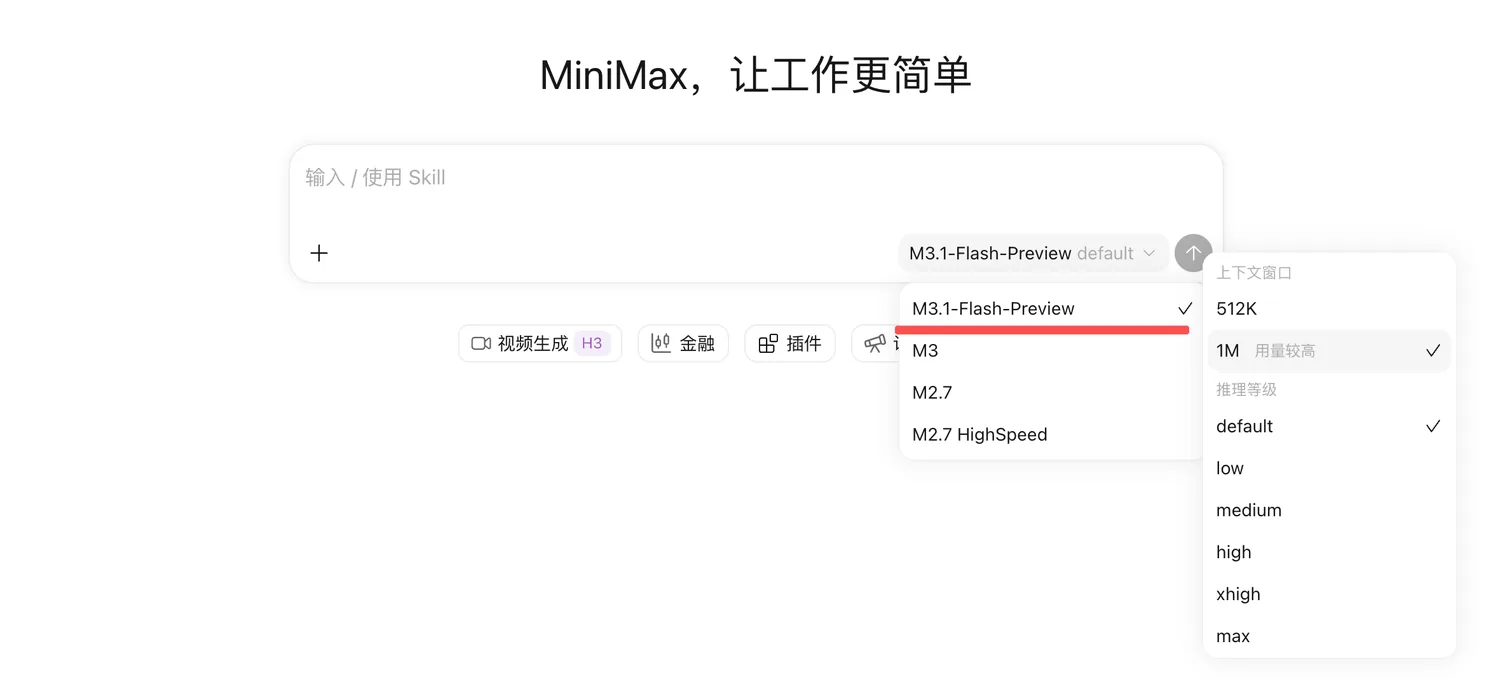
MiniMax officially launched and opened public beta testing of its M3.1-Flash model on the eve of the 2026 National Day holiday. Positioned as a lightweight Flash model, it diverges from the conventional notion of lightweight models merely handling simple fallback tasks—instead, it demonstrates a significant breakthrough in frontend delivery capability. M3.1-Flash is currently in public beta, open to the developer community.
Core Facts: Multiple Real-World Tests Verify Frontend Generation Capability
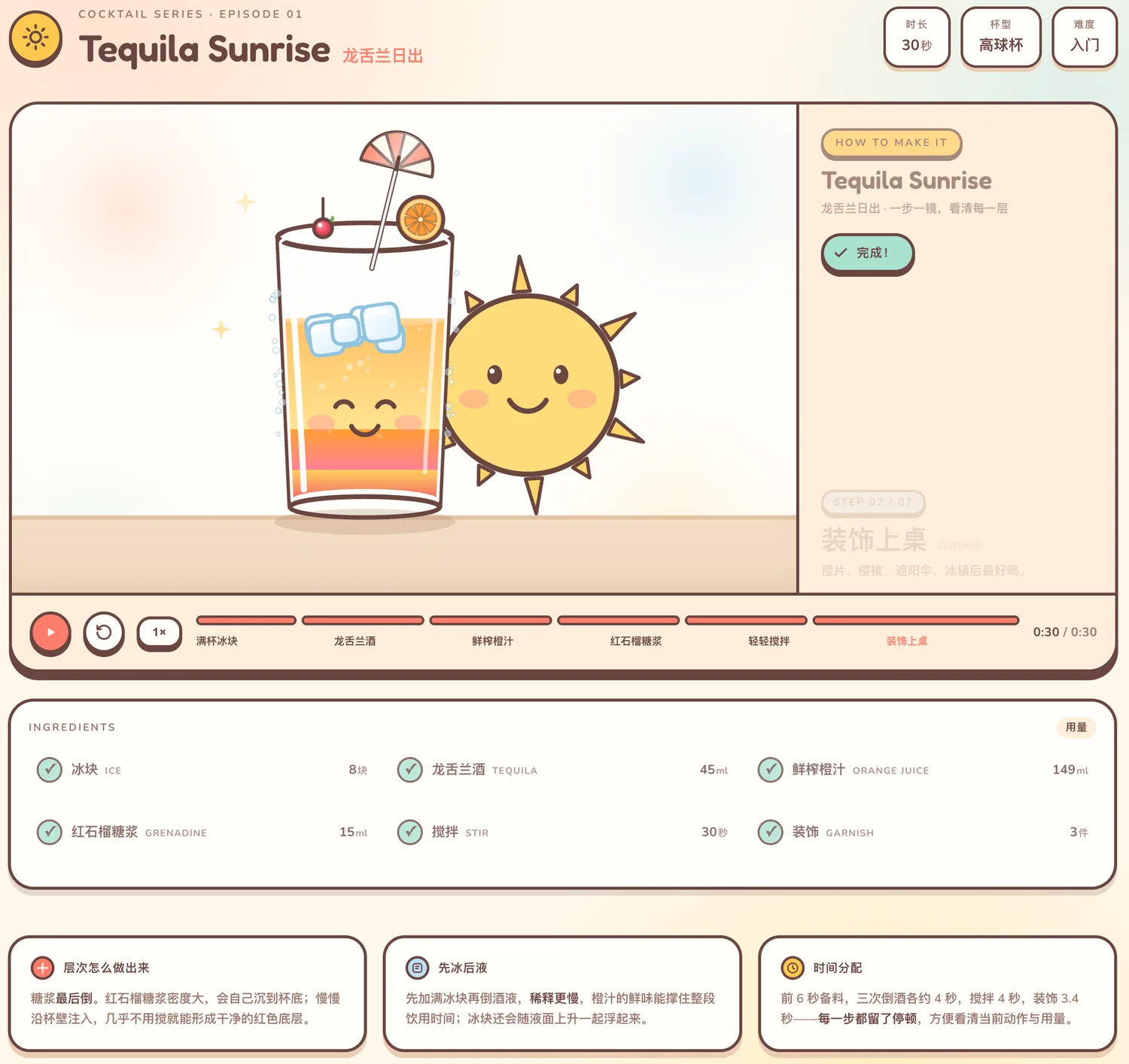
This round of testing centered on three categories of typical frontend tasks: programmatic animation, interactive web pages, and pixel-art wizard Canvas rendering. During testing, M3.1-Flash was compared head-to-head with the overseas flagship model Claude Opus 5.5, and the results exceeded most practitioners’ expectations:
- Dynamic Educational Animation: Given a prompt to generate a chemistry concept animation on “large π bonds and small π bonds” (approximately 1 minute), the model produced a teaching asset with a black background where light points and text dynamically interact—directly usable as a classroom aid
- Starry Train Interactive Prototype: Generated an interface with a right-side control panel and left-side real-time response functionality, supporting parameter adjustments for camera angle, train speed, and more, approaching the interactivity depth of a game-scene prototype
- Cocktail Preparation Demo: Fully implemented a six-step decomposition flow (empty glass → ingredients → add ice → mix → garnish → complete), plus playback control and speed-adjustment button modules
- Pixel Wizard Spell Effects: Rendered a pixel-art wizard spellcasting scene using Canvas 2D, adding visual enhancement details such as a starry sky background, with particle light effects richer than the comparison sample
Notably, when generating a 15-second portfolio animation under the same open-ended prompt, Opus 5.5 leaned on high-density motion graphics (font morphing, particle dot matrices, rotating arcs, etc.), while M3.1-Flash, though more relaxed in pacing, delivered clearer and more stable text rendering with more consistent color palettes and visual language. This shatters the old stereotype that “Flash models can only generate basic code and lack aesthetic judgment or design reasoning.”
Source of Key Capabilities: Native Multimodal Training Architecture
M3.1-Flash’s breakthrough stems from MiniMax’s native multimodal training approach in the M3 series. Key characteristics include:
- Support for a 1M context window length
- Mixed training across text, image, and video semantic spaces during the pretraining phase
- Multimodal capabilities embedded natively within the model, not bolted on as post-hoc modules
This architecture effectively sidesteps the semantic fragmentation and inconsistent modality adaptation that plague lightweight models. MiniMax’s accumulated experience with the H3 video model has also created a technical feedback loop—within one month of open-sourcing, it surpassed 24 million downloads and spawned over 300 public models, providing real-world scenario feedback for multimodal technology evolution.
The table below summarizes the head-to-head comparison between M3.1-Flash and Opus 5.5 across key capability dimensions (based on this round of testing):
| Dimension | M3.1-Flash | Opus 5.5 |
|---|---|---|
| Frontend Code Generation | Delivers complete, runnable HTML/JS | Delivers complete, runnable HTML/JS |
| Animation Transition Logic | Cleverly chains animations to illustrate concepts (chemistry teaching case) | High-density motion graphics stacking (portfolio case) |
| Design Detail Completion | Proactively adds starry sky background, interactive control panels, etc. | Focuses on core actions with clean, minimal backgrounds |
| Spelling Error Correction | Did not detect or correct errors | Did not detect or correct errors |
| Model Positioning | Lightweight Flash model (public beta) | Overseas flagship model |
Practical Recommendations: Defining Applicable Scenarios and User Profiles
Users who should try it right away:
- Designers and product managers who need to quickly produce runnable frontend prototypes
- Marketing/teaching teams lacking professional development resources who want to shorten the cycle from idea to previewable deliverable
- Content creators who value multimodal consistency and aesthetic coherence
Scenarios where you should wait:
- Beginner users who rely heavily on automatic error correction from the model (neither model corrected spelling errors in testing)
- Engineering visualization needs requiring strict physical proportions and real-world logic validation (distorted glass proportions were observed during testing)
Final Thoughts
The M3.1-Flash experience confirms that large model competition has shifted from raw parameter contests to closed-loop delivery capability. When a lightweight model can complete the full loop—from frontend code to visual aesthetics to interaction logic—the cost of deploying AI applications and the quality of user experience will both undergo a systemic upgrade.