NVIDIA seven-year veteran turns to VC: Robots still haven’t had their “ChatGPT moment”
On October 16, 2026, Amulya Vishwanath, former product marketing lead for NVIDIA’s robotics platform, offered a contrarian view on TechCrunch’s Equity podcast: robots are still in the “LEGO era.”
The hard facts are as follows:
- Show: TechCrunch’s Equity podcast, published October 16, 2026, at 9:30 a.m. PT; about 30 minutes long; host Dominic-Madori Davis
- Guest: Amulya Vishwanath, who spent seven years in product marketing for NVIDIA’s robotics platform
- New role: founder and managing partner of Techable VC, focused on early-stage investing
- Focus: physical AI (intelligent systems that can perceive and act on the real physical world), covering robotics, materials science, and life sciences
- Core take: robots have yet to have their “ChatGPT moment”
The ‘LEGO era’ means the building blocks haven’t taken shape yet
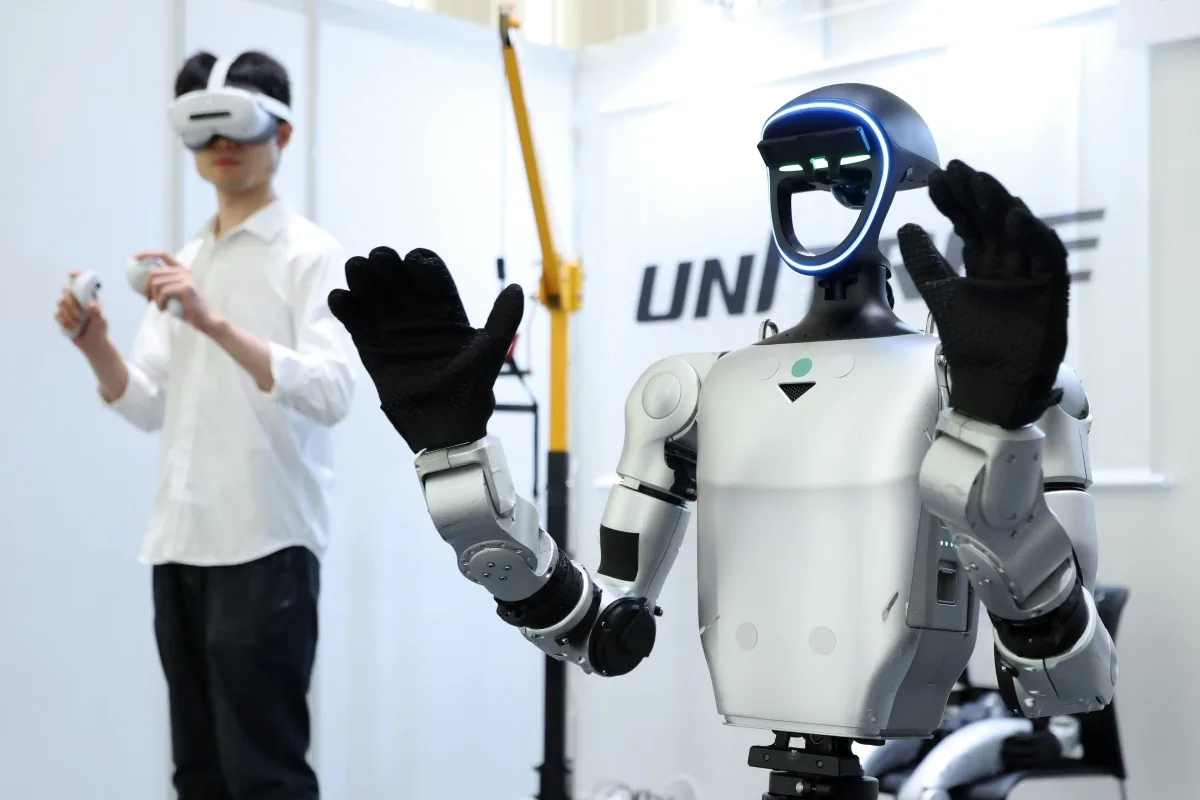
Vishwanath uses “LEGO era” to describe today’s robotics industry: actuators (components that convert electrical signals into mechanical motion), robotic hands, software, and safety standards—the most basic “building blocks”—are still being rebuilt.
Her point is that these underlying modules have not yet converged into stable, reusable forms. With the foundational components unsettled, it is too early to talk about a leap enabled by general intelligence at higher layers. The so-called “ChatGPT moment” refers to that day in late 2022 when an unexpectedly capable chatbot launched—the moment a single model suddenly gave the entire field a clear finish line.
Notably, the person saying this comes from exactly the position least likely to underestimate robots. Seven years in product marketing for NVIDIA’s robotics platform is a long tenure for anyone in the industry, and she is now putting real money behind physical AI. She isn’t bearish on robots; she believes the timeline is longer than most people think. The episode also notes that she is one of the earlier female executives to leave NVIDIA and start her own early-stage fund.
The dissenting view: one general model is enough
The opposing voice comes from Pim de Witte, CEO of General Intuition. Earlier this year on Equity, he said that a general foundation model—one pretrained on large-scale data and transferable to many tasks—will make much of today’s specialized robotics work redundant, and that this will be the “day” robots have been waiting for.
The disagreement really comes down to something quite narrow: do you first make the parts solid, or bet directly that one large model will unify everything? The former means value sits upstream in hardware and standards; the latter means many of today’s specialized approaches could be rendered obsolete overnight. The source material provides no price, specification, or version comparison data, so no comparison table is included.
Who should follow this, and who should wait
- Worth following: teams working on actuators, robotic hands, robotics software, and safety standards, as well as investors looking at early-stage physical AI. If the “building-blocks stage” holds, value is more likely to settle in the component and standards layers in the near term, rather than the application layer.
- Better to wait: people treating the “ChatGPT moment” as an investment clock, and those expecting a single general foundation model to solve robotics generalization all at once in the near term. The only public evidence for that timeline right now is opinion, not shipped products.
Final thoughts
The real substance of this episode isn’t whether robots can work. It’s that someone just out of the industry is pulling expectations back down to the component layer. Neither side in the debate gives a timeline, which itself suggests the “ChatGPT moment” still has no observable coordinates. For ordinary readers, it’s better treated as a sober recalibration of expectations than as a signal.
Information note: The source page is a podcast episode page with no full transcript. The above is based on the episode summary and page description and does not cover the specific argument details in the episode.