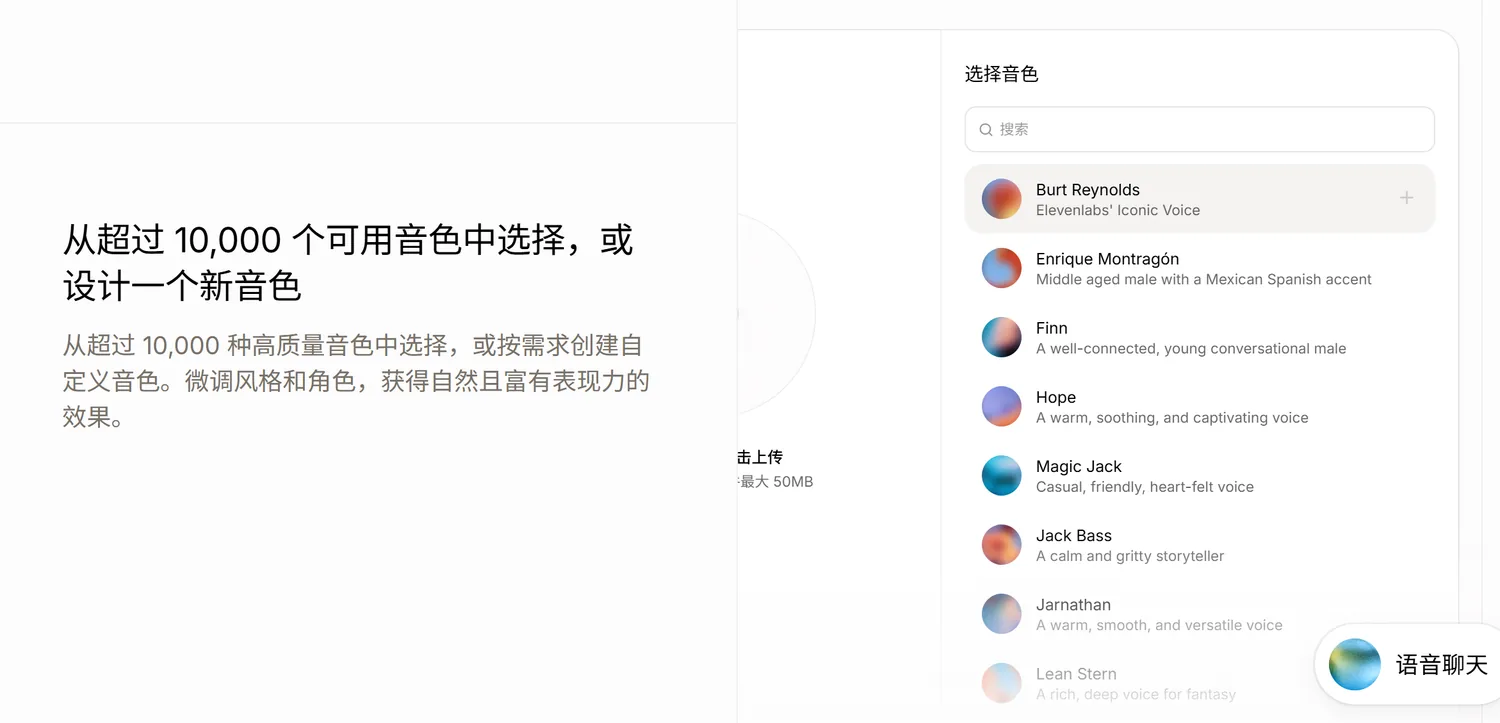
ZhiDongXi, October 22: On October 20, UK AI audio unicorn ElevenLabs released the Eleven Realtime voice model series, comprising Eleven Realtime v1 Mini for natural conversation and Eleven Realtime v1 Max for customer service and multi-step tasks. Both models support more than 90 languages and can use over 17,000 voices from the ElevenLabs voice library.
- Aiming to simplify voice agent building
The core of the release is simplifying the building and debugging of voice agents. Previously, developers had to separately choose speech recognition, large language model and speech synthesis components, then tune interaction details such as turn-taking and interruption. Eleven Realtime unifies configuration and tuning of the underlying components, so after choosing Mini or Max, developers only need to set the persona, knowledge base and tools around their specific business, without selecting underlying models one by one.
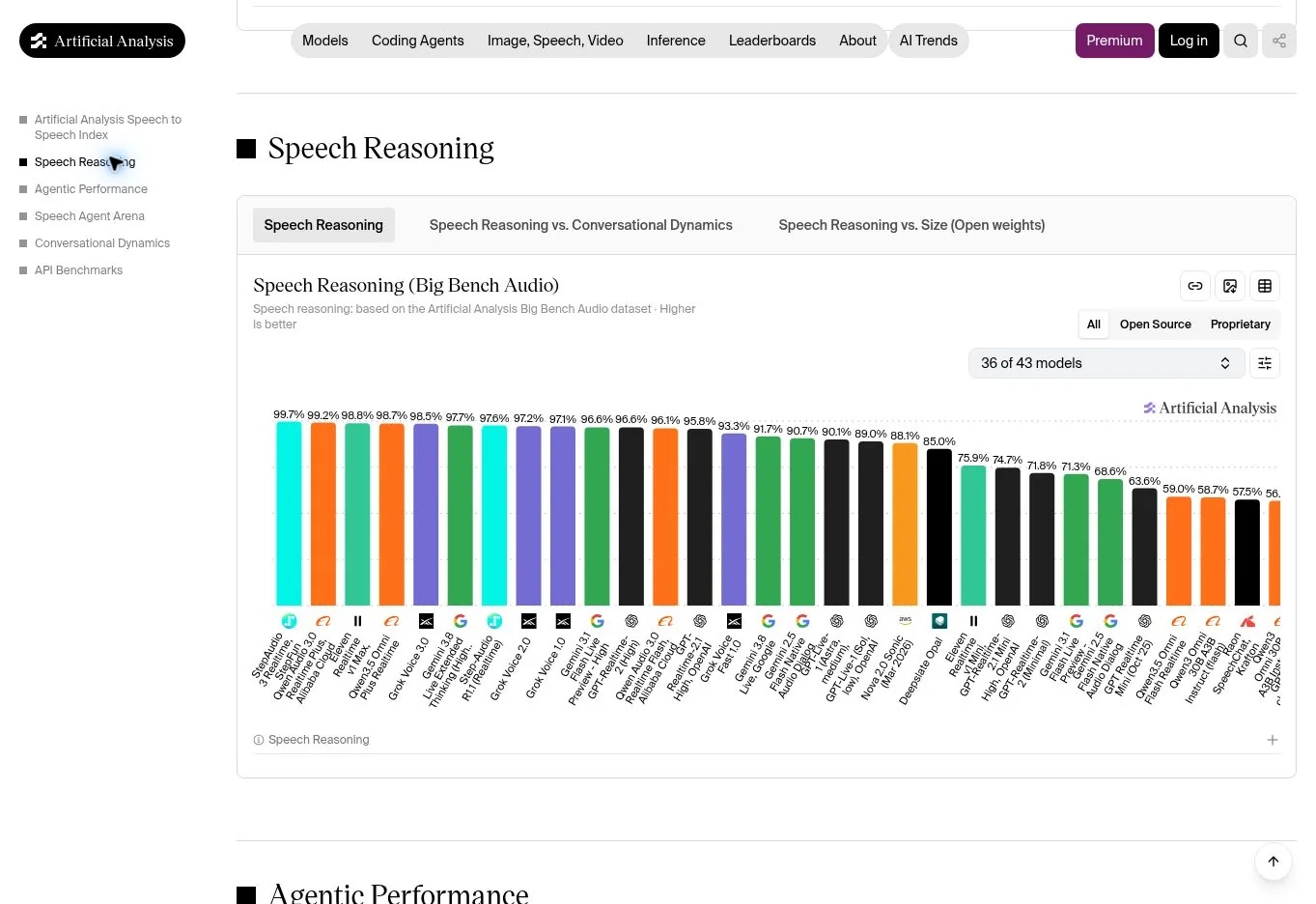
One difficulty of real-time voice is answering correctly without making users wait too long. According to independent testing by third-party AI evaluation firm Artificial Analysis, Max ranked third on the Big Bench Audio speech reasoning benchmark with 98.8% accuracy and an average first-audio response time of 0.57 seconds. The test poses 1,000 questions by voice covering logical judgment, object counting and path reasoning, then scores the models’ spoken answers. Mini scored 75.9% on the same benchmark. As of October 21, Max trailed only StepFun’s StepAudio 3 Realtime (99.7%) and Alibaba’s Qwen Audio 3.0 Realtime Plus (99.2%) on that measure.
On latency, per ElevenLabs’ announcement, Max and Mini recorded average first-audio response times of 0.57 and 0.62 seconds respectively on Big Bench Audio; for reference, Artificial Analysis lists 1.54 seconds for Qwen Audio 3.0 Realtime Plus. The metric measures how long a model takes to start speaking.
In Speech Agent Arena, which involves real humans in live conversations, Max achieved an 87.1% tool-use task completion rate versus 60.3% for Mini, a 26.8 percentage point gap. The metric measures the share of tasks completed through correct tool calls.
Mini scored slightly higher on turn-taking behaviors such as pauses and interruptions. In Full-Duplex-Bench, Artificial Analysis calculates a weighted score across pause handling, turn handover, user interruption and backchannel responses: Mini reached 95.8% and Max 94.1%. These items test whether a model waits when the user pauses, responds promptly when the user finishes, and distinguishes genuine interruptions from acknowledgements like “mm” or “right”.
- Hands-on: voice-based configuration is convenient, but the Chinese accent is obvious
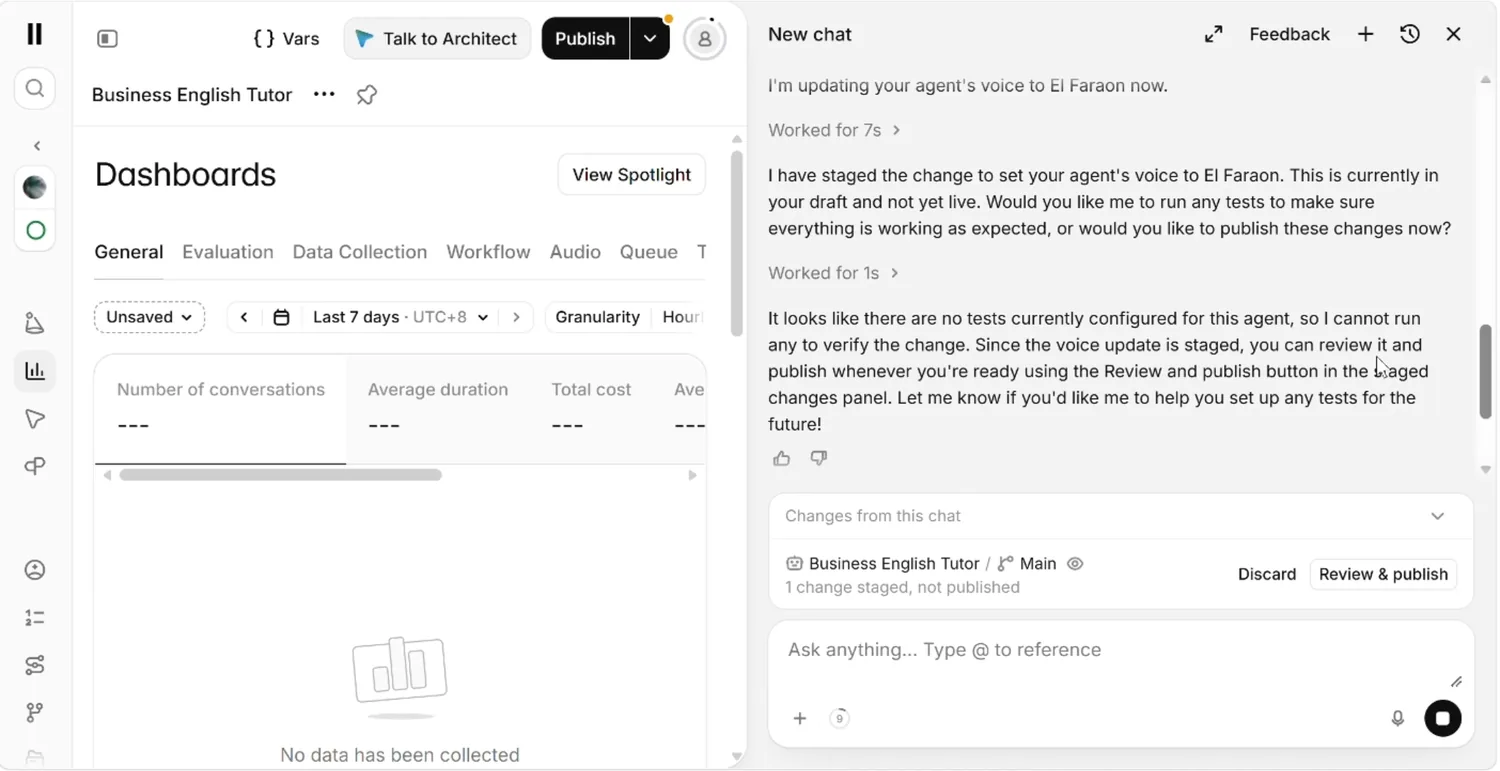
ZhiDongXi tested the Architect setup assistant, first changing the language and switching voices in English, then asking the assistant to switch to Chinese and continuing to modify settings in Chinese.
When asked in English to change the agent’s language setting, Architect understood the instruction and made the change smoothly, with no need to hunt through menus or toggle options manually. The request to change the voice did not work: Architect’s own voice cannot be switched, while the voice of the created agent can be selected in settings, and the voice library does offer a large number of options.
Asked to switch to Chinese, it understood the request, but its Chinese carried an obvious foreign accent, sounding somewhat artificial, with some expressions requiring careful listening. Execution of Chinese instructions went smoothly, however: asked in Chinese to change the agent’s language setting, it completed the change.
Overall, editing settings directly by voice was a pleasant surprise: users state their requirements and the assistant completes part of the configuration, saving the work of finding menus and filling in forms. The downside is that Architect is talkative, sometimes producing a long explanation for a simple request, and it is not easy to interrupt. The test also showed noticeable waiting and occasional stuttering, possibly due to the network. Long replies, sluggish interruption handling and unnatural Chinese speech were the most prominent shortcomings.
Note: the hands-on test covered only the Architect setup assistant. Running a created agent requires paid tokens, so the actual conversational performance of Mini and Max could not be tested.
- Product matrix and cascaded architecture
Before Realtime, ElevenLabs had already released speech synthesis and speech recognition models and offered voice agent building services. On speech synthesis, in September this year it released the text-to-speech model Eleven v4 and its low-latency version v4 Turbo, focused on improving emotional expression, voice cloning and multi-character dialogue; users can control tone and stress with natural language or tags and add sounds such as laughter, while v4 Turbo is optimized for low-latency scenarios such as voice agents. On speech recognition, Scribe v2 Realtime, launched last November, targets real-time transcription; Scribe v2, released this January, focuses on long recordings and complex audio, supporting speaker diarization, word-level timestamps and hotword hints. Beyond individual models, ElevenLabs launched Conversational AI back in November 2024, letting developers build voice agents with knowledge bases, functions and large language models.
Technically, Eleven Realtime continues the cascaded architecture, with speech recognition, large language models and speech synthesis as separate components working together. The company argues this makes each stage easier to test and upgrade separately, allows errors to be traced and answers constrained via the intermediate text, and permits integration of stronger LLMs. In its technical blog, however, the company notes that converting speech to text loses some intonation, rhythm and emotional information, which requires additional modeling to recover; its optimization direction is to improve voice quality, latency and turn-taking while retaining the controllability of each component.
- Company and commercialization
Founded in 2022, ElevenLabs started with text-to-speech and expanded into speech recognition, sound effects, music and conversational agents. In February this year it closed a $500 million Series D at a $11 billion valuation; an employee share transaction in September valued the company at $22 billion. Investors include Sequoia Capital and a16z as well as corporate backers such as Nvidia’s NVentures and LG Technology Ventures. Co-founders Mati Staniszewski and Piotr Dabkowski each spent years at Palantir and Google respectively, and joined the Forbes billionaires list in 2025. The company is also considering an IPO; CEO Mati Staniszewski has said he hopes to be ready to list within two to two and a half years.
On pricing, the Realtime API bills by audio connection time and token usage. Beyond plan quotas, audio connection costs $0.08 per minute for both models; Mini charges $0.20 per million input tokens and $6 per million output tokens, while Max charges $1.80 and $9 respectively.
Both models are available through the ElevenAgents platform or the Realtime API. Users can create or open an agent in the platform and select a Realtime model, while developers can integrate the API into their own applications. The API is compatible with the OpenAI Realtime specification and currently supports WebSocket connections only.
Product and demo entry: https://ElevenLabs.io/zh/realtime; agent building: https://ElevenLabs.io/app/agents; API docs: https://ElevenLabs.io/docs/eleven-agents/guides/openai-realtime-compatibility
Conclusion: real-time voice accelerates into agents
With Realtime, ElevenLabs packages speech recognition, reasoning and speech generation into a ready-to-use real-time interaction offering, improving conversational performance while lowering the barrier to building voice agents. The field is already crowded with major players: OpenAI’s GPT-Realtime, Google’s Gemini Live and Alibaba’s Qwen-Audio-Realtime series are all strengthening real-time voice interaction and tool calling. Despite differing technical routes and product emphases, the goal is the same: let users drive AI through natural conversation to complete concrete tasks. In this test, creating documents and changing settings by voice was impressive, but response speed, interruption handling and voice continuity during page switches still need work.