
One: Core Event — A Tooling Route Selection Gets Attention
A recent deep-dive article on稀土掘金 (Juejin) technical community analyzes four E2E testing approaches, focusing on their fundamental trade-offs in locator sourcing, AI involvement, asset ownership, and maintenance costs. Rather than promoting any single tool, the piece presents five critical questions to help teams choose based on their actual bottlenecks.
Key facts:
- All four routes can execute basic tests (open page → click → assert text)
- Differences lie in how tests are built and maintained, not whether they run
- No product launches, pricing changes, or release dates involved—purely methodological analysis
Two: Shapes and Costs of the Four Routes
Raw Playwright: Engineering-First Flexibility
Playwright, maintained by Microsoft, is a browser automation framework supporting JavaScript/TypeScript, Python, Java, and .NET. Its codegen records browser actions and selects locators by priority: role → text → test id.
Strengths: Cross-browser (Chromium, Firefox, WebKit), built-in storageState for login reuse, Inspector debugging.
Trade-off: codegen is only a starting point—test asset management, reporting, and CI integration must be built or pieced together separately, where the gap between “runs once” and “runs daily” truly emerges.
Cypress: Full-Stack Platform for Frontend Teams
Cypress positions itself as a quality platform integrating E2E, component, accessibility, and coverage testing, with Cloud as its commercial offering.
Strengths: Fast frontend onboarding, superior component testing and debugging experience, cy.origin for cross-origin scenarios.
Trade-off: Architecture forbids multiple browser windows simultaneously—an intentional design constraint, not a bug.
Commercial Recording & Playback (SaaS)
这类 SaaS 产品通常提供可视化录制、云端执行与团队报表体系。
Strengths: Zero setup, no-code recording, built-in parallel execution and team permissions.
Trade-offs: Often requires outbound network access (unless private deployment), cost scales linearly with team size, complex assertions and deep debugging constrained by product boundaries.
Local E2E Tools (TestDog example)
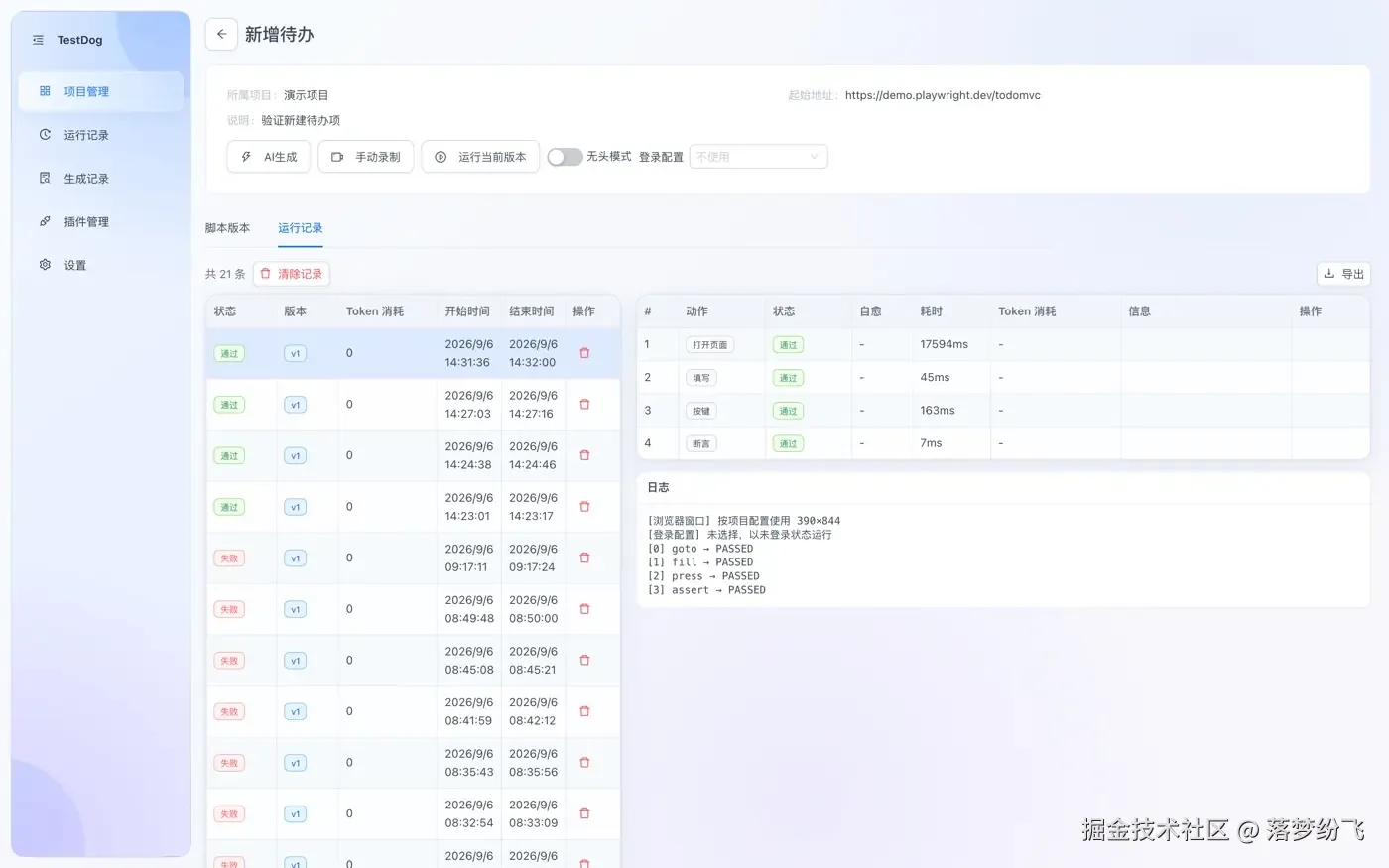
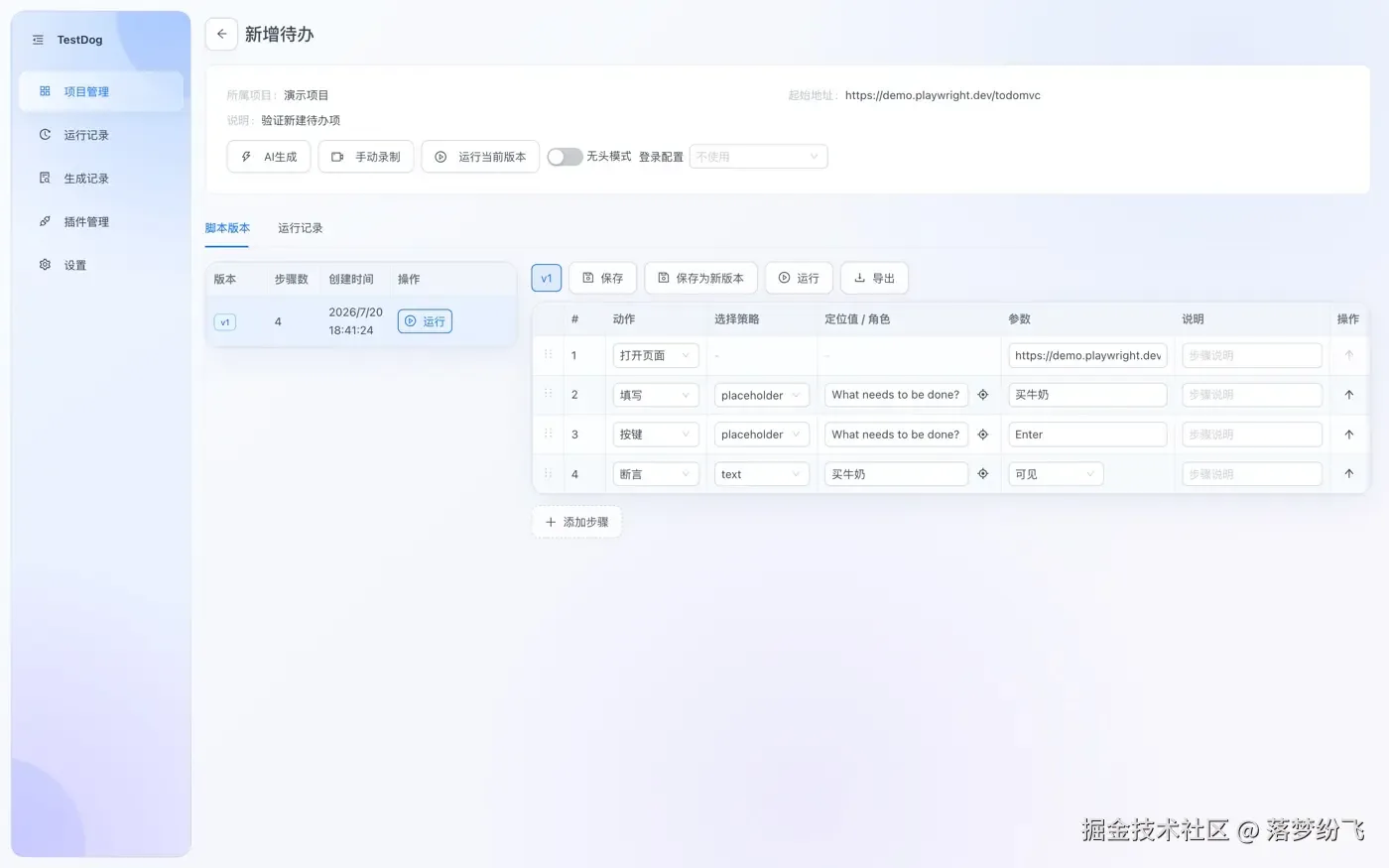
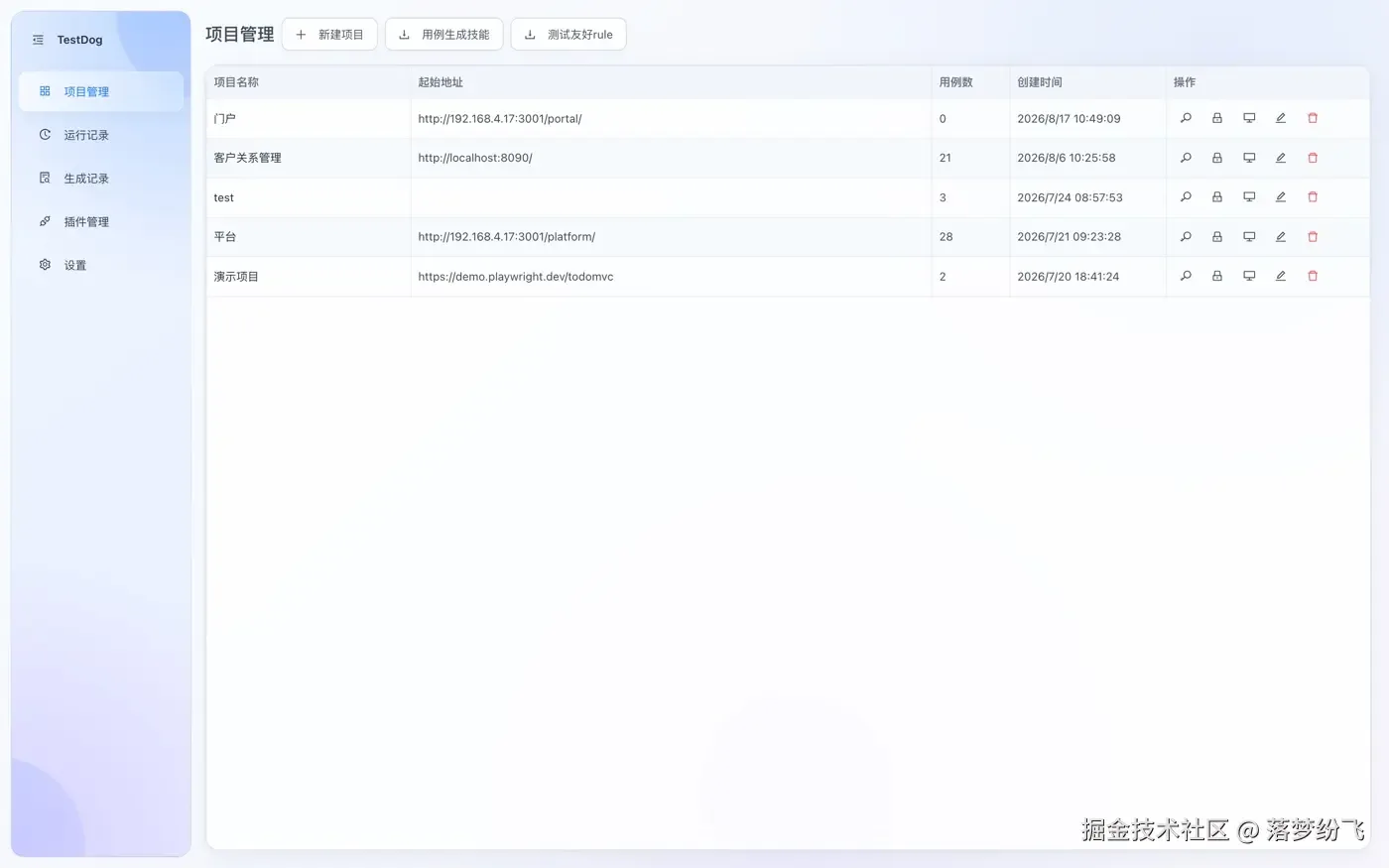
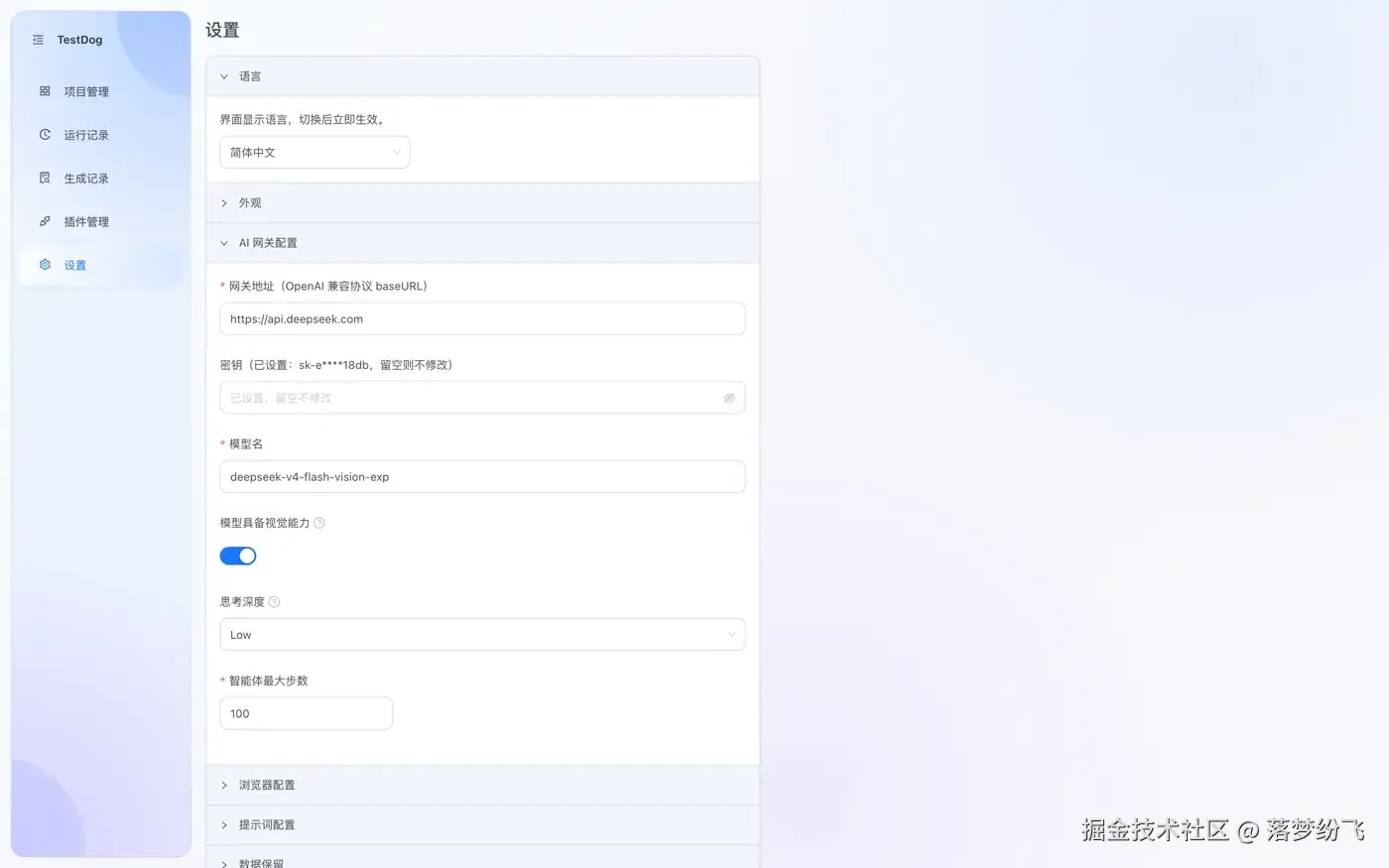
TestDog is a desktop app storing projects in local SQLite, executing via Playwright.
Key mechanics:
- Two production lines: natural language generation (after “pre-draft plan” confirmation) or manual Playwright codegen recording
- Executable scripts are editable semantic step sequences, not black-box videos
- Deterministic playback (0 token cost); model only invoked when locators fail
- Auto-saves screenshots, console, and last 20KB of network logs on failure
- Semantic action plugins for UI libraries (Ant Design, Element, Vant, MUI)
- Exportable .testcase files including uploaded assets (v2 format)
Trade-offs: No managed orchestration or parallel queues; multi-machine collaboration via file sync; model quality depends on self-managed gateway and parameters.
Three: Comparative Dimensions
| Dimension | Raw Playwright | Cypress | SaaS Recording | Local E2E (TestDog) |
|---|---|---|---|---|
| Locator source | Generated by codegen | Generated | Auto from recording | NL generation or playback parsing |
| AI involvement | None | None | Often during every run | Only for locator self-healing |
| Asset ownership | Code repo | Code repo/Cloud | Vendor cloud | Local SQLite + file |
| Requires coding | Yes | Yes | No (complex logic limited) | No (semantic steps editable) |
| Deterministic | Yes | Yes | No (model-dependent) | Yes (playback skips model) |
| Failure evidence | Self-built | Partial | Built-in | Screenshot + console + network |
Four: Practical Guidance
Adopt immediately if your bottleneck is:
- Expression power → Raw Playwright for engineering teams needing granular control
- Onboarding speed → Recording/SaaS for non-technical contributors
- Asset durability → Local tools for teams valuing determinism and data sovereignty
Wait or look elsewhere if:
- You need unit/component tests—use Vitest, Jest, or Cypress component testing instead
- You require cross-iframe or multi-tab operations—local tools typically don’t support cross-frame element targeting
- You need fully mocked APIs with synthetic data—local tools rely on real HTTP calls
- Your team refuses to maintain test anchors—without data-testid in code, locators degrade to brittle text/position selectors
Write-Up
Tool selection should begin with your bottleneck, not vendor claims. If the bottleneck is expressive power, choose raw writing; if speed of adoption, choose recording; if asset longevity and maintenance, choose solutions that embed test resilience. Every option carries costs—unspoken costs become technical debt.
The unexpected insight: “intelligent” tools that invoke models on every execution sacrifice reproducibility—the core tenet of testing. TestDog’s design flips this: deterministic playback with zero tokens, and model assistance is the exception, not the rule.