Launch Details and Key Information
ByteDance’s AI product line officially launched Doubao Work, an independent application designed for productivity scenarios, on August 26, 2026. Key details:
- Release Date: August 26, 2026
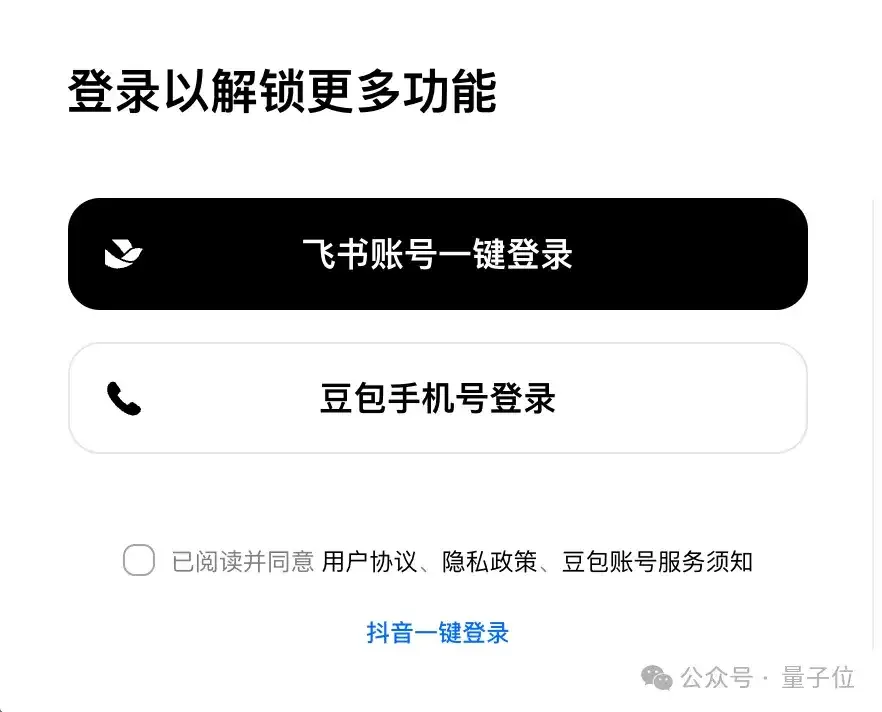
- Access Method: One-click login via Feishu enterprise accounts—no additional plugins or permission configuration required
- Free Tier: Downloading the desktop version currently grants a free 30-day subscription; existing subscribers receive a 30-day extension
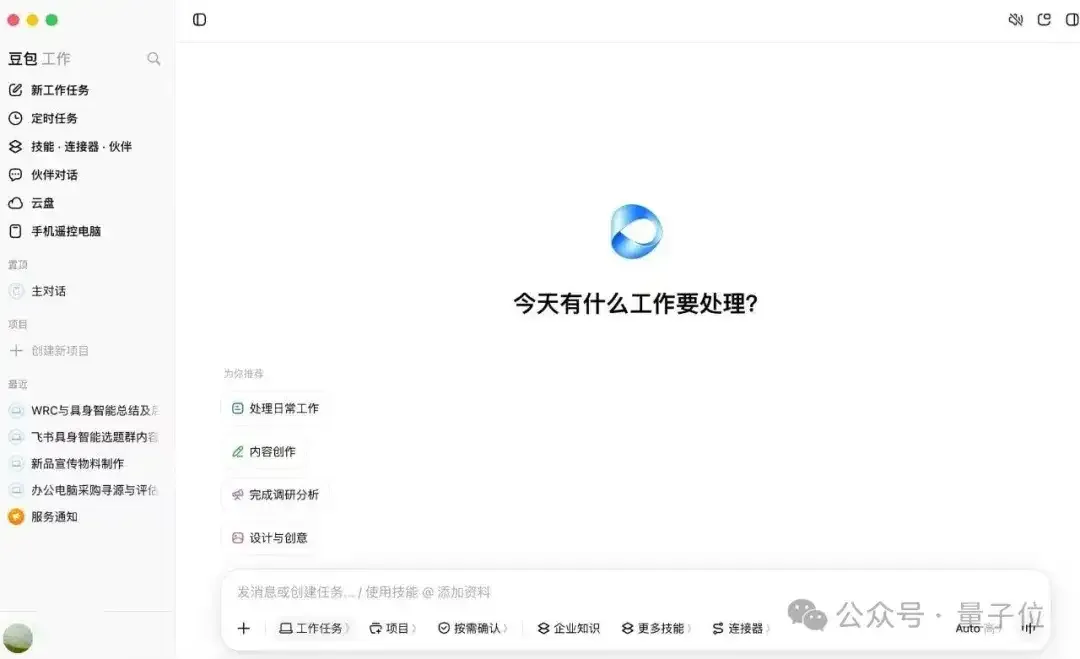
- Deployment Format: Standalone desktop application featuring a classic three-column layout (Task Management | Execution | Preview & Edit)
- Permission System: Directly inherits Feishu’s organizational identity and permission framework for native integration
- Multi-Device Support: Mobile app allows remote task assignment and review; background tasks continue running on cloud computers
This marks Doubao Work’s first explicit launch targeting enterprise office scenarios, differentiating it from the consumer-facing “Doubao” brand.
Product Capabilities and Hands-On Observations
Based on hands-on testing, Doubao Work demonstrates two categories of typical capability boundaries and breakthroughs:
Full Coverage of Basic Productivity Tasks:
- Capable of independently handling file parsing, visual content generation (images, videos, web pages), browser operations, and spreadsheet construction
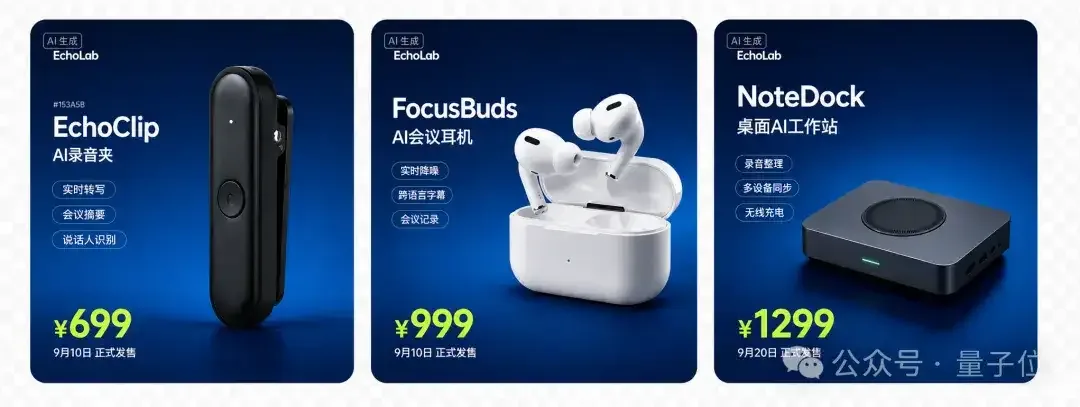
- A single task involving “three promotional images + 15-second video + interactive webpage” was completed in approximately 10 minutes, with consistent style and editable output
- In a procurement comparison scenario, the system automatically searched for suppliers, verified configurations and pricing, and generated a procurement plan with a comparison dashboard and a “Pending Quote” flag mechanism
Enterprise Context Understanding as the True Differentiator: As the basic capabilities of mainstream office agents (file processing, tool invocation, webpage generation) converge, organizational context comprehension has become the new dividing line. During testing, after the editorial team logged in with their Feishu accounts, Doubao Work directly accessed recent group chat records and cloud documents related to “embodied AI” and the “World Robot Conference,” then organized them into three categories of leads—“Key Priorities This Week,” “Ongoing Observations,” and “Observation Pool”—with responsible persons, pending verification items, and pass reasons clearly marked. The entire process required no manual uploading or background explanation.
Contrasting Data Point: Unlike OpenClaw and other CLI agents that require plugin installation and separate identity configuration, Doubao Work achieves permission synchronization simply by logging in with a Feishu enterprise account, eliminating the need for application creation, permission requests, and identity binding. This makes it one of the first products to真正实现 “zero-config context onboarding.”
Additionally, its visual browser includes basic error-tolerance mechanisms (e.g., automatically returning to the search page when a page fails to load), and it has been optimized and adapted for domestic websites and content platforms, delivering smoother operation than several international competitors.
Feishu Ecosystem Integration Advantages
As the enterprise collaboration hub, Feishu accumulates core workflow data within organizations: chat records, meeting notes, multi-dimensional spreadsheets, approval processes, and document collaboration. Once Doubao Work integrates with Feishu, three layers of synergy are enabled:
| Functional Dimension | Traditional Agent Integration | Doubao Work + Feishu |
|---|---|---|
| Identity Authentication | Requires separate app creation and permission configuration | Direct login with Feishu enterprise account |
| Permission Sync | Manual mapping of org structure and data permissions | Automatic inheritance of Feishu user permission system |
| Context Loading | Manual upload or prompt-based background supplementation | Direct access to existing group chats, documents, and spreadsheets |
Hands-on testing covered multiple scenarios:
- Project Collaboration: Extracting cross-department progress from group chats, tasks, and approvals; identifying launch risk points;
- Sales Operations: Analyzing Feishu spreadsheet data, generating visual reports, and pushing recommendations back into group chats to drive execution;
- Content Production: Leveraging multi-dimensional spreadsheets to build collaborative assets (e.g., “Embodied AI Topic Radar”), supporting continuous filtering and enrichment.
All operations are completed within the Feishu environment, avoiding data silos.
Practical Usage Recommendations
Suitable for Current Users:
- Enterprise teams that heavily rely on Feishu as their collaboration platform, especially those concerned about reducing “context reset costs” (e.g., continuous project management, cross-department collaboration, content topic tracking);
- Small to mid-sized teams with frequent needs for visual generation and webpage construction but lacking dedicated design resources.
Recommended to Observe Before Adopting:
- Organizations not integrated with Feishu that have already established complete Slack/DingTalk workflows—migration costs and agent adaptation depth need comprehensive evaluation;
- Financial and government organizations with strict compliance requirements regarding data sovereignty and third-party agent access to internal information.
Final Thoughts
The enterprise agent competition has shifted from “who works better” to “who understands the organization better.” The deep integration between Doubao Work and Feishu marks a critical step in the evolution of AI from auxiliary tool to organizational member—when agents can naturally continue existing workflows instead of starting from scratch upon onboarding, the qualitative leap in enterprise collaboration efficiency truly becomes grounded in reality.