
TL;DR: Conversations and memory can now “move”
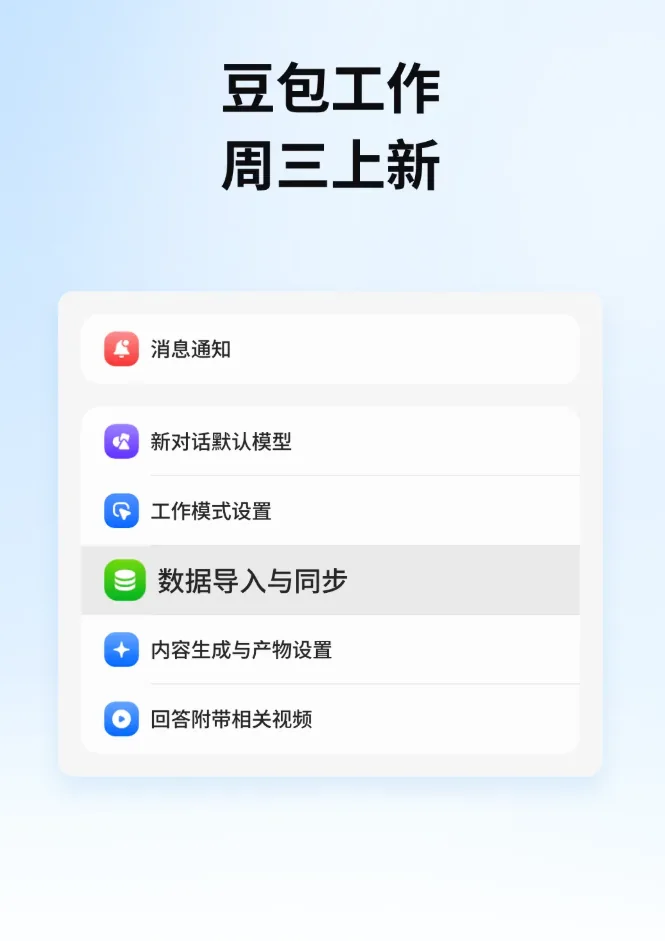
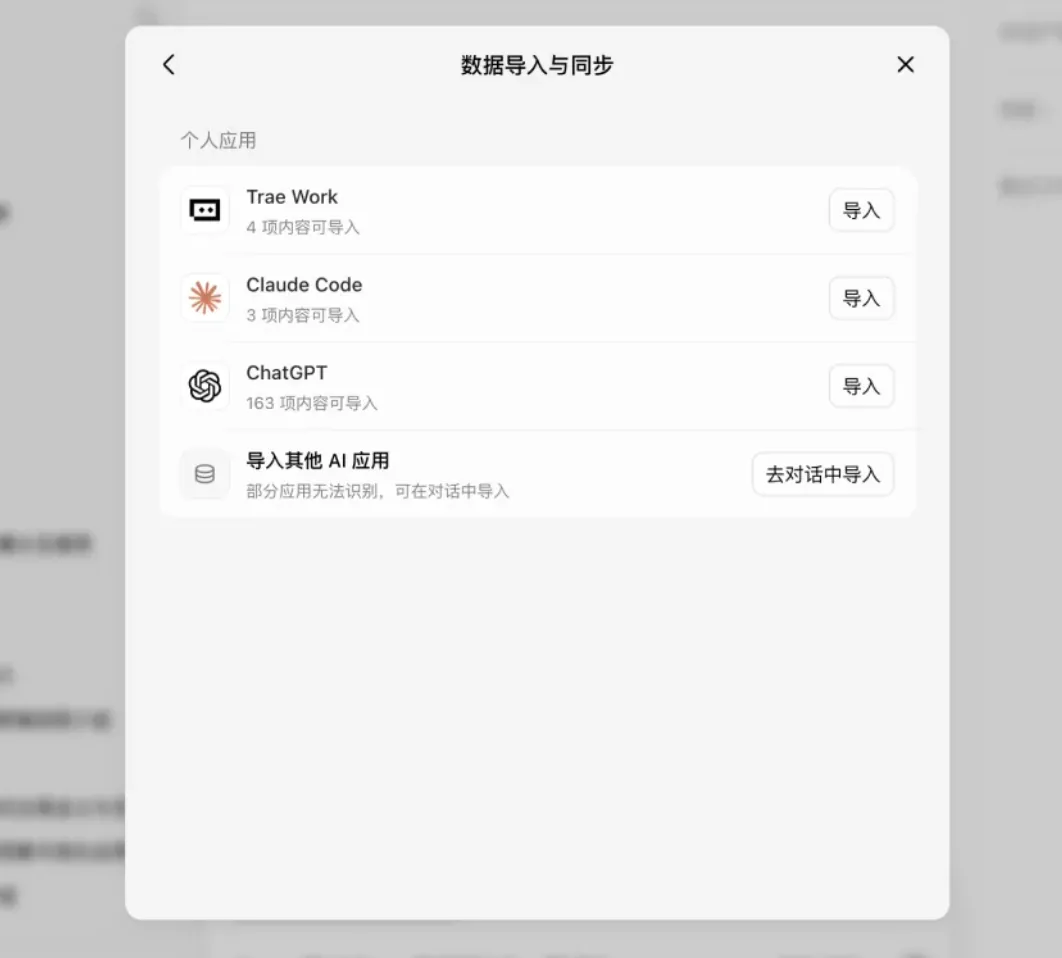
On October 14, Doubao Work announced the launch of data import and sync, allowing users to migrate conversations, skills, and memory accumulated in other AI products and keep using them. Its goal is clear: compress the cost of “switching tools” from rebuilding workflows to a single click.
Quick facts:
- Launch date: Announced October 14 (according to IT之家)
- Versions affected: The official announcement did not disclose specific version numbers or plan tiers
- Price: No pricing or fee changes were mentioned in this announcement
- Availability: It did not say whether the feature is fully rolled out or requires an application
- Migratable content: Task preference instructions, skills, connectors, working memory, projects, historical conversations
- Migration sources: ChatGPT, Claude Code, Trae Work, and other products
- Model weights: The announcement did not touch on opening model weights
More than chat history moves
If it were only about exporting chat history, this would be nothing more than a copy feature. But the migration list includes “task preference instructions,” “skills,” “connectors,” and “working memory,” which belong to the configuration layer—the part of your assets that you have spent time tuning in this tool. A quick explanation: connectors are interfaces that let AI call external tools or data; working memory is information that lets AI remember your preferences and context over the long term; skills are predefined, reusable task templates. These things are usually invisible, and once you switch tools, rebuilding them is often more laborious than a hundred more rounds of chatting.
Doubao Work’s approach is: imported content is automatically filed into the corresponding entry point or list, historical conversations retain their original context, and users can continue chatting directly within Doubao Work without having to reconfigure anything or restate the background.
Here’s a spot where it runs counter to industry convention: context and memory are usually treated by companies as moats; products generally encourage importing but rarely offer an outbound path. This announcement writes “support for migrating from ChatGPT” directly into the feature description, effectively productizing a migration path for competitors’ user assets. Another contrast is the makeup of the source list: ChatGPT is a general assistant, while Claude Code and Trae Work lean more toward coding and agent tasks. General conversation tools and programming tools are put on the same migration list, which suggests it is targeting not just chat users, but people who want to move their entire workflow configuration over.
Also worth noting: the announcement only describes “import.” The full text never mentions exporting Doubao Work data back out to other platforms. Letting data in without promising a way out is a common one-way design for migration features like this.
Sync improvements target the pain points of long conversations
Beyond import, this update also changes two parts of the experience:
- Continue in a new conversation: Select this option on the relevant message, and the existing context is automatically carried into the new conversation, while the original conversation is kept for easy reference. It solves the dilemma of long conversations getting messier the longer they go, while starting a new conversation means restating the background all over again.
- Message annotations and conversation summary sidebar: Aimed at work scenarios, improving information management and retrieval efficiency.
Neither change is big, but both point to the same problem: once a conversation carries enough context, it is no longer “chatting”—it is work material that needs to be managed.
Who should act now, and who can wait
- People who should try it now: Those who already switch back and forth among multiple AI tools and repeatedly lose time to “restating the background.” Especially users with substantial accumulated preference instructions and connector configurations, for whom the migration payoff is clearest.
- People advised to wait: Team users with requirements around data location, permissions, and compliance. The announcement does not explain how imported data is stored, whether the enterprise version supports it as well, or what the permission boundaries are after migration; teams that need audits or internal processes should wait for more complete documentation first. In addition, those who have already built working processes around a certain ecosystem’s connectors and automations should verify, one by one, whether the connectors work equivalently after migration, rather than assuming that “imported” means “usable.”
Final thoughts
Context and memory are replacing model parameters as the real hook for user retention. By compressing migration costs to a single click, Doubao Work is essentially betting that what keeps users is not the model, but the part that is remembered. But migration only solves “getting in.” Whether it can retain users still depends on whether these memories are truly handy in everyday work.