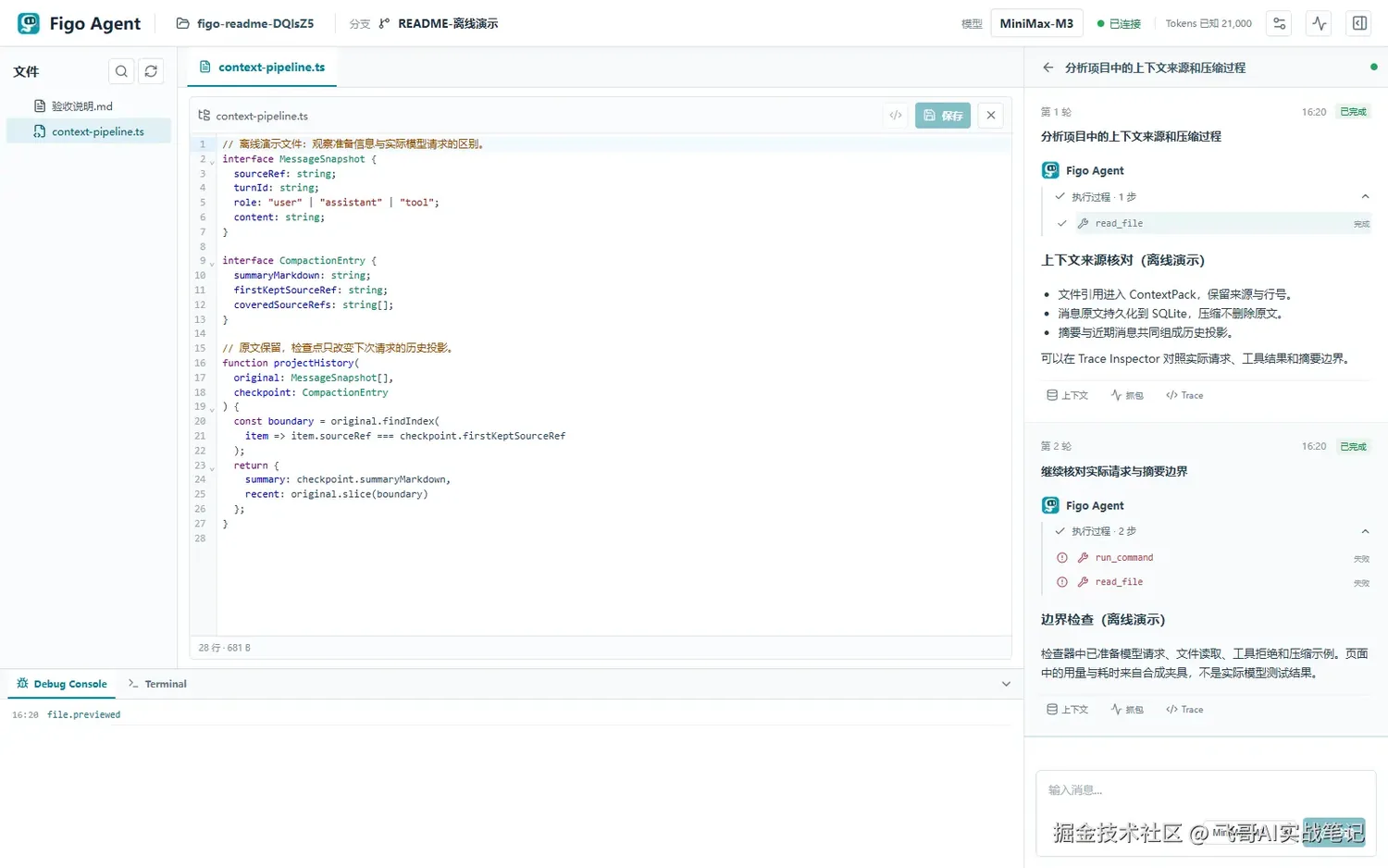
A developer’s self-account published in the Juejin developer community shows: the author built a local agent called Figo Agent from scratch with Codex. The problem it aims to solve isn’t “can it get work done,” but “can you see and verify how the work gets done.”
Because the full text of the submission is empty, the only confirmable information comes from the title and summary, so hard facts can only be treated as “not disclosed”:
- Release time: No launch or release date is given
- Version number and price: Neither is mentioned; no pricing plan is described
- When it will be available: No download link or installation method is given, nor is it stated whether you need to provide your own model API
- Whether weights and code are open: No open-source license or code repository URL is mentioned
- Positioning: The summary says it is “a local agent you can control”
In other words, what can be confirmed at this point is the product name (Figo Agent), how it was built (from scratch with Codex), and the goal it aims to achieve; Codex is usually used to refer to coding-agent-style tools, but the original text does not specify which product form or version it is.
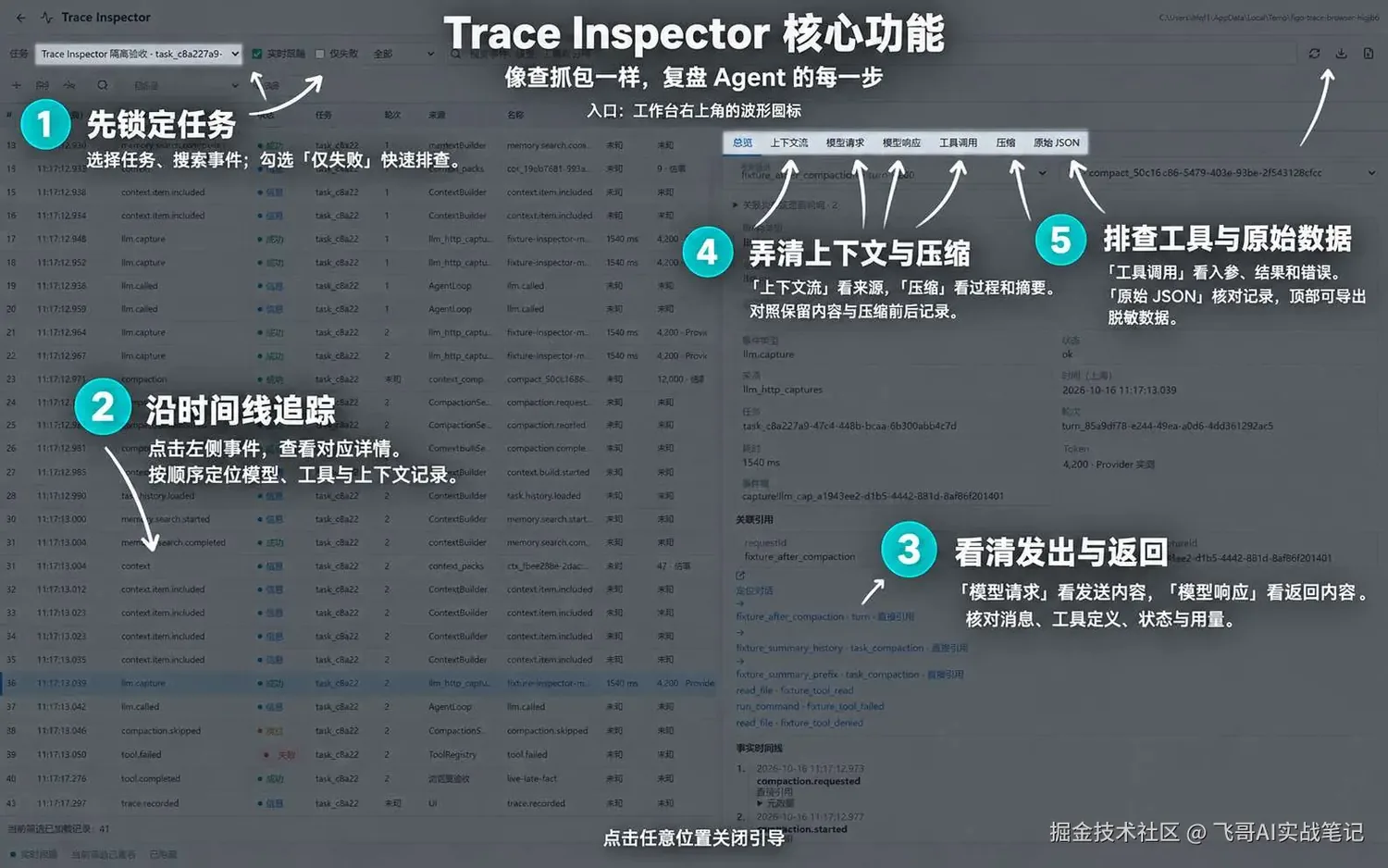
The four things he focused on are exactly the black box of most Agents

The summary lists four questions the author had when building this, and they effectively define the feature direction of Figo Agent:
- What material did it actually read? — Which files or snippets were actually fed to the model before it answered, not which ones you think it read;
- Did the tools actually execute? — Tool calls can be understood as “letting the model request a piece of code to do work” (reading files, running commands, querying APIs, etc.). This is a key difference between an Agent and a chatbot, but whether a call actually happened and what it returned are often invisible;
- How many times was the model called for one question? — A seemingly simple question may trigger multiple rounds of model calls behind the scenes, and the count directly affects wait time and cost;
- After the conversation grows longer, what is still left in the context? — Context refers to the entire text window the model can see in each round. The window is limited, and anything beyond it gets trimmed or compressed, while what was trimmed is often unknown.
Put these four points together, and they point to the same word: observability, meaning “the degree to which a system can be externally observed and troubleshot while running.”
There is a notable contrast here: the metrics above — especially a granularity like “how many times the model was called for one question” — usually appear only on the platform side or in enterprise monitoring tools. They are data that service providers collect to troubleshoot failures and calculate costs. But in this article, it is the first demand raised by an individual developer building an Agent from scratch. Most Agent projects first solve “can it get things done”; this project first solves “can you see how it gets things done.” Different order, different product shape.
There is also an implicit trade-off: running locally means data and execution stay on your own machine, giving you more control, but model capability, tool ecosystem, and maintenance costs are yours to bear. The original text does not elaborate on this, so it can only be seen as an inherent cost of this positioning.
Who should take note, and who should wait
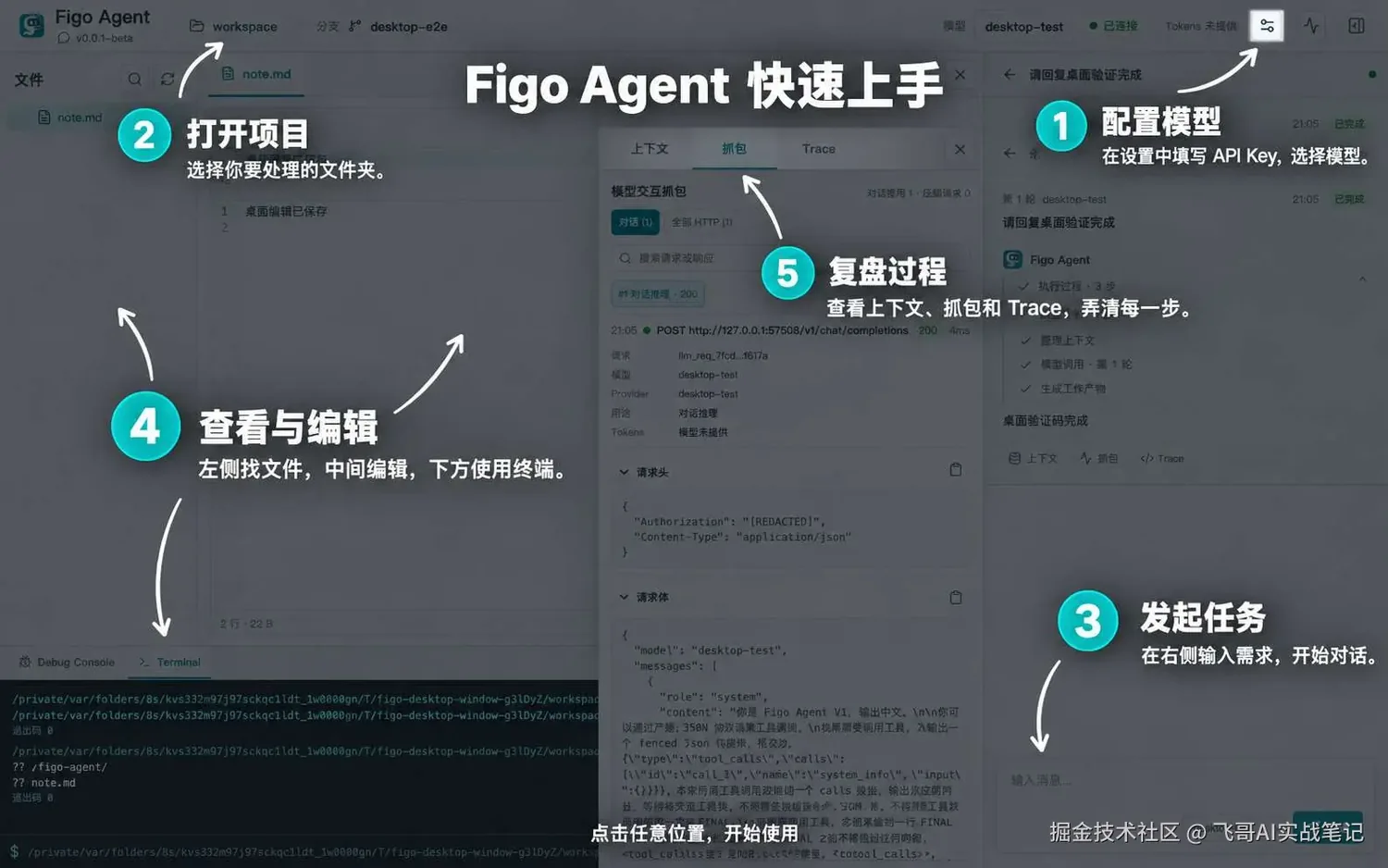
People who may find it useful: If you are writing your own Agent loop, or have been tormented by “what did it actually do,” the ideas in this self-account are directly worth borrowing — turn context snapshots, tool-call records, and model-call counts into readable logs or panels, and debugging costs will drop noticeably. This approach is not tied to a specific model or framework; it is a general engineering technique.
People who should wait: If what you want is an out-of-the-box product, it is too early to judge now. With no version number, no release date, no installation method, and no open-source information, there is no way to assess its model integration scope, breadth of tool support, or maintenance activity. It will be safer to look again after the author adds a repository URL or a trial entry point.
Final thoughts
An Agent’s capability ceiling is determined by the model, but whether an Agent can be trusted is often determined by whether its process is inspectable. The fact that an individual developer puts observability first on the feature list shows that this kind of need has long been obscured by insufficient productization. As for whether Figo Agent can deliver, that can only be discussed after it is actually installable and runnable.