
Local Deployment Solution for DeepSeek Harness
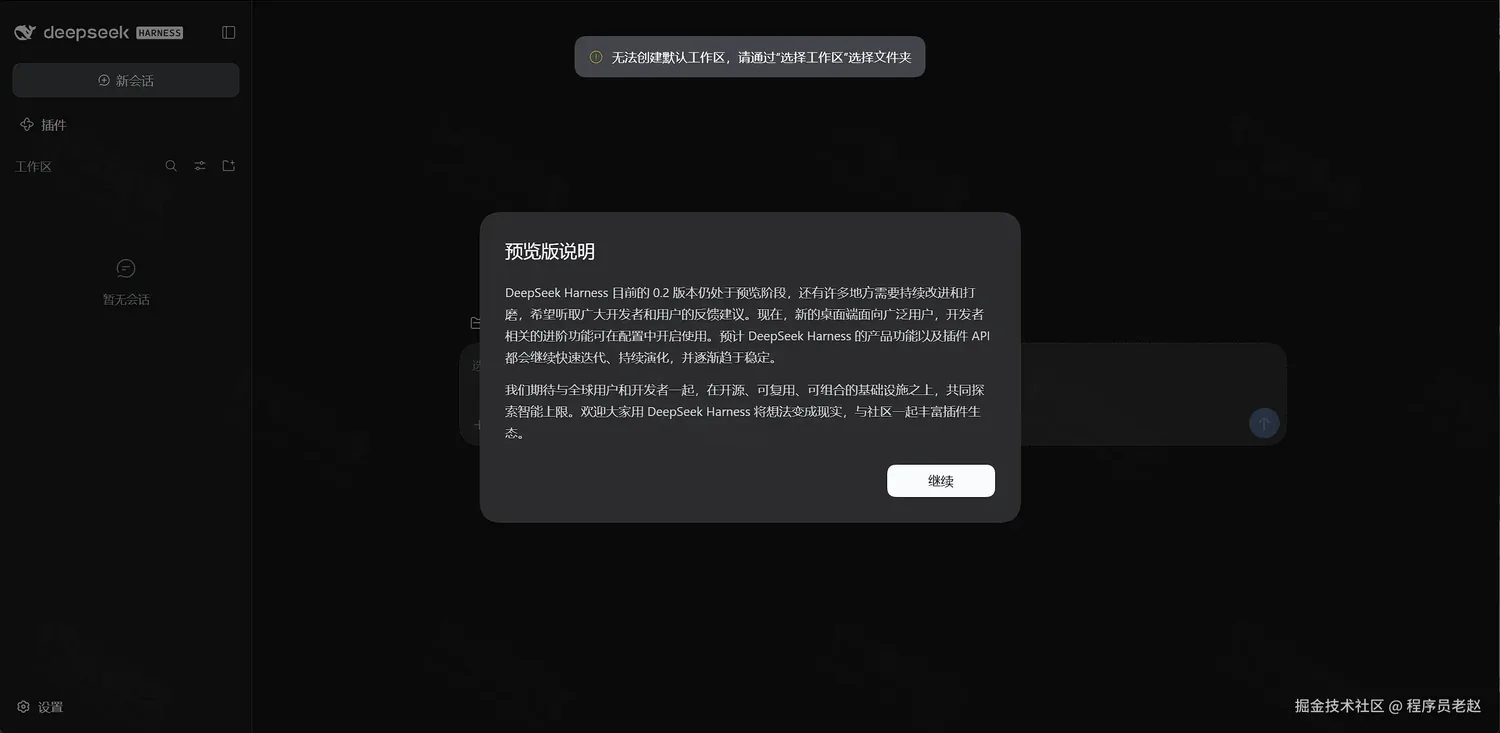
DeepSeek Harness (DSH), an official ecosystem project from DeepSeek, can be deployed as a Docker container via the community image smanx/deepseek-harness. The current version is based on 0.2.0-rc.2 (the latest release line as of October 2026) and supports mainstream Linux distributions such as Ubuntu 24.04. This solution is purpose-built for secure use within a local area network, with the core goal of enabling enterprises or home users to run AI Agent functionality locally without exposing API keys to the public internet.
Key facts at a glance:
- Release date and version: The community image is based on DSH 0.2.0-rc.2, which is currently a release candidate (no stable release yet)
- Deployment method: Docker Compose or
docker runsingle container, using named volumes for persistent configuration and sessions - Key limitation overcome: The image includes a built-in reverse proxy that resolves the
crypto.randomUUIDfailure caused by insecure contexts when accessing the LAN IP via browser - Port configuration: The DSH main process inside the container listens on 127.0.0.1:3079, while the proxy exposes 0.0.0.0:3080
- Storage architecture: Configuration and session data are written to the /root/.dsh named volume, surviving container rebuilds
Technical Implementation and Key Design
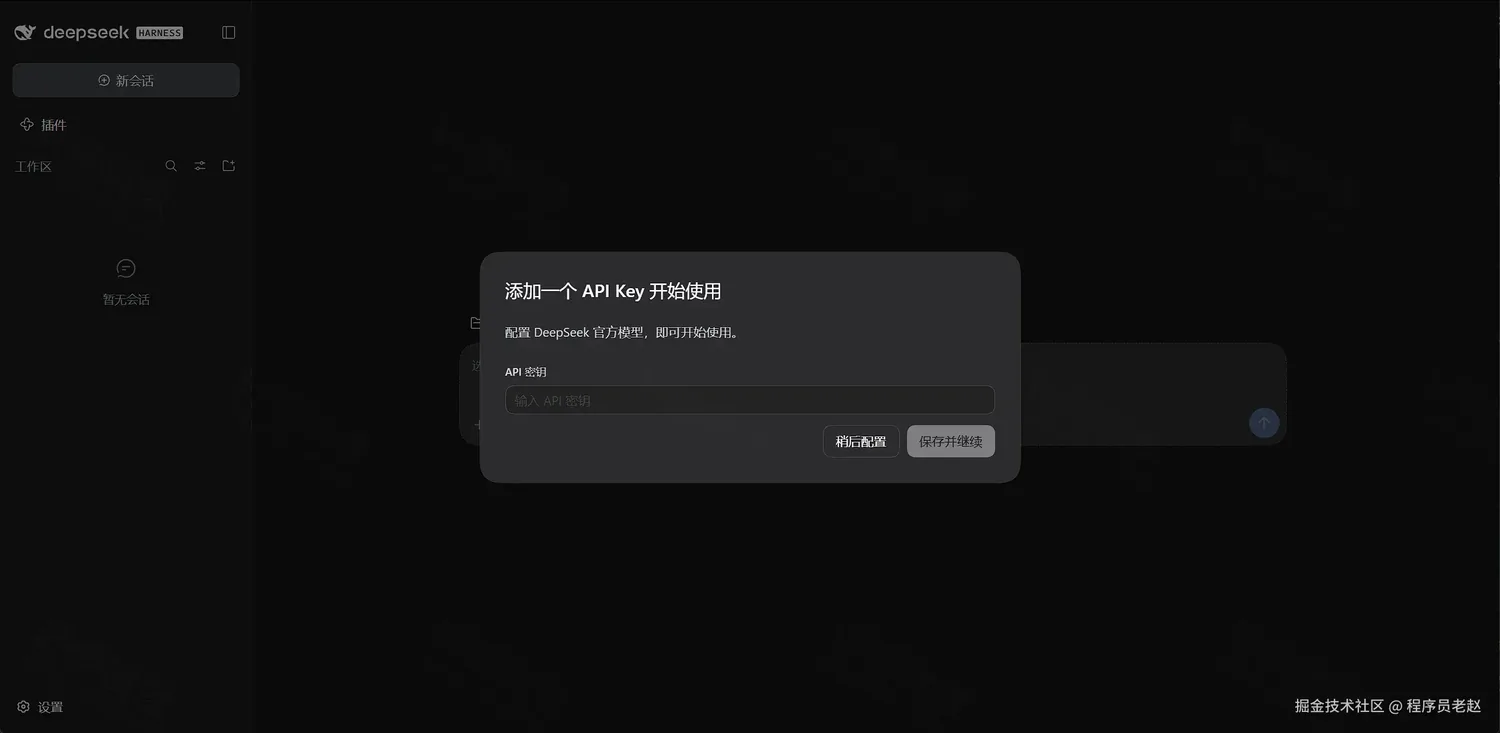
The solution adopts a layered architecture of “core application + reverse proxy.” The DeepSeek Harness main program listens directly on 127.0.0.1:3079 (the official build does not expose --host 0.0.0.0), while the proxy layer listens on 0.0.0.0:3080 to serve external requests. The clever part is that the proxy fills in the crypto.randomUUID call that browsers lack in non-localhost environments, and automatically replaces the ?token= parameter in URLs with a Cookie-based session, allowing LAN users to simply enter http://[server-IP]:3080 without manually handling tokens or WebSocket paths (/api/events.mux and others are forwarded by the proxy).
The community image smanx/deepseek-harness is built on top of Node.js 24. The slim 0.2.0-rc.2 variant does not bundle pnpm or uv, making it suitable for browser session scenarios; if you need dsh plugin or uvx to launch MCP, you’ll want to switch to the devtools-min or admin variant. The admin version additionally mounts a /opt/dsh volume to support web-based DSH version switching, ideal for dynamic testing scenarios.
| Image Tag | Includes pnpm/uv | Web-based Version Management | Use Case |
|---|---|---|---|
| 0.2.0-rc.2 (slim) | No | No | Browser sessions only, lightweight runtime |
| admin-0.2.0-rc.2 | Yes | Yes | Multi-version testing, plugin marketplace dependencies |
On the security side, if there’s a risk of unauthorized access within the same network segment, you can enable Basic Auth by setting PROXY_USERNAME and PROXY_PASSWORD (both are required). Additionally, the image contains no model weights whatsoever — API keys remain entirely under the user’s control.
Implementation Recommendations and Limitations
Who it’s for:
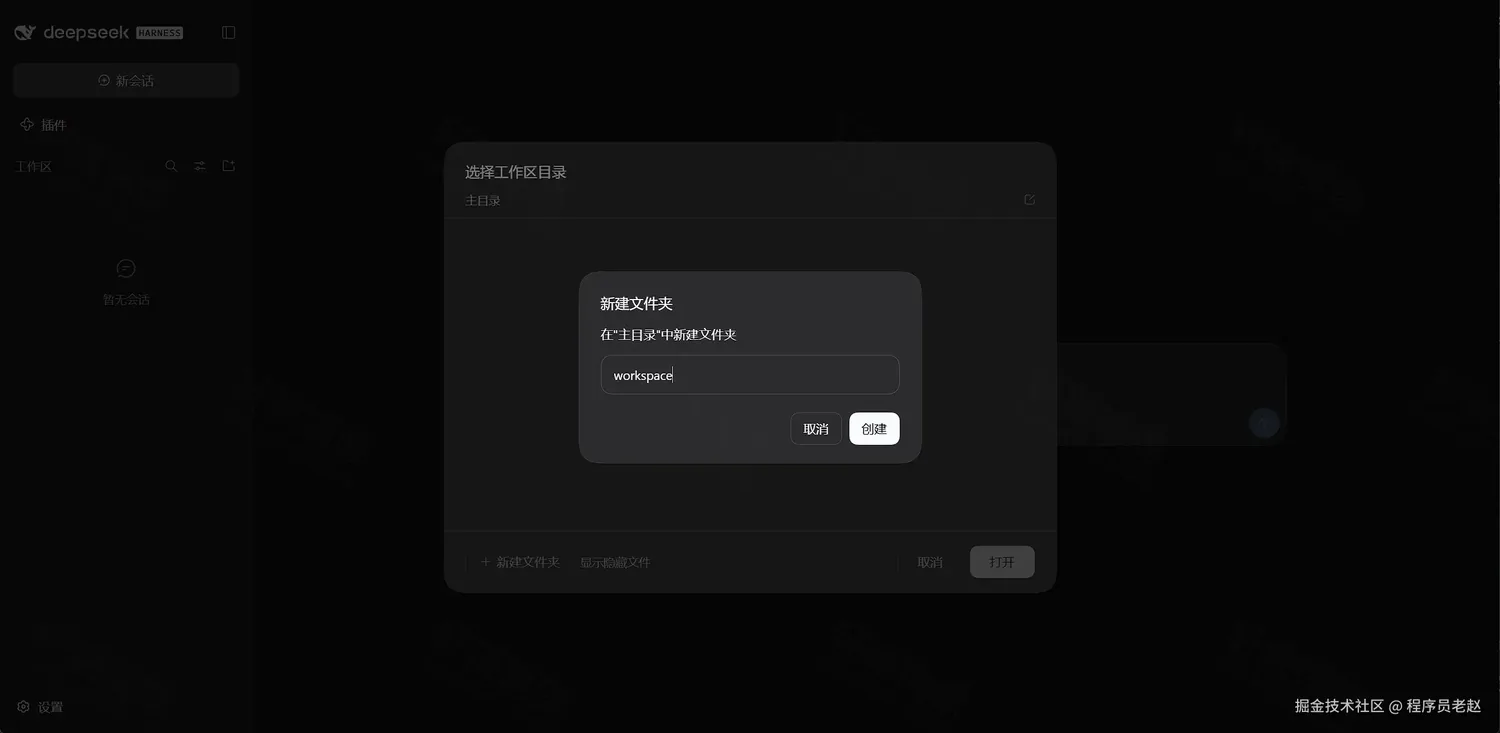
- Development teams that need to process code locally and privately (mount a workspace to a host directory so the Agent can read and write project files)
- Home users or small-to-medium organizations looking to run an Agent within their intranet (only one proxy port is exposed, avoiding direct exposure of the DSH process)
- Privacy-sensitive scenarios where API keys must never leave the local machine
When to hold off:
- If you frequently use the plugin marketplace or MCP tools: The slim version lacks pnpm/uv, so consider whether you need to upgrade to the devtools-min branch
- If you need public internet exposure: The current solution has no built-in HTTPS or certificate management; public deployment requires a front-end Nginx reverse proxy
- For MacOS desktop-only users: If it’s just personal temporary testing, running
dsh webdirectly via the official CLI is simpler (though it cannot bypass the LAN access limitation)
Summary
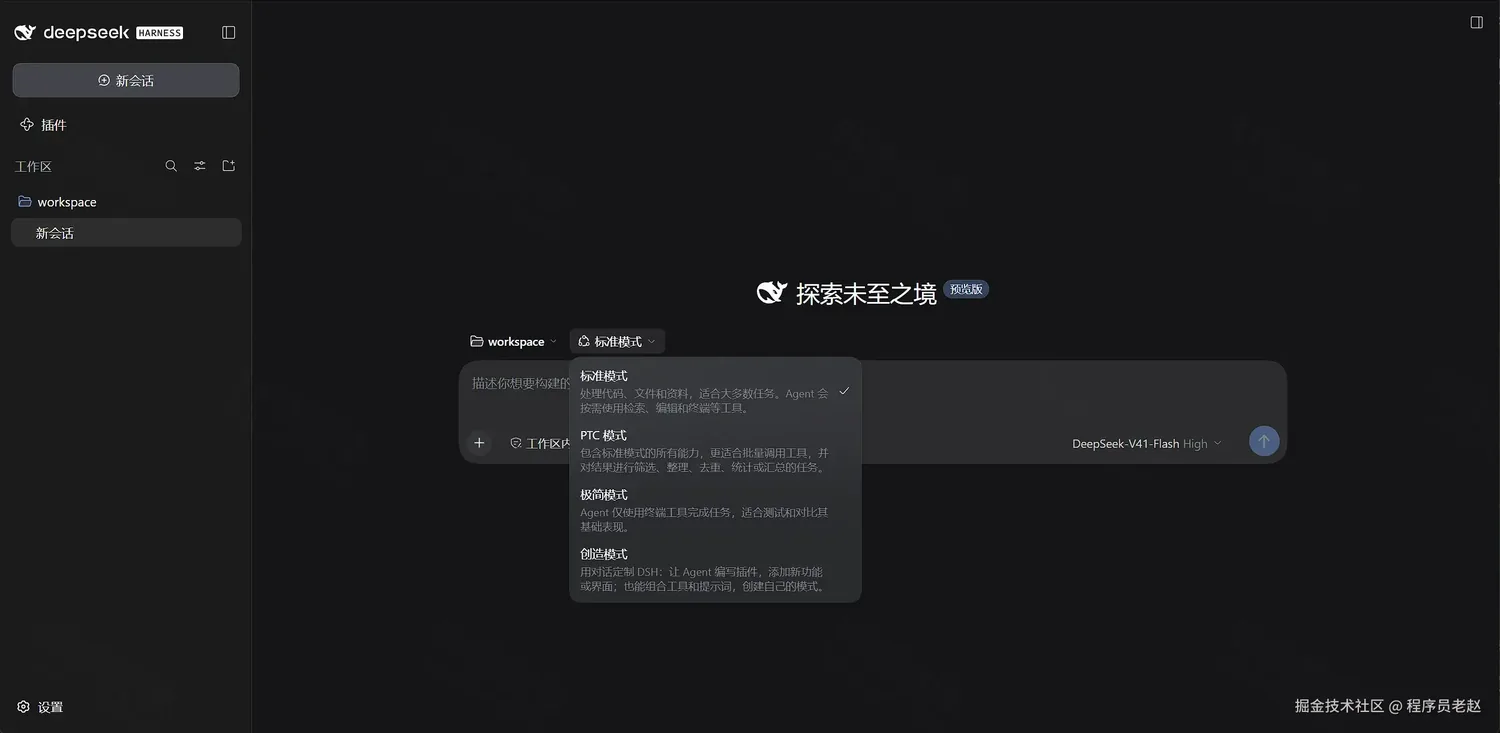
A containerized image for DeepSeek Harness has not yet been officially released. The community solution effectively completes the final piece of the local deployment puzzle while preserving the integrity of core functionality. Its layered proxy design demonstrates that without modifying upstream code, third-party solutions can address API compatibility and secure context limitations by injecting a middleware layer — an approach that could well be transferred to the local deployment of other similar Web Agent products.