
Key Highlights
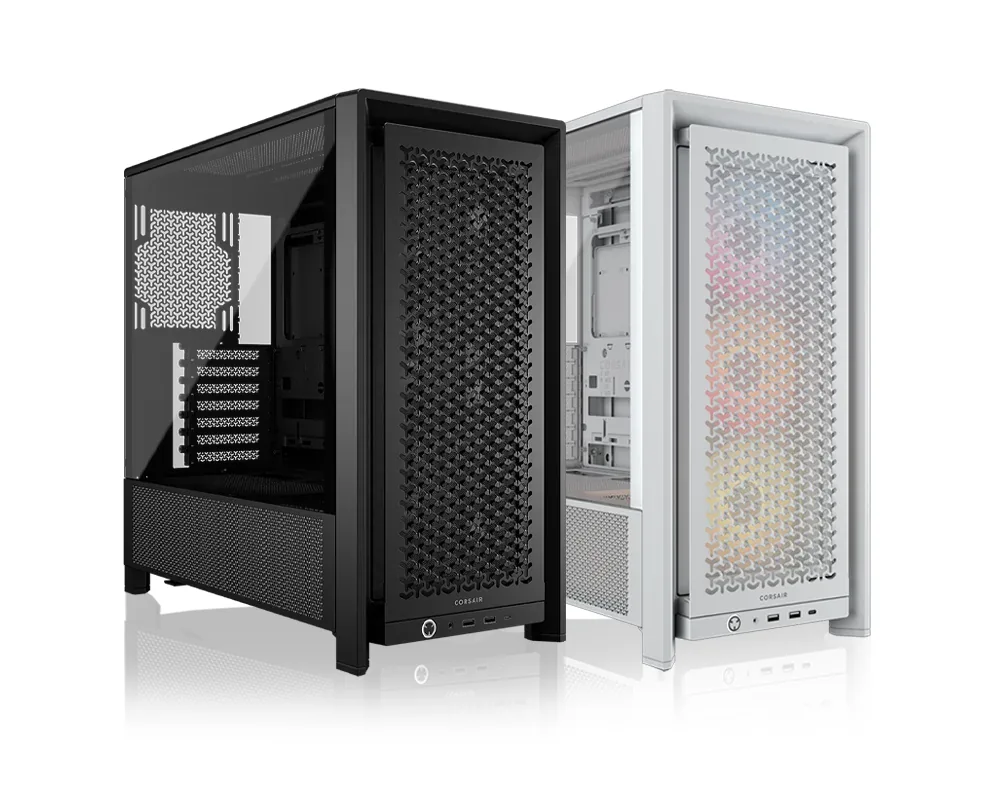
CORSAIR has officially launched the WARTHOG mid-tower case at CES 2025, built on its newly introduced FRAME 4000D modular platform. As the first product under this series, WARTHOG carries forward the legacy of the 2012 Vengeance C70 “Ammunition Box” case, with its name honoring the A-10 “Warthog” attack aircraft. It emphasizes military-inspired aesthetics alongside true modularity.
- Launch Timing: CES 2025 (January 2025)
- Platform: FRAME 4000D mid-tower chassis
- Core Features: Backplane motherboard support, swappable front panels/looms, integrated handle, fighter-style toggle switches
- Pricing Range: $94.99 – $109.99
- Availability Versions: Base, 3×PWM fan, 3×ARGB fan variants
Platform Architecture and Design Details
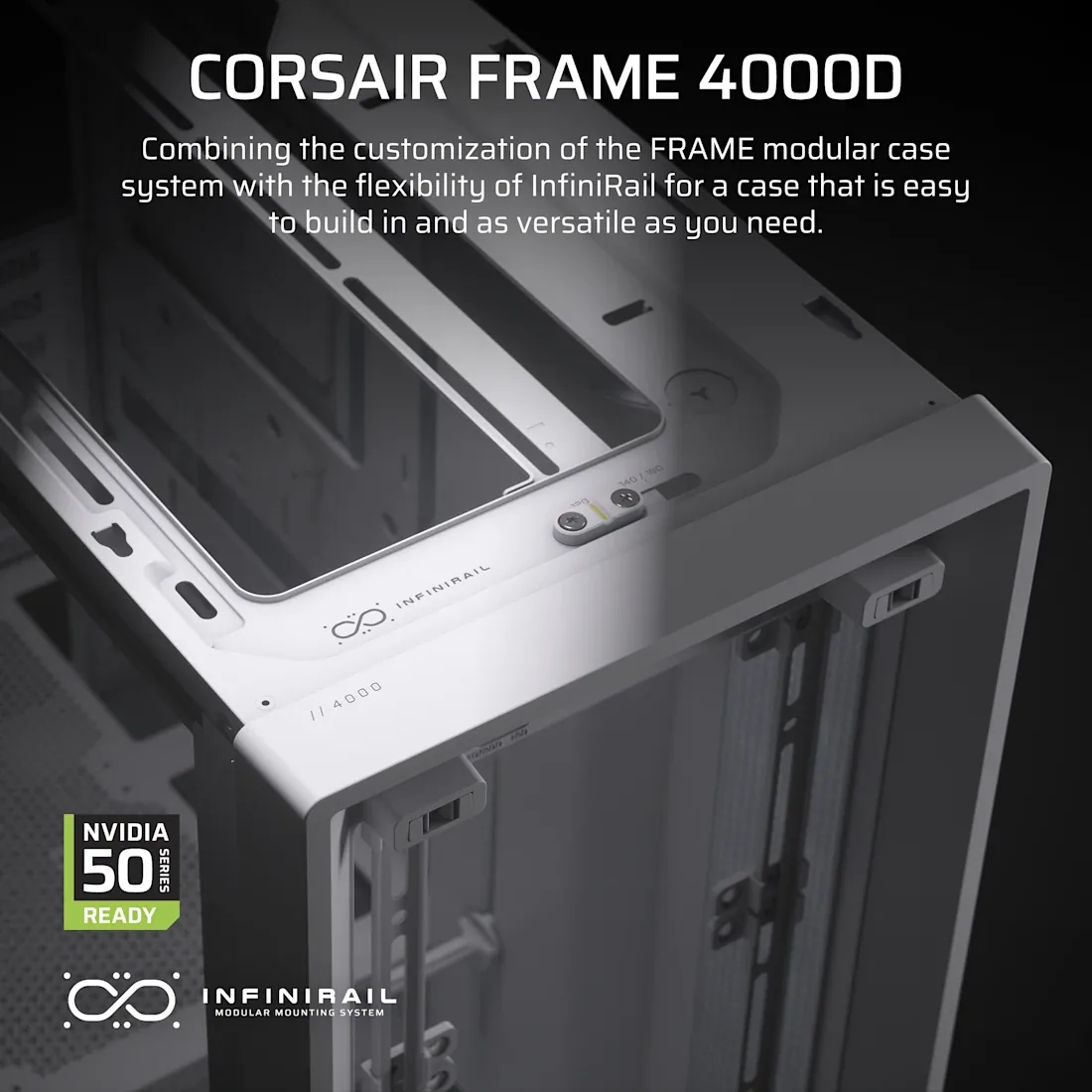
The FRAME 4000D—the foundation of WARTHOG—measures 487×239×489 mm (W×H×D), offering ~56.6 L of volume. It supports E-ATX motherboards up to 305×277 mm and fully accommodates backplane installation, a departure from standard Front I/O + ATX mounting conventions.
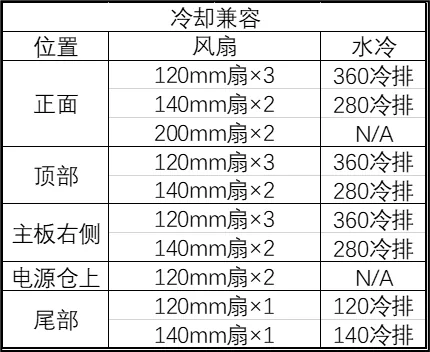
Structurally, the chassis employs heavy-gauge steel with an integrated handle directly affixed to the frame for easier transport. The InfiniRail modular rail system appears on both front and top panels, enabling flexible fan mounting across varied sizes. A dedicated bracket is also included for right-side fan installation.
Thermal capacity enables up to 170 mm CPU coolers, 370 mm graphics cards (with four-slot vertical mounting), and 220 mm PSUs. An unexpected data point: though classified as a mid-tower, its GPU compatibility (370 mm) nearly matches many full-tower standards (~400 mm)—demonstrating efficient internal space optimization.
Storage flexibility includes two 3.5/2.5-inch hybrid bays and two dedicated 2.5-inch mounts. A compact GPU sag support bracket is included but notably incompatible with right-side fans and E-ATX boards—users must prioritize cooling over structural support in compact configurations.
User-Centric Modifications and Modularity
FRAME 4000D introduces several quality-of-life enhancements for enthusiasts:
- Removable dust filters at front panel, PSU shroud, and right fan area;
- Perforated steel mesh front panel with 3D “Y”-shaped cutouts—balancing visual aggression with airflow performance;
- Cable management cover on motherboard side (shares space with fan brackets);
- Pre-installed PSU mounting screws to accelerate build-time;
- Two optional PSU shroud panels: quarter-hole mesh for airflow or semi-transparent for visibility;
- CORSAIR plans to publish 3D printing files enabling extensive community-driven customization.
Model Comparison
| Configuration | Price (USD) | Approx. CNY | Included Fans |
|---|---|---|---|
| Base Model | $94.99 | ~$97 | None |
| Upgrade Kit | $99.99 | ~$101 | 3× RS120 PWM (non-addressable) |
| Premium Kit | $109.99 | ~$111 | 3× RS120 ARGB PWM (addressable) |
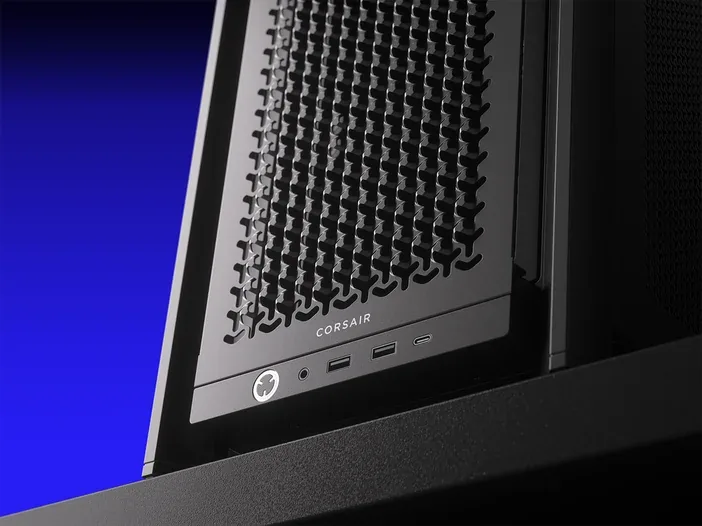
Front I/O hosts two USB-A 5Gbps ports, one USB-C 10Gbps, and a combined audio jack. Back-panel I/O integrates lighting controls, while physical switches emulate aircraft-style metal guard towers for tactile durability.
Target Audience and Buying Guidance
- Ideal For: Mod-focused enthusiasts who value future-proof expansion, military-themed aesthetics, and E-ATX support; creators needing expanded PCIe slots (7 total) and cable accommodation;
- Consider Delaying: If you intend to use E-ATX boards plus right-side fans plus the GPU bracket—for those combinations, real-world space conflicts may require review validation;
- Compare With: NZXT H-series or Fractal Design Define 7 XL for competing modularity narratives.
Final Thoughts
By bringing FRAME’s modular framework to a mainstream mid-tower form factor, CORSAIR signals a strategic pivot—from raw component specs toward repairability, upgradeability, and ecosystem longevity. When chassis design evolves from sealed enclosure to plug-and-play platform, the PC’s open heritage regains relevance in assembled worlds.