
Key Event: Opus 5.5’s Video Generation Capability Goes Live
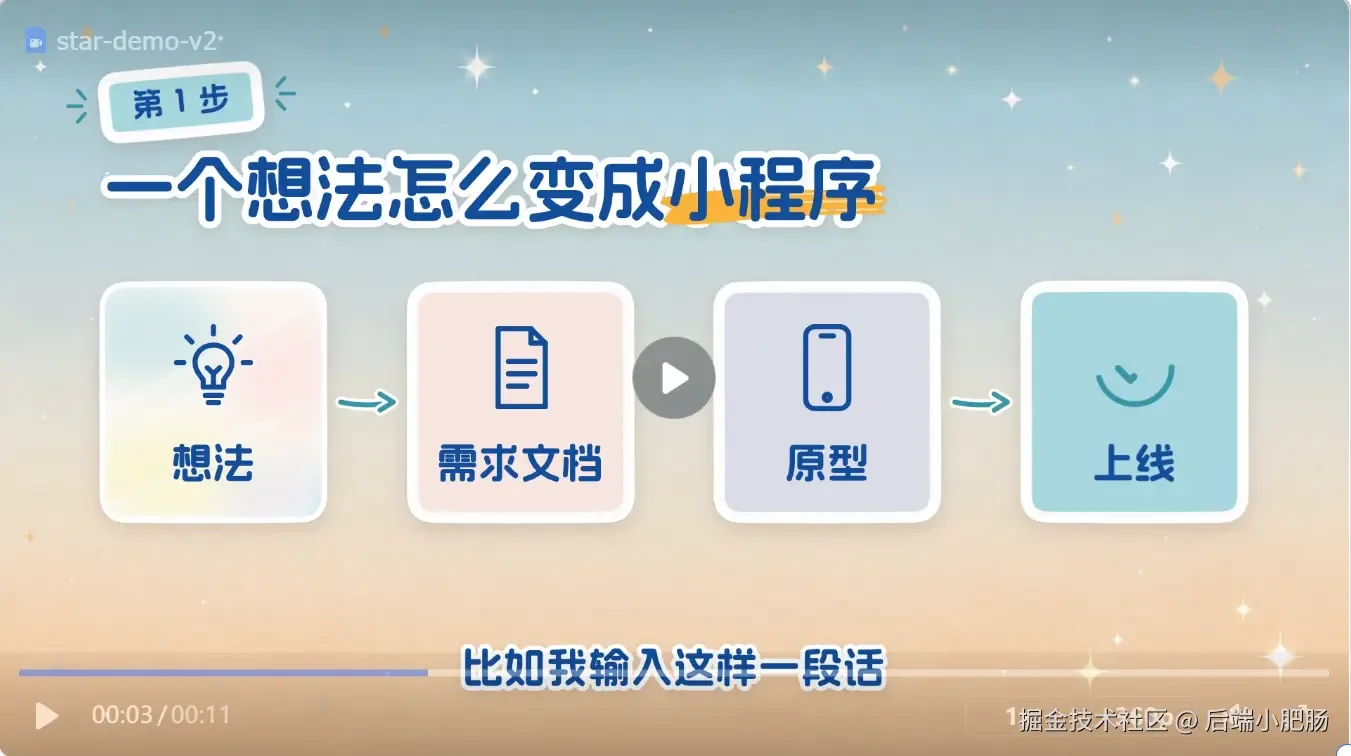
The technical creator 小肥肠 recently completed validation for multiple UGC video production workflows using Claude Opus 5.5, demonstrating that LLM-driven video automation has moved from prototype to production-ready. The approach does not rely on traditional editing software; instead, it uses prompts to drive code generation and rendering, offering a new path for knowledge creators.
- Model version: Claude Opus 5.5 (.current)
- Core mode: Director Skill for storyboard design + Theme Template Skill for animation generation
- Use cases: knowledge popularization and IP lead-generation scenarios involving image/text-to-video conversion
- Progress: End-to-end pipeline is working; plans to package it into a desktop product within the year
- Current constraint: Token cost per video remains high, so monetization has not been launched yet
Technical Path Analysis: A Code-Generation-Driven Video Pipeline
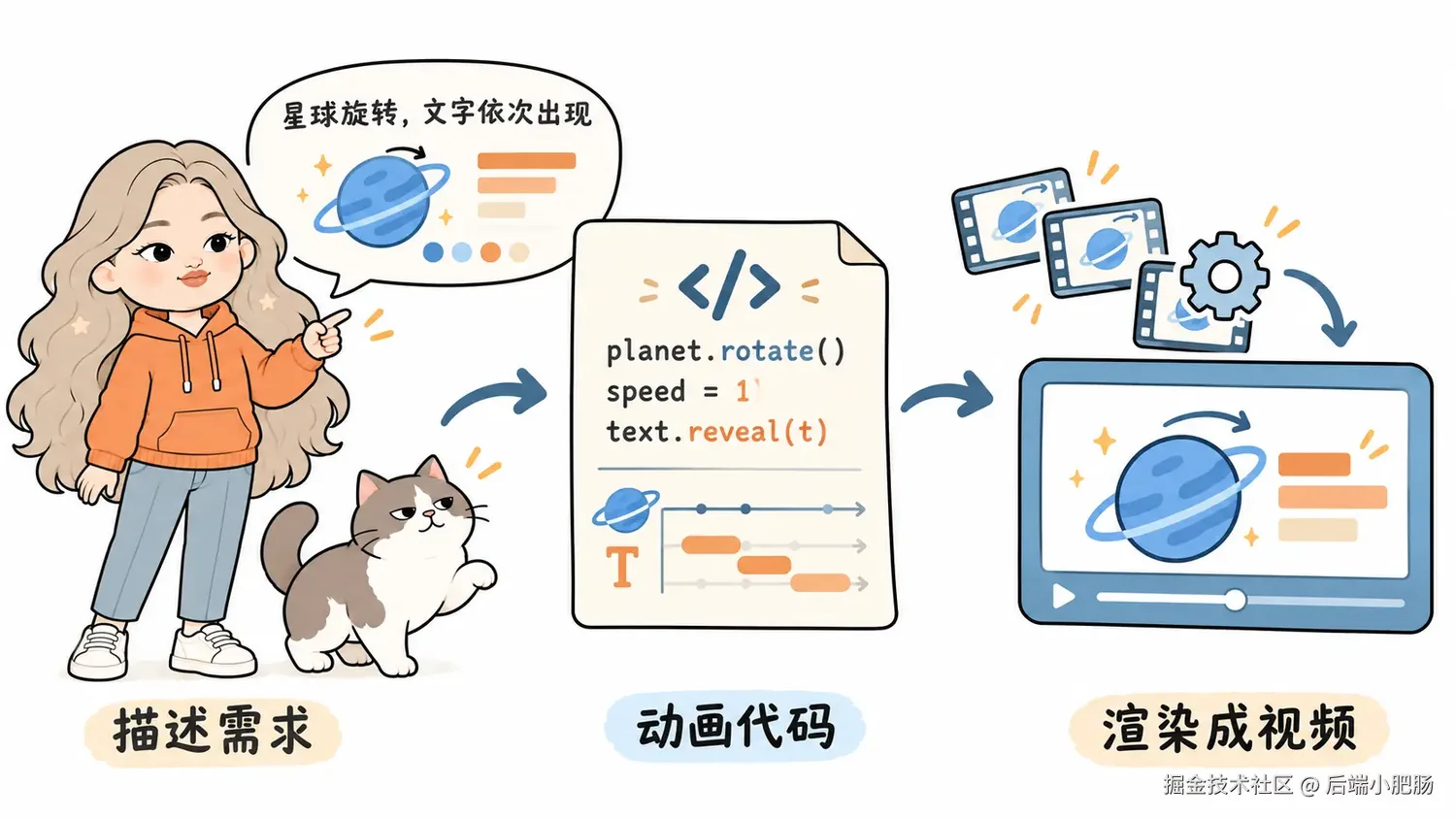
Opus 5.5 creates video by having the model write animation script code, which a rendering tool then executes to compute successive frames. Users only need to input a voiceover script, specify an art style and animation logic (e.g., a rotating planet, text appearing line by line), and the model outputs complete code containing object properties, motion curves, and timeline controls.
The technical implementation follows a layered strategy:
- Director Skill stage: Generates an animated storyboard script from the user’s voiceover script, defining the visual elements and transition logic for each shot.
- Template Skill stage: Loads preset theme styles (e.g., stars, violet, planetary science) and feeds the storyboard and color specifications to the model to generate animation code in the corresponding style.
- Rendering and compositing stage: The rendering engine executes the animation code to output a video sequence, later supplemented with voiceover and background music.
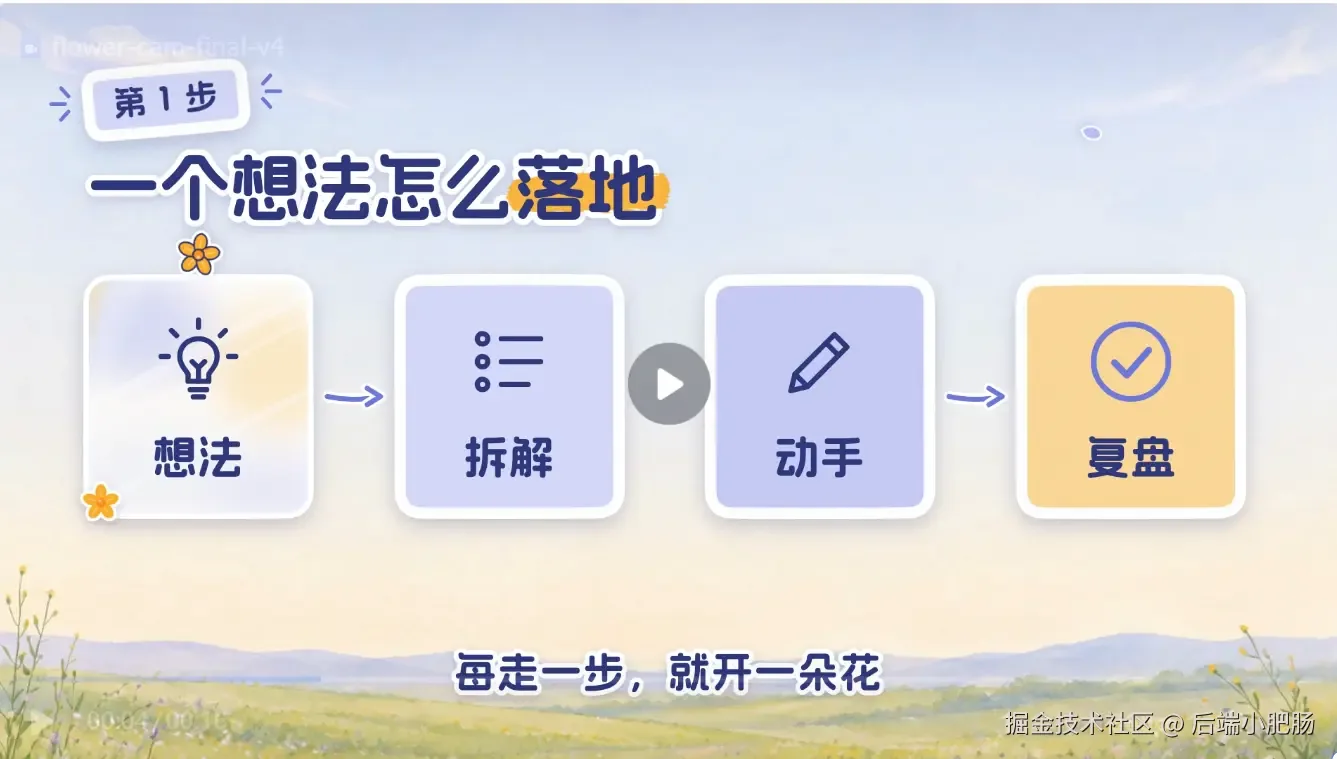
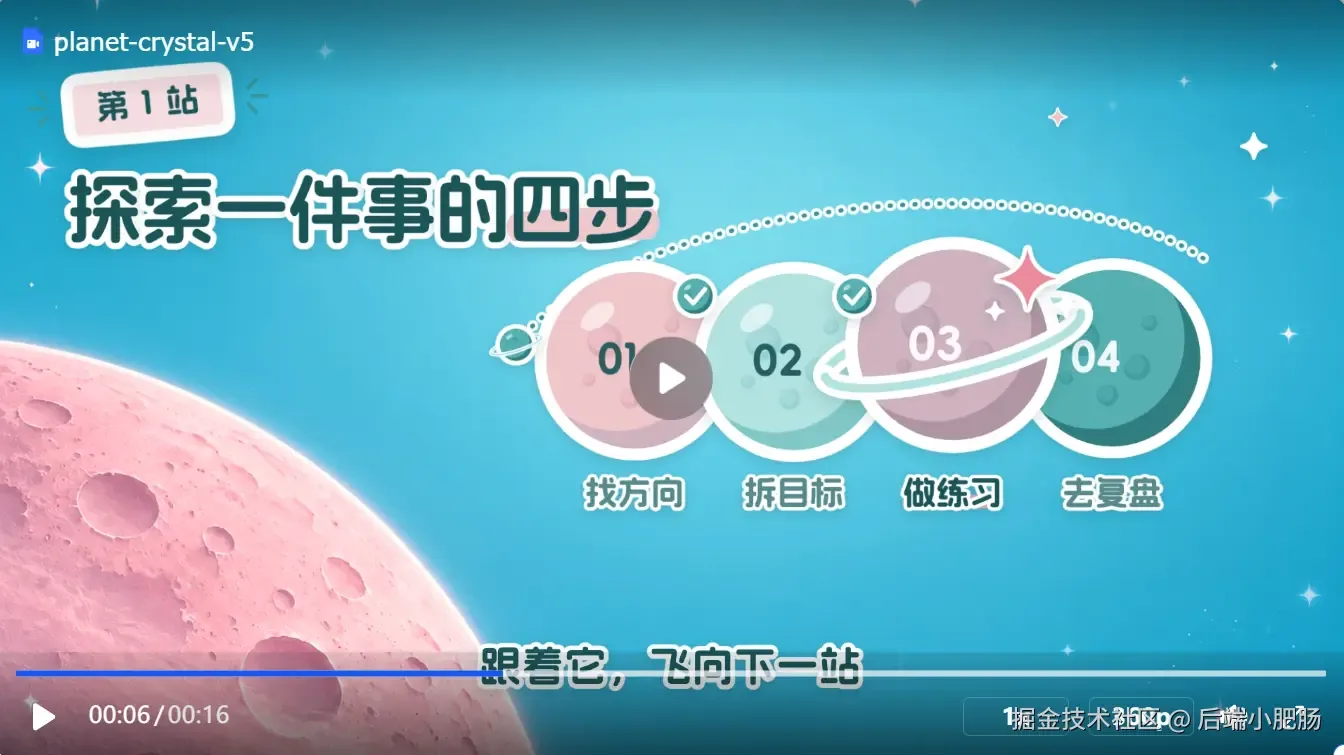
The key contrast: visual polish is decoupled from implementation complexity—three videos with different themes all use the same tech stack, and switching styles only requires changing the template prompt. This shows that a general-purpose model combined with customized Skill packaging can quickly reproduce diverse outputs.
Notably, the entire workflow has been iterated on by the tester for three months, but the cost of generating a single video remains high, which is the main factor limiting scaled application and explains the decision not to commercialize it yet.
Product Roadmap: From Experiment to Productization
The tester revealed that the plan is to package the polished video generation workflow into a standalone desktop product, with priority tied to the “漫画工坊” project in the same series. This workshop adds a comic reproduction feature and is expected to launch on October 10 alongside a mini-program comic training camp, while also starting operational tests for a WeChat Official Account comic channel.
Currently, the video templates are not for sale, and the reason clearly points to economic bottlenecks rather than insufficient technical capability. Its product roadmap is rational and pragmatic: first polish the high-stickiness feature (漫画工坊), then release the accompanying video production tool, avoiding a premature release that would harm user experience.
Adoption Recommendations
- Recommended user types: individual content creators with basic prompt engineering skills; teams that need to batch-produce knowledge short videos on the same theme; small and medium-sized studios looking to validate the cost and quality of AI video generation.
- Scenarios where you should wait: high-frequency publishers with limited budgets who need controllable per-video costs; professional editing teams that need support for complex editing transitions (e.g., keying, multi-track compositing); users with no technical background who expect plug-and-play, ready-made templates.
Final Thoughts
This case reveals a pragmatic path to technology deployment: rather than pursuing a single breakthrough in the model, it achieves capability decoupling and packaging through Skill combinations. As generative AI enters the practical stage, “programmable smooth animation” will become an infrastructure capability with greater commercial value than “a single perfect finished video.”