
Core Announcement: Projects Relaunched

Anthropic has officially launched the re-engineered Claude Code Projects feature, enabling multi-agent coordination. Key facts:
- Launch date: September 18, 2026
- Initial access: Select Claude Pro and Max subscribers (beta)
- Expanded access: To all Pro, Max, Team, and Enterprise users, plus Cowork and standard Claude chats, later
- Current execution: Cloud-only
- Local support: Coming “very soon” per Anthropic
Architecture: Shared Memory Across Concurrent Threads

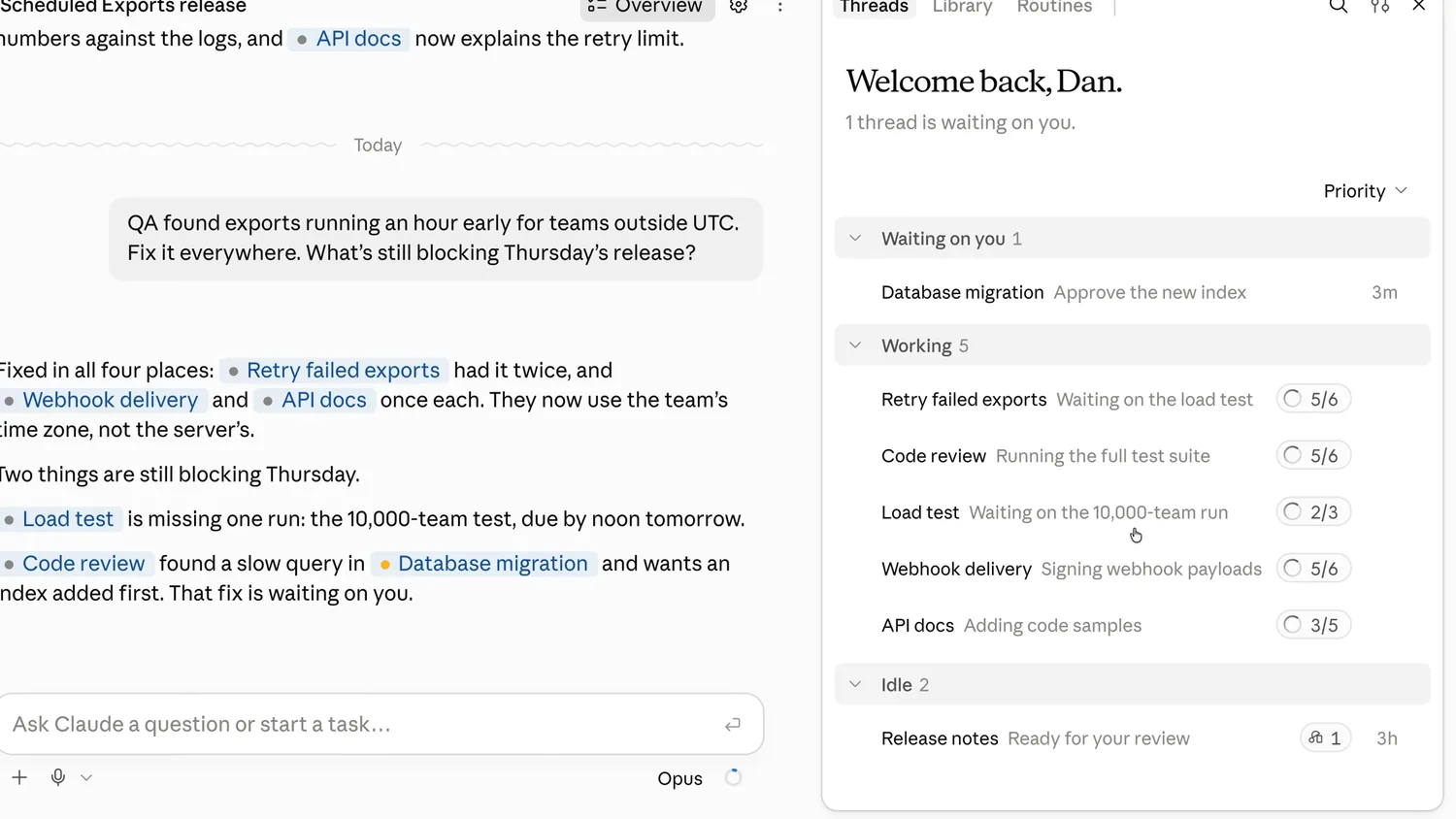
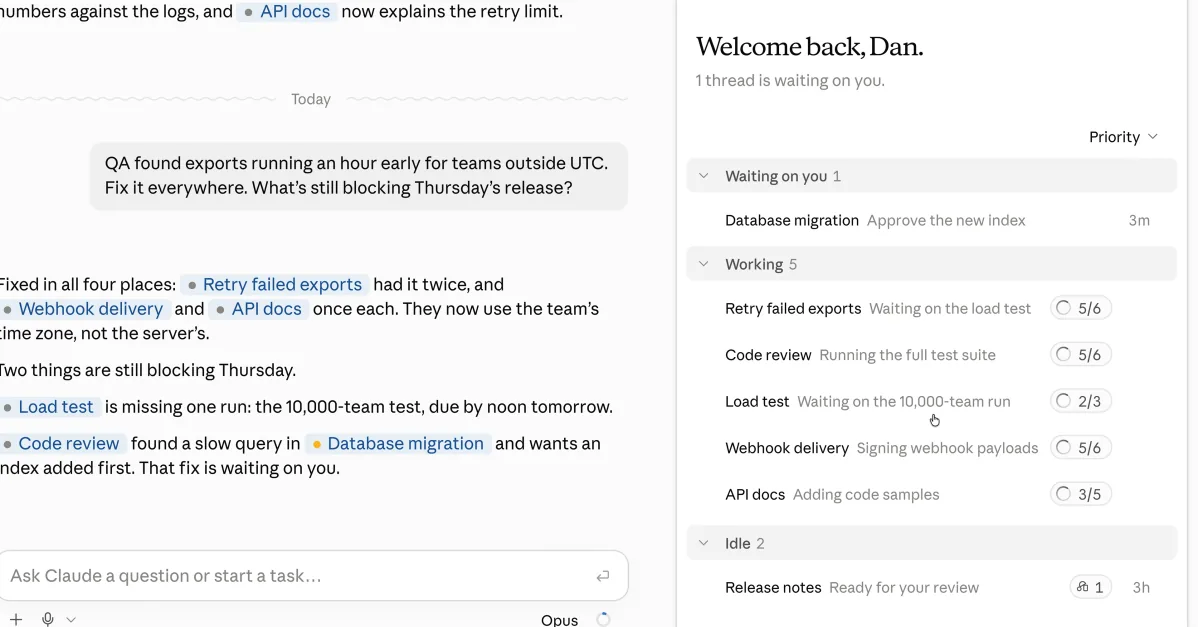
Each Projects instance runs multiple threads in parallel, where each thread is a dedicated cloud session on its own repo branch and copy. All threads within a project share memory, goals, and a common library of files and artifacts.
A dedicated coordinator agent orchestrates the entire workflow. When threads modify the same code, conflict resolution follows the standard pull request (PR) merge flow—identical to how GitHub handles overlapping changes. This is an intentional design: instead of avoiding concurrency collisions, the system normalizes them as merge conflicts.
Tasks delegated to a thread can be further subdivided using subagents, loops, and workflows to accelerate completion of large assignments. Users may interact with individual threads directly or monitor/update progress through the main project chat.
Notable Asymmetry
While the feature promises collaborative multi-agent execution, threads currently run exclusively in the cloud. Local tool and code support is upcoming. This contrasts with some competitors (e.g., Grok Bot) that already offer local deployment—Anthropic has prioritized validating coordination semantics in a cloud-native environment before expanding to hybrids.
Capability Comparison with Competitors
| Dimension | Claude Code Projects | Grok Bot other multi-agent tools |
|---|---|---|
| Parallel threading | Yes (threads + subagents) | Yes (implementation details unspecified) |
| Shared memory | Yes | Yes (similar architecture reported) |
| Explicit coordinator | Yes (task orchestration + merge) | May exist implicitly |
| Execution environment | Cloud (current); local “very soon” | Some support local deployment |
| Conflict handling | PR-style merge | Conflict resolution not emphasized |
Adoption Guidance: Who Should Migrate Early?
Ready to try now:
- Teams on Pro/Max needing parallel module孵化 (e.g., feature rollout across layers);
- Developers comfortable with cloud-native workflows who accept PR-style conflict resolution;
- Advanced users leveraging subagents to decompose large coding tasks.
Recommended to wait:
- Users in regulated industries (finance/healthcare) requiring local execution due to data policies;
- Teams with low tolerance for merge conflicts, especially in highly coupled codebases;
- Those preferring full functionality stability before β phase ends.
Final Note
Multi-agent orchestration is not new, but embedding standard PR-style merge conflicts into the development flow is pragmatic: rather than wished away, distributed développements’ inevitable overlaps are acknowledged and resolved with familiar tooling. When the coordinatortrue decides how to split work, efficiency gains will hinge on its judgment along critical paths—not just on parallelism itself.