
The Big Picture: Chinese Robotics Brands Go Global En Masse, IFA Hits a Pivotal Turning Point
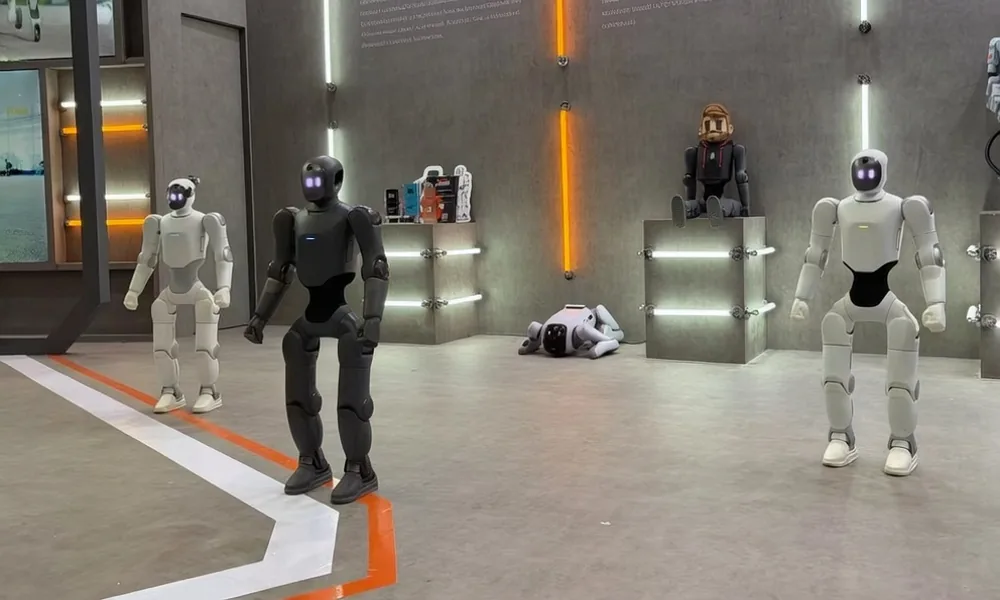
On September 8, 2026, the Internationale Funkausstellung Berlin (IFA 2026) wrapped up. This year’s edition drew over 1,900 exhibitors from 49 countries and regions, with projected attendance surpassing 220,000 visitors. The number of Chinese robotics companies exhibiting surged dramatically—last year, only three showed up (AgiBot, Pi, UBTECH); this year, that figure climbed to dozens. Hall 25’s Innovation Zone housed roughly 260 exhibitors last year versus approximately 300 this year, with Chinese brands holding the majority. The fair even introduced a special “Robots on the Runway” event, where humanoid robots took center stage.
Key facts at a glance:
- Chinese robotics companies: AgiBot, Pi, S1 Motion, Huanke Power, Xuanji Tech, and others all made a collective appearance
- Intel’s first-time participation: Xiaomi debuted its full “Human·Car·Home” ecosystem with a booth exceeding 3,000 square meters
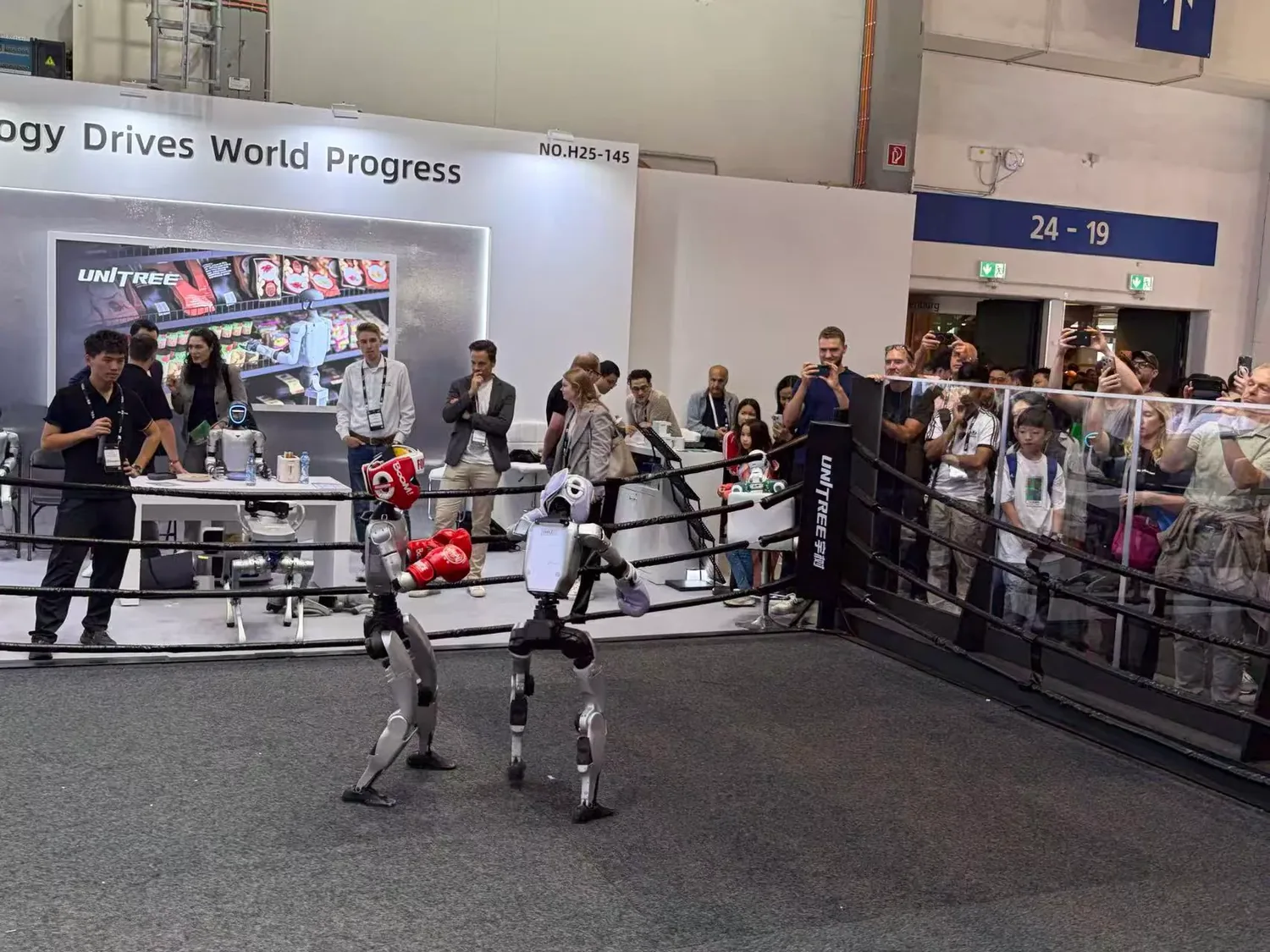
- On-site hot draws: robot fighting performances, runway shows, and home-scenario solution demos
- Market drivers: Europe’s labor shortage is fueling demand across manufacturing, logistics, and eldercare; IFA’s family-oriented positioning aligns with the trend of robots entering the home; amid U.S. market uncertainty, Europe offers greater resilience
Hardcore Tech Meets European Real-World Scenarios

The robots on display have shifted from flashy tech demos toward real-world deployment. In the H25 Innovation Zone, quadruped and humanoid robots roamed freely, while fighting-performance booths drew crowds throughout the day. However, industry insiders told Leitech that most demonstrations still rely on remote teleoperation, leaving a gap before genuine autonomous Agent capabilities—“Agent” here referring to a robot’s ability to independently perceive, decide, and act without external intervention.
Automakers entering the fray brought fresh breakthroughs. XPeng Motors showcased IRON, a humanoid robot featuring a highly anthropomorphic form factor, robust computing power, and stable bipedal locomotion, supporting continuous conversation and complex environment interaction. Currently, IRON is positioned for B2B scenarios: serving as in-store sales consultants, guide docents, and inspection staff across XPeng’s offline retail network. Mass production is planned for later this year, with subsequent entry into homes to provide emotional companionship and similar functions.
Xuanji Tech simultaneously presented innovative solutions tailored for home scenarios. Its photography robot, co-developed with S1 Motion, features dual arms specifically sized to grip Insta360 handheld gimbals, capable of executing cinematic techniques like the Hitchcock dolly zoom—shots that human photographers struggle to pull off. Beyond cameras, it also supports selfie sticks and panoramic camera mounts. The robot can operate independently, offering a freely mobile “God’s-eye view” for shooting, potentially lowering the barrier to professional-grade video production in the future.
Chinese Brand Strategies: From Fighting Robots to “Your First Personal Robot”
Xuanji Tech has laid out a clear path toward home adoption—positioning its product as “your first personal robot.” The brand explicitly recognizes that the personal and household robotics market remains a blue ocean, requiring solutions that address genuine user pain points. The photography robot serves as an entry point; differentiated pathways—home chore assistance, child companionship, and daily task execution—are actively being explored.
Another key technology from Xuanji Tech is “compliant force control,” which enables the robot to follow along by sensing the pulling force a user applies—simply guiding it by hand controls walking, turning, and reversing, eliminating the lag of traditional remote-controlled operation and significantly boosting household adaptability. Pi and UBTECH, meanwhile, continued to showcase fighting and athletic capabilities to capture overseas attention.
Key Comparison: Exhibition Scale and Technology Stage
| Dimension | IFA 2025 | IFA 2026 | Trend |
|---|---|---|---|
| Chinese robotics exhibitors | 3 | Dozens | >10x growth |
| H25 Innovation Zone exhibitors | ~260 | ~300 | +15% |
| Chinese brands’ share in H25 | Minority | Dominant | Significant increase |
| Demonstration focus | Fighting/athletic demos | Fighting + home scenarios | Scenario-driven upgrade |
| Autonomy level | Primarily teleoperated | A few approaching autonomy | Slow progress |
Who Is It For / Should You Wait?
- Early adopters: Users already comfortable with smart hardware who have high-frequency content creation needs—the photography robot can serve as an interest-driven component to expand the boundaries of home intelligence;
- Hold off for now: Households expecting fully autonomous domestic capabilities (e.g., self-directed dishwashing or folding laundry)—current products remain at the preview stage and need another 1–2 generations of iteration;
- Enterprise users first: Companies with innovation labs or retail display spaces can leverage B2B solutions like IRON to test human-robot collaboration models;
- Policy risk avoiders: Businesses concerned about U.S.–China trade friction will find that the European market currently offers greater policy clarity and user acceptance.
Final Thoughts
IFA’s accelerated pivot from a consumer-electics main stage to a launchpad for humanoid robots signals that the industry has entered a critical transition—from “tech demo” to “scenario validation.” Chinese robotics companies collectively choosing Germany as their first stop for going global reflects both recognition of Europe’s purchasing power and regulatory stability, and signals that their ambition to convert technological confidence into market confidence is being realized.