
Core Announcement and Key Facts
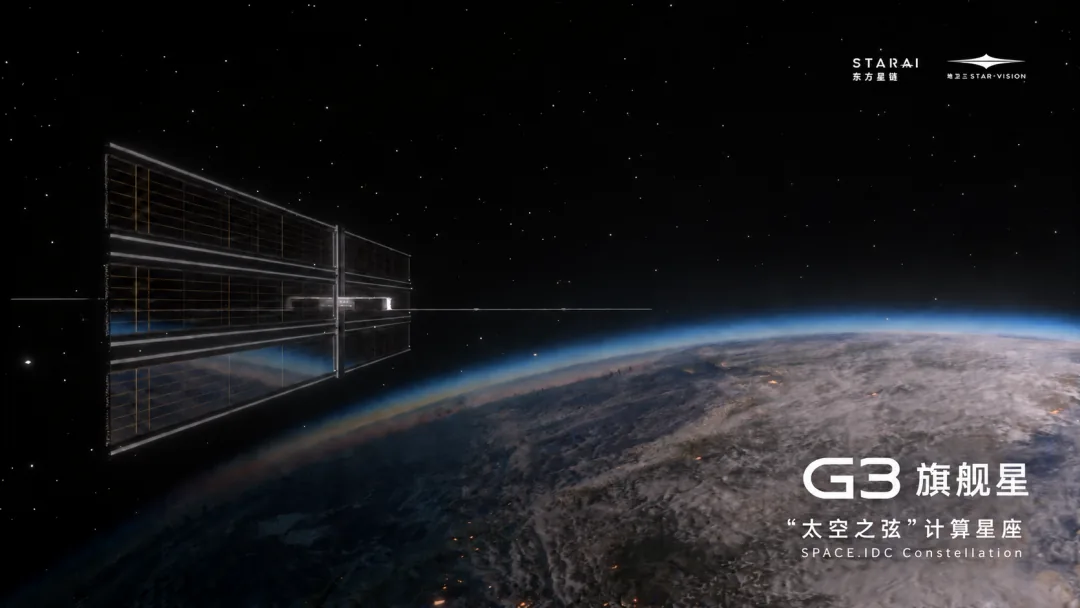
China’s first space-based computing infrastructure, the ‘Skystring’ computing constellation, was officially unveiled on September 25, 2026. Developed jointly by Kōdai StarLink and Tiange-II, this system marks a transition from point-technology validation to large-scale constellation deployment for in-orbit computing capabilities in China.
Key factual details:
- Announcement date: September 25, 2026
- Pioneer satellite: G1 validation satellite
- Expected launch window: Q4 2027
- Constellation architecture: Two-layer collaborative system (business layer + computing layer)
- Data satellites: 720+ planned for the business layer
- Computing satellites: 360+ planned for the computing layer (strategic distribution in dawn-dusk orbits)
Architecture and Technical Roadmap
The Skystring constellation employs a distinctive two-layer design:
- Business layer: 720+ ‘data satellites’ or ‘inference satellites’ primarily handling remote sensing data acquisition and business task execution
- Computing layer: 360+ ‘computing satellites’ or ’training satellites’ operating in dawn-dusk orbits, providing AI model training and inference support
The key innovation lies in the horizontal inter-satellite laser link connectivity—business satellites can dynamically connect to computing layer resources as needed, enabling multi-node collaborative computation that overcomes single-satellite compute limitations. This on-demand allocation model gradually consolidates scattered in-orbit resources into a unified service platform.
The engineering implementation follows a staged approach across three phases:
- G1 phase: Validation satellite for technical feasibility demonstration
- G2 phase: Standard satellite for definitive spacecraft design
- G3 phase: Flagship satellite for routine high-performance computing services
Partner Roles and Responsibilities
Kōdai StarLink (Shandong) Technology Development Co., Ltd. serves as the overall designer and operator. Founded on September 2, 2021, with headquarters in Haiyang City, Yantai, Shandong Province, the company is a technical provider and operator for the ‘Oriental Eye’ intelligent remote sensing constellation project, a collaboration between Wuhan University and Yantai municipal government.
Tiange-II, as the co-developer, contributes primarily local AI capabilities and international market expansion. Notably, this collaboration systematically integrates Tiange-II’s prior in-orbit AI technology, satellite project experience, and international cooperation networks into the constellation architecture, transforming technology accumulation into an engineered product.
Implementation Guidance and Target Users
Recommended users for early engagement:
- Remote sensing data processing providers: Leverage space-based preprocessing to reduce ground bandwidth demands
- AI model training organizations: Benefit from distributed in-orbit compute resources, lowering local infrastructure dependency
- Deep space mission operators: Utilize the constellation’s relay computing support for enhanced autonomy
Users advised to wait:
- Commercial projects requiring immediate compute capacity: With G1 launch in 2027, near-term needs still require ground-based or low-orbit commercial alternatives
- Consumer-level application developers: Current planning targets B2B and research users; consumer-facing features remain unannounced
Final Thoughts
Skystring reveals a new paradigm for low-orbit constellations: evolving from single-function communication and remote sensing toward multifunctional ‘computing-as-a-service’ models. China’s first systematic focus on computational capability as the core of space infrastructure demonstrates a shift from hardware-centric deployment to software-defined space operations. When satellites can not only receive but also autonomously process data, space-based computing networks stand to surpass traditional constellations’ relay functions.