
According to an October 18 report from IT 之家, citing a report by “Tech 星球,” the “AI toy” sector is showing signals in two directions at once: rapid market growth and a sharp investment cooldown.
- Market size: Data from the Ministry of Industry and Information Technology (MIIT) shows that China’s AI toy market reached RMB 29 billion in 2025 and is projected to reach RMB 34.2 billion in 2026.
- Platform popularity: Taobao’s 2025 annual data shows that transaction volume for AI toy products grew by more than 1,600% year on year.
- Capital side: Investment across the entire sector is cooling sharply.
- Experience side: Industry reports show that the return rate for AI toys has remained above 50% year-round.
- Supply chain: In toy supply chain hubs such as Dongguan and Yiwu, some merchants’ sales in the first half of this year have already exceeded their full-year sales last year.
- Timing: The above data was relayed by IT 之家 on October 18, sourced from “Tech 星球.”
Transaction volume is up 16x, but market size is up only about 18%
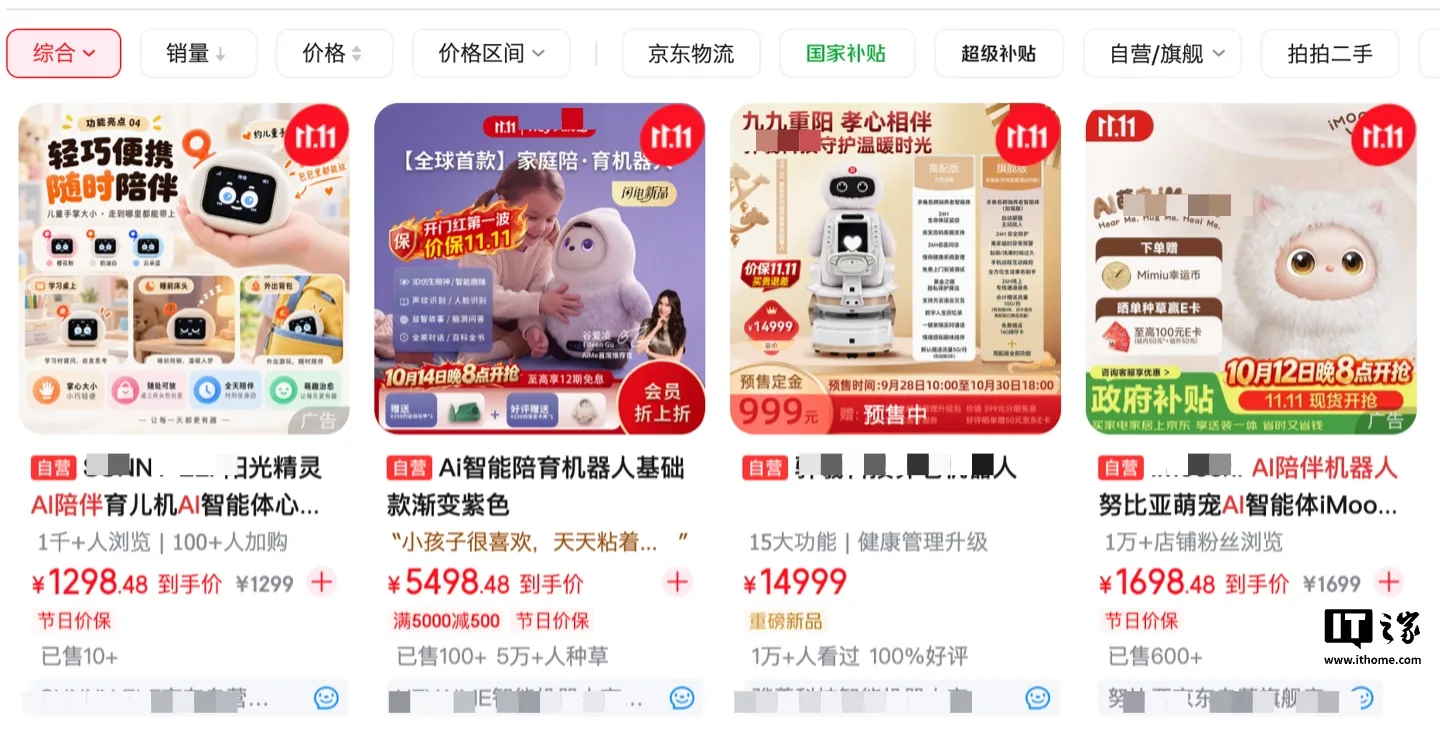
Putting the two sets of numbers side by side is the most striking part of this story. By MIIT’s measure, the market goes from RMB 29 billion in 2025 to a projected RMB 34.2 billion in 2026, an increase of about 18%; by Taobao’s measure, transaction volume for AI toy products grew by more than 1,600% year on year—16 times.
| Metric | 2025 | 2026 (projected) |
|---|---|---|
| China AI toy market size (MIIT) | RMB 29 billion | RMB 34.2 billion |
The two figures are not based on the same measurement—one is sales for the entire market, while the other is the growth rate of transaction volume on a single e-commerce platform—so they cannot be directly subtracted from each other. But the contrast in direction is still worth noting: when transaction volume balloons by more than tenfold while market size grows by less than 20%, the incremental growth most likely comes from more, cheaper items, not from each order selling for more. In other words, the players flooding into this sector are mainly using price to grab position.
This is also the most intuitive manifestation of “homogenization.” A large number of brands looking to make quick money entered during the short-term explosive growth, while repeat purchases and user experience have not kept pace.
Tier-1 parents study large models; lower-tier markets just ask whether it’s cheap
One AI toy industry practitioner’s account divides users into two tiers.
In Tier-1 cities, buying an AI toy is more about investing in education or trying out new technology; the average order value can reach thousands or even tens of thousands of yuan, and parents will study the large model’s capabilities, conversation quality, and educational content—here, “large model” refers to the capability behind the toy for voice-based conversation with a large language model. Whether the interaction feels natural and whether the answers are reliable directly determine the experience. The logic in lower-tier markets is simpler: cheap, able to talk with the child, and better than an ordinary toy.
The purchasing context is also shifting. Gift-giving has become a primary purchase scenario for AI toys, which means a considerable share of sales does not come from genuine usage demand. After this year’s National Day holiday, data disclosed by some manufacturers showed that first-half sales had already exceeded their full-year sales last year.
The problem comes after the purchase. Industry reports show that the return rate for AI toys has remained above 50% year-round—roughly one out of every two sold is returned. Once