
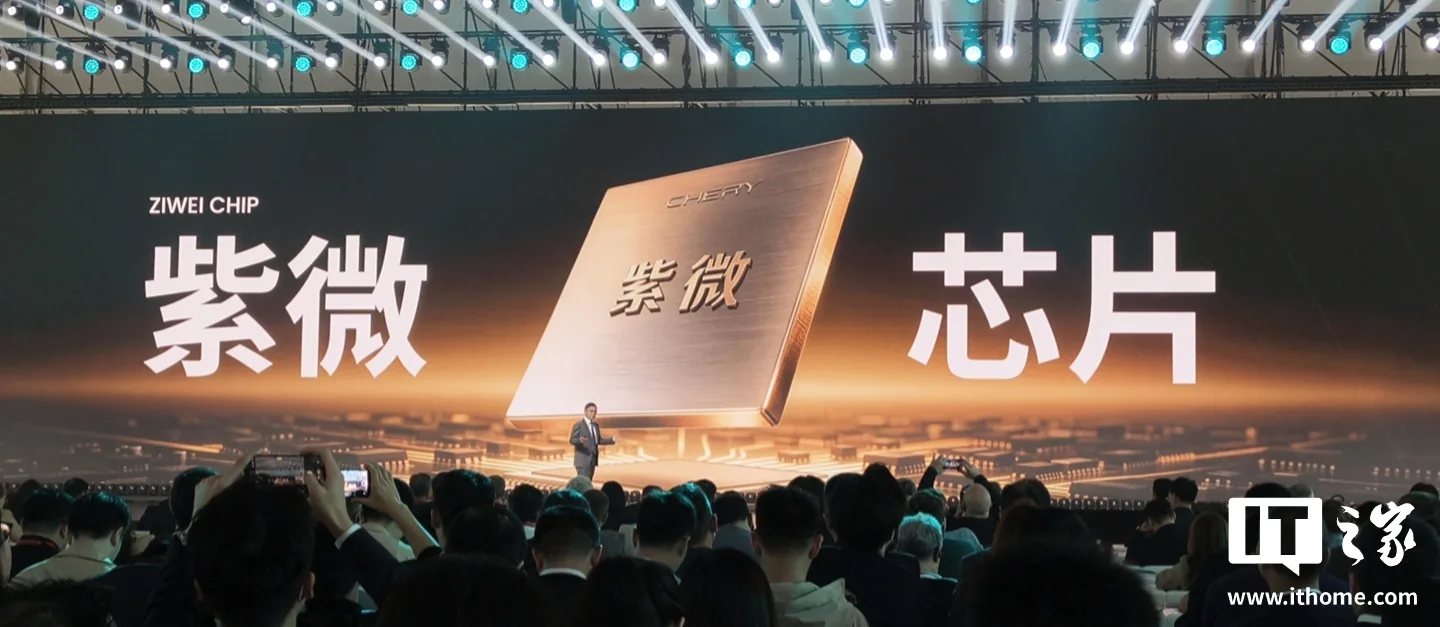
On the morning of October 20, 2026, at Chery’s Global Innovation Conference, the automaker unveiled Ziwei, its in-house chip family, alongside three product series, five package families, and the claim that 8-inch wafers have entered mass production.
Key facts:
- When and where: morning of October 20, 2026, at the Chery Global Innovation Conference
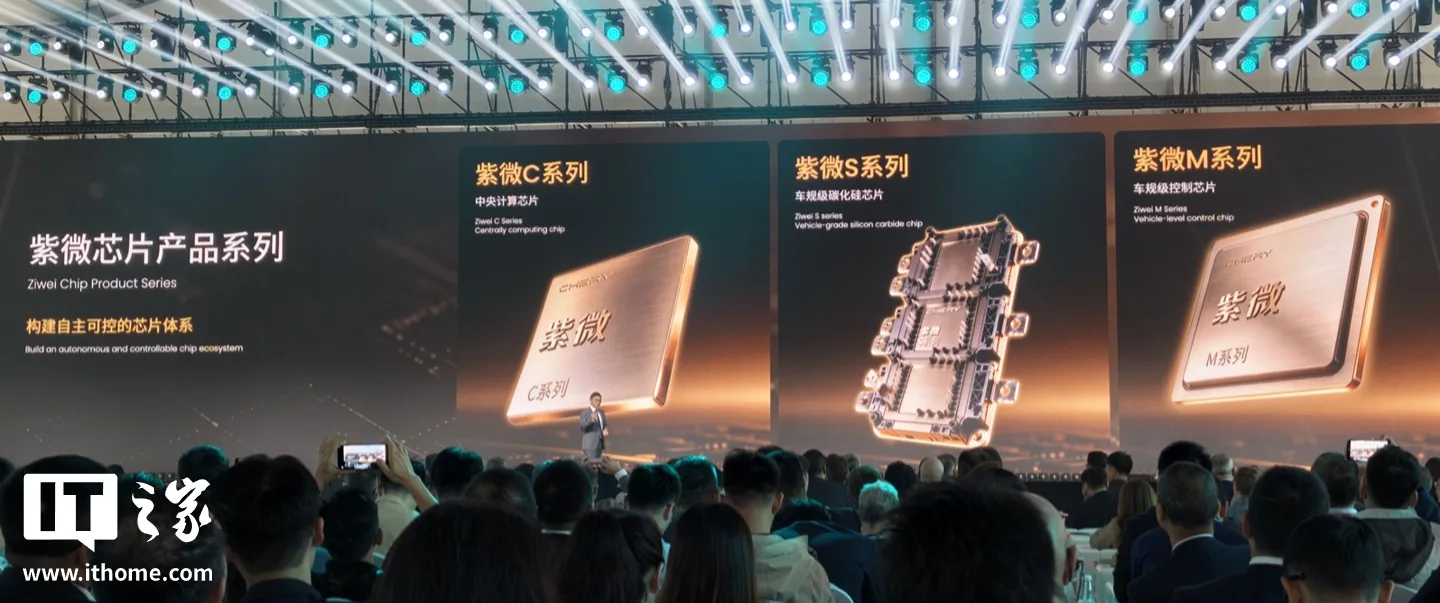
- Three series: C-series central compute, S-series automotive-grade silicon carbide, M-series automotive-grade control
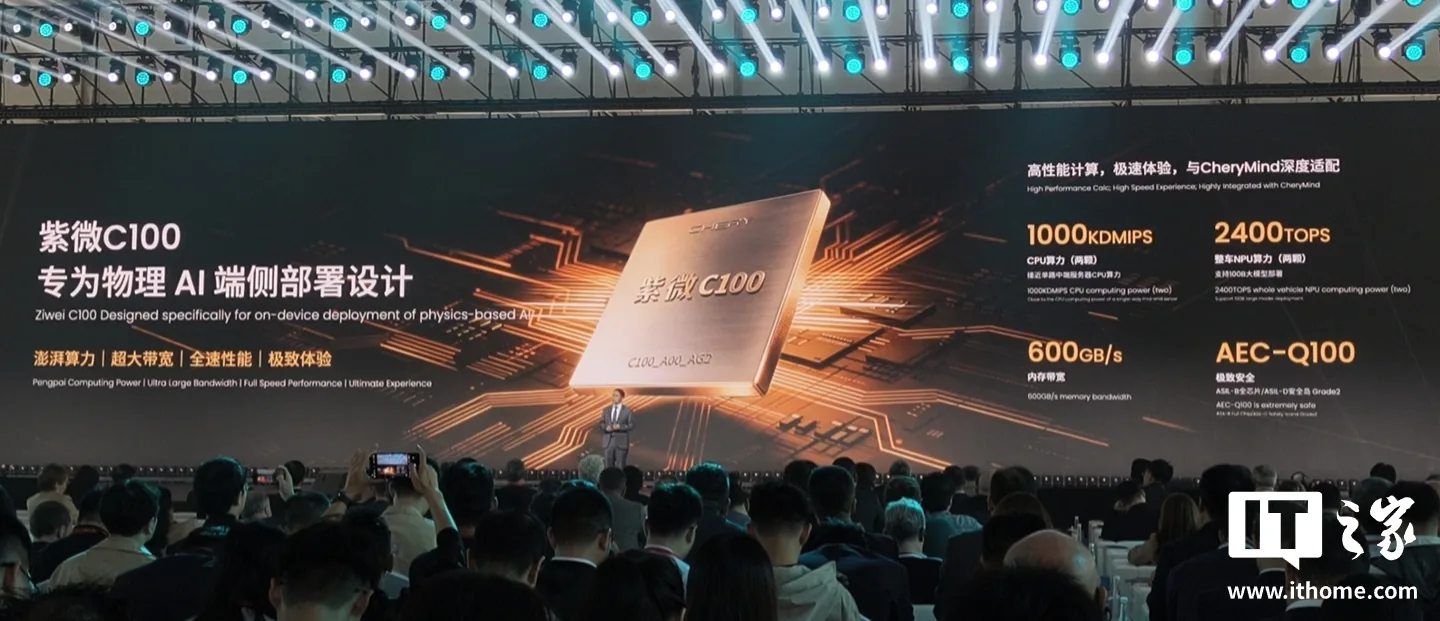
- C100 specs: two CPUs at up to 1000 KDMIPS, two vehicle NPUs at up to 2400 TOPS, 600GB/s memory bandwidth
- S1500 specs: 1500V automotive-grade voltage, 1450A module current
- Manufacturing and packaging: 8-inch wafers in mass production, cost cut by more than 30%; five package families covering all Chery platforms
- Not disclosed: pricing, launch timing, M-series specifications
Compute and voltage: two tracks at once
A quick glossary: KDMIPS measures CPU integer throughput in thousands of millions of instructions per second; TOPS measures AI inference in trillions of operations per second; SiC is silicon carbide, a third-generation semiconductor material that tolerates high voltage and heat and is widely used in inverter modules; “physical AI” means AI acting directly in the real world, such as autonomous driving and robotics.
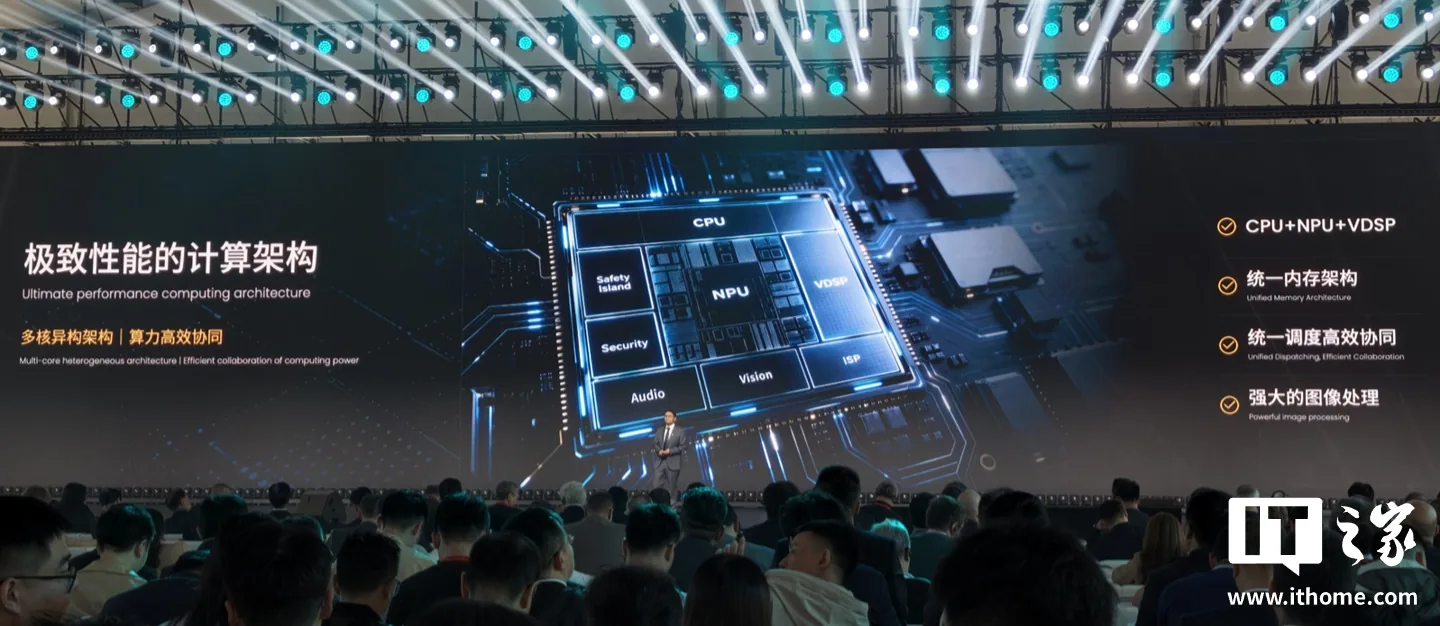
The C-series detail released so far is the Ziwei C100 central-compute chip. Chery positions it for on-device deployment of physical AI, saying it is “tailor-made for a 100B physical-world model” — a 100-billion-parameter model intended to run locally in the vehicle rather than entirely in the cloud. On paper: two CPUs reaching 1000 KDMIPS, two vehicle NPUs reaching 2400 TOPS, and 600GB/s of memory bandwidth.
One counting detail matters: both the 1000 KDMIPS and the 2400 TOPS are figures for pairs of chips, not a single die. Automotive silicon is often quoted at the whole-vehicle compute-platform level, so it pays to check the boundary of the numbers.
The S-series covers automotive-grade silicon carbide, and the S1500 shown here supports what Chery calls the industry’s highest automotive voltage class at 1500V, with 1450A module current. Higher voltage classes demand tougher material specs while opening design room in the drivetrain and charging path. The M-series control chip appeared only as a name, with no specifications disclosed.
The most striking figure sits on the manufacturing side: Chery says 8-inch wafers have entered mass production, cutting cost by more than 30%. Carmakers usually talk chips in terms of compute and architecture, so putting wafer size and cost reduction front and center signals a different question — not whether the chip exists, but whether it can be built into volume cars affordably.
What Chery has disclosed so far
| Item | C100 central compute | S1500 silicon carbide | M-series control |
|---|---|---|---|
| Series role | Central compute, on-device physical AI | Automotive-grade SiC | Automotive-grade control |
| CPU compute | 1000 KDMIPS across two CPUs | Not disclosed | Not disclosed |
| NPU compute | 2400 TOPS across two vehicle NPUs | Not disclosed | Not disclosed |
| Memory bandwidth | 600GB/s | Not disclosed | Not disclosed |
| Voltage / current | Not disclosed | 1500V automotive voltage, 1450A module current | Not disclosed |
| Target workload | 100B physical-world model | Not disclosed | Not disclosed |
Manufacturing and packaging: 8-inch wafers in mass production, cost down more than 30%; five package families covering all Chery platforms. “Not disclosed” means the source material did not provide the figure.
Who should watch, who should wait
- Worth watching if you track China’s automotive chip supply chain or third-generation semiconductors. Three series spanning central compute, silicon carbide and control, plus 8-inch wafer production and a stated 30%-plus cost cut, make this a traceable case of a carmaker moving from chip design to manufacturing.
- Better to wait if you want to judge real-world performance or pick a car from these numbers. As of the announcement, the source material lists no vehicle models, launch dates, pricing, software stack or toolchain support, and the M-series has no specs at all. Compute and voltage are design targets; yield and actual platform adoption have to be answered by shipping cars.
Final word
For automakers, the hard part of chips is not the spec slide but yield and unit cost. By putting 8-inch wafer production and a 30%-plus cost reduction next to raw compute, Chery shifts the question from “can we build it” to “can we build it cheaply.” That answer will arrive with the cars, not the keynote.