Key Event: Intelligent UI Global Rollout
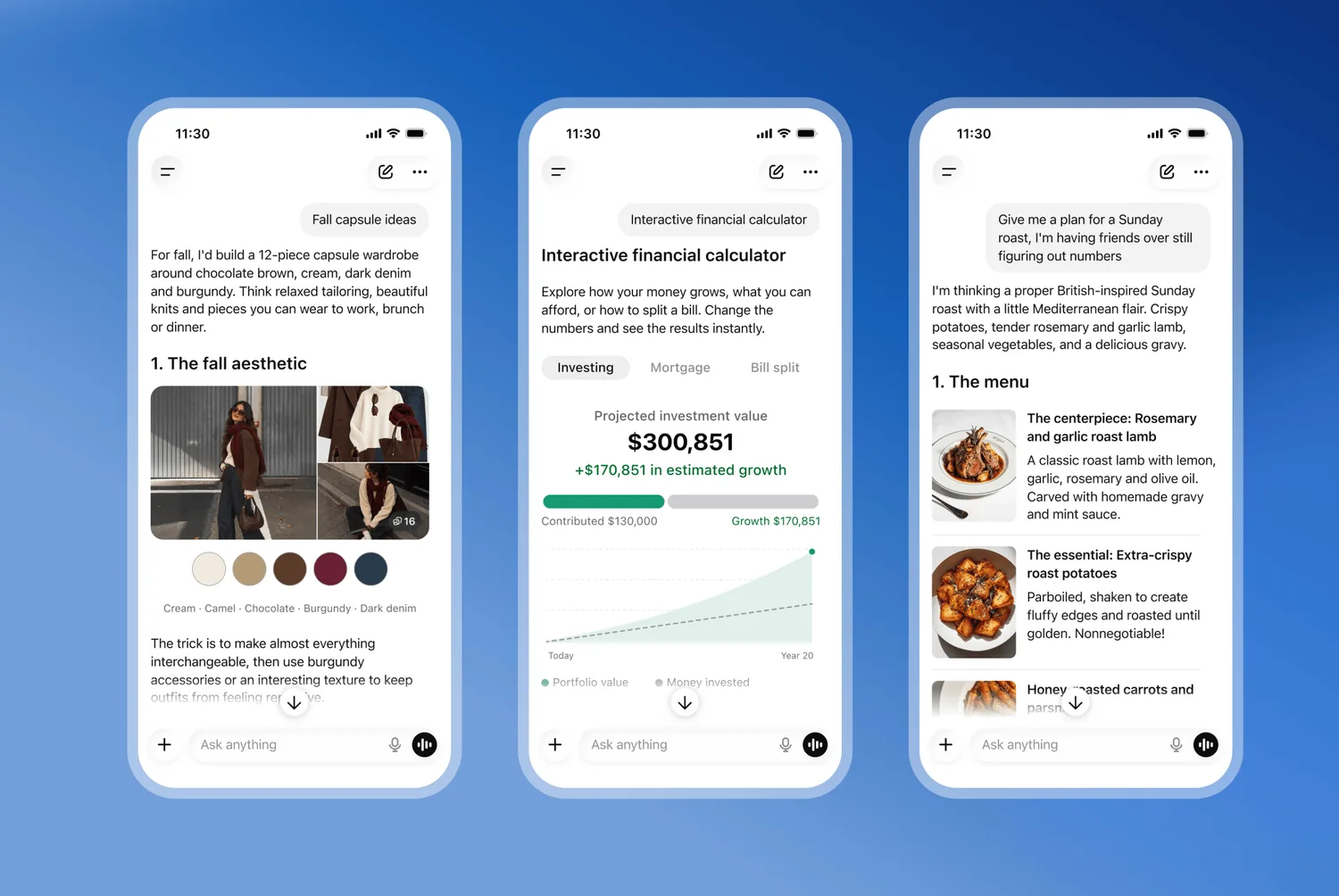
OpenAI is rolling out GPT-6 and Intelligent UI features to ChatGPT Plus, Pro, Business, and Enterprise subscribers starting today, and will expand them to the Go free tier and free users on Thursday. This update enables ChatGPT to generate interactive visual content embedded directly in conversation responses, without needing to switch to external tools or pages.
- Release timing: Available to higher-tier users starting October 8, 2026, and to free users on October 10
- New model versions: GPT-6 Sol (advanced) and GPT-6 Luna (efficient)
- Feature scope: Interactive charts, diagrams, forms, clickable buttons, and embedded tool generation
- Model access: Plus/Pro/Business/Enterprise users get Sol; Go/free users get Luna
The New Shape of Intelligent Interaction: From Text to Actionable Interfaces
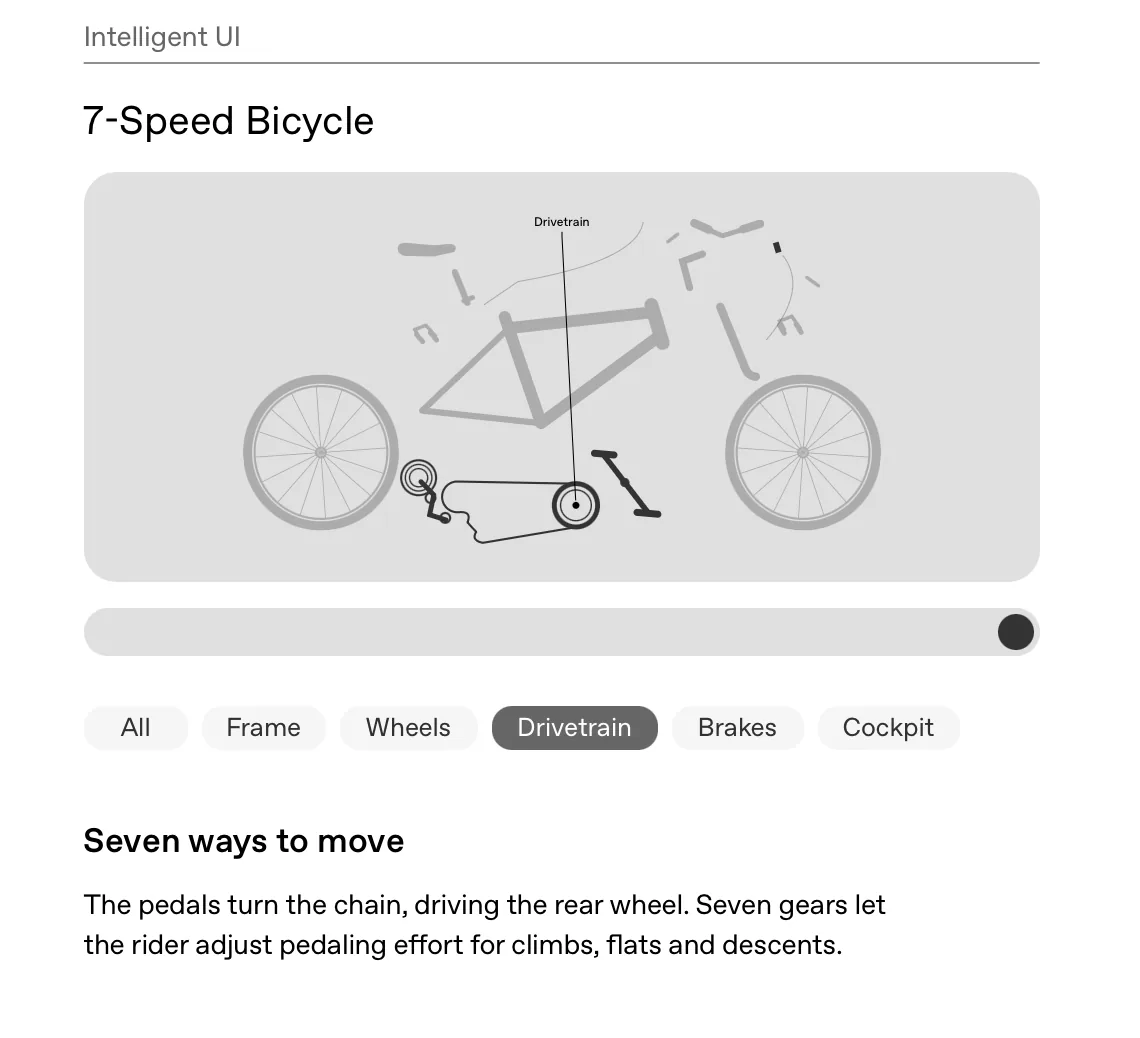
At its core, Intelligent UI upgrades ChatGPT responses from traditional plain text to hybrid output that includes dynamic visual components. In its blog post, OpenAI noted that GPT-6 has been specifically trained to determine when to generate interactive visual content instead of plain text and to adapt its layout accordingly.
Specific scenarios include:
- Automatically drawing a diagram of a seven-speed bicycle’s structure, with clickable buttons labeling each component
- Generating scrollable, categorized mahjong tile images when teaching mahjong
- Building embedded tools in real time based on user instructions (such as a retirement calculator, bill splitter, or retro mini-game)
These tools are embedded directly in the conversation flow, allowing users to perform calculations or interactive exploration without leaving the current chat window.
Notably, Intelligent UI is not merely visual rendering—it requires the model to output structured data that conforms to front-end interaction standards, marking an evolution of large models toward lightweight app generation capabilities.
GPT-6 Model Upgrade in Tandem: Advancing Performance and Safety
This update coincides with the first full rollout of the GPT-6 model. OpenAI also highlighted the following key improvements:
- Enhanced search capabilities: More precise web search with lower response latency
- Optimized response speed: Supports partial answers, allowing users to see partial results in real time while the system continues generating the complete answer in the background
- Improved safety features: GPT-6 shows stronger resistance to attacks that attempt to bypass safety training (the source provides no specific protection data, only a qualitative description)
Refer to the table below for model tiering:
| Version | Subscription tiers | Characteristics | Intelligent UI support |
|---|---|---|---|
| GPT-6 Sol | Plus / Pro / Business / Enterprise | Mid-tier performance | Yes |
| GPT-6 Luna | Go / Free | Higher efficiency | Yes |
Practical Recommendations: Choose Based on Your Needs and Expectations
Users who should try it right away:
- Educators and science communicators: Visual teaching scenarios (such as explaining structures or demonstrating processes) can significantly improve comprehension efficiency
- Product designers / technical writers: Can quickly generate diagrams and interactive explanations, reducing the need to switch to external drawing tools
- Everyday productivity users: Practical features such as embedded calculators and bill-splitting tools can save time spent switching between apps
Users who may want to wait and see:
- Users with high-precision technical needs: Although GPT-6 Luna is efficient, its complex reasoning may be weaker than Sol’s; for research-grade data analysis, professional software is still recommended
- Privacy-sensitive scenarios: Initial embedded tool generation involves local data processing logic; those handling sensitive business calculations may want to wait for more detailed privacy documentation in v2.0
Final Thoughts
Intelligent UI moves large models from an “information output endpoint” toward a “lightweight app entry point,” but whether it can replace dedicated tools still depends on the stability and customizability of the generated content. This direction confirms that interactive AI is moving from demos to the threshold of practical use.