
Bolt Graphics Reportedly Seeking $100M at Around $700M Valuation
Zhidx, October 16 — According to Reuters, U.S. chip-design startup Bolt Graphics is seeking to raise about $100 million (about RMB 672 million), at a current valuation of about $700 million (about RMB 4.704 billion), as it plans to develop GPUs to rival Nvidia and AMD.
- Funding size: About $100 million, corresponding to a valuation of about $700 million
- Status: The round is still ongoing. CEO Darwesh Singh declined to disclose the exact amount and terms, but said it is progressing well
- Product focus: GPUs, targeting high-performance computing (HPC—the field of using massive amounts of compute for scientific computing and engineering simulation), professional rendering, and gaming graphics
- Key milestone: First-round testing of the Zeus GPU architecture was just completed this week; the plan is to enter professional markets first, then expand into consumer gaming graphics cards
- Timeline: Zeus is targeted for mass production between late 2027 and early 2028
Six Years of R&D Yield a 6-Square-Millimeter Test Chip
Bolt Graphics is headquartered in Silicon Valley, USA, and was founded by Singh in 2020. Reuters noted that over the past decade, venture capital has been relatively cautious about chip startups because advanced chip development is costly and the journey from development to commercialization is long; Bolt Graphics has already invested about six years in chip and hardware R&D.
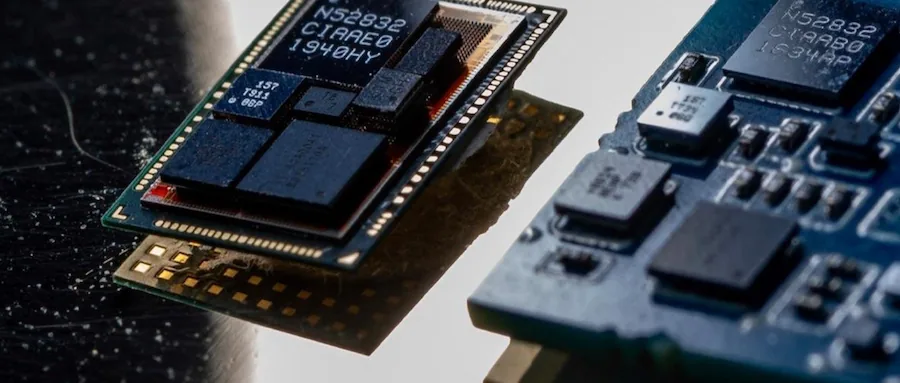
On October 13, semiconductor industry outlet HPCwire reported that Bolt Graphics had completed first-round testing of its Zeus GPU architecture. The company said the test chip has an area of about 6 square millimeters, is manufactured using TSMC’s 12nm process, and exceeded expectations in both performance and power consumption. According to an announcement it released on October 13, the test chip has completed silicon bring-up, meaning it was powered on and ran basic functions for the first time after manufacturing.
One core design feature of Zeus is dedicated hardware modules for Maxwell’s equations. Maxwell’s equations describe physical phenomena such as electric fields, magnetic fields, and electromagnetic waves, and are a foundational tool for electromagnetic simulation, semiconductor design, and photonic chip research. Singh believes that ray tracing and rasterization are already important capabilities of existing GPUs; the way Zeus aims to differentiate itself is by offloading complex physics algorithms to dedicated on-chip hardware.
Zeus also targets workloads that require double-precision floating-point (FP64) operations. FP64 can be thought of as a floating-point format with “more decimal places and greater computational accuracy”; complex scientific computing relies on it to ensure numerical precision. By contrast, many AI training and inference tasks can use lower-precision data formats, and the two have different chip-architecture requirements.
Several contrasts emerge here: the test chip is only about 6 square millimeters, while the company’s planned production chip is about 400 square millimeters; the production model is intended to use more than 1 terabyte of LPDDR5 memory, rather than the high-bandwidth memory (HBM) commonly used in some high-performance computing products.
From Test Chip to Mass Production: Specs and Timeline

| Item | Zeus test chip | Planned Zeus production model |
|---|---|---|
| Manufacturing process | TSMC 12nm | TSMC 5nm |
| Chip area | About 6 square millimeters | About 400 square millimeters |
| Memory | Undisclosed | LPDDR5, over 1 terabyte |
| Interfaces | Undisclosed | 400G Ethernet, PCIe |
| Status | First-round testing and silicon bring-up completed | Targeted for mass production between late 2027 and early 2028 |
From a 12nm test chip to a 5nm production model—more than a 60x increase in area and a generational process shift—the funding is only the first step toward commercialization. On the customer side, Bolt Graphics says it is in talks with potential customers across industries including scientific research, defense, data centers, film and TV production, and game development.
Competitive Landscape and Adoption Advice

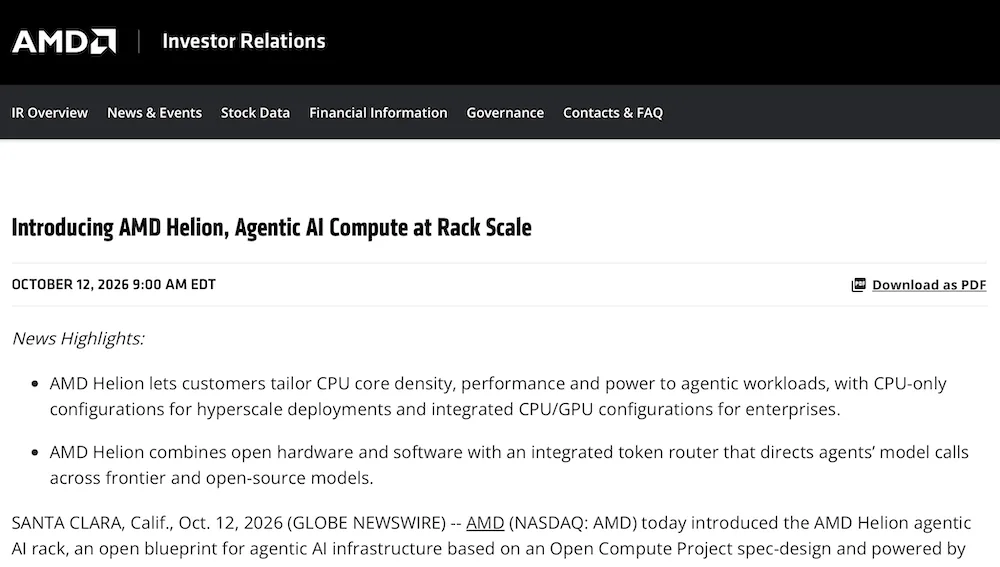
While Bolt Graphics raises funding, the giants have not stood still. On October 12, AMD launched Helion, a rack-scale computing solution for agentic applications, which can combine EPYC processors and Instinct GPUs according to customer needs, or use a CPU-only configuration; the first configurations are expected to launch in November 2026. On the same day, Nvidia announced it was contributing the rack and compute tray designs for its Vera Rubin platform to the Open Compute Project (OCP); on October 14, it also launched the cuPotential software library for building AI agents that can simulate atomic and molecular interactions. Competition has extended from single-chip performance to the application ecosystem.
- Worth watching: Teams working on electromagnetic simulation, photonic chip research, or FP64-dependent scientific computing, as well as data centers and film/TV and 3D production teams looking to diversify their GPU supply, can keep an eye on Zeus’s follow-up tests and customer list.
- Better to wait: Individual users who want to buy a gaming graphics card. Zeus plans to target professional markets such as 3D art creation and game development first, with consumer graphics cards coming later; mass production is targeted for late 2027 to early 2028. Gaming graphics cards also need extensive game optimization and developer support.
Final Thoughts
Bolt Graphics has chosen to avoid the main battlefield of mainstream AI compute and instead carve out niche scenarios with dedicated hardware. Whether this path works depends on whether the technology can become a deliverable product and whether customers are willing to pay. For PC users, having one more GPU option in the future is not a bad thing.