
Core Event: TechCrunch Disrupt 2026 to Focus on the Central Question of Scaling AI Enterprises
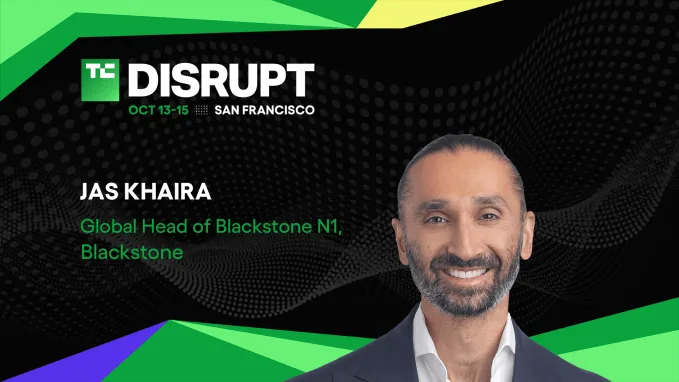
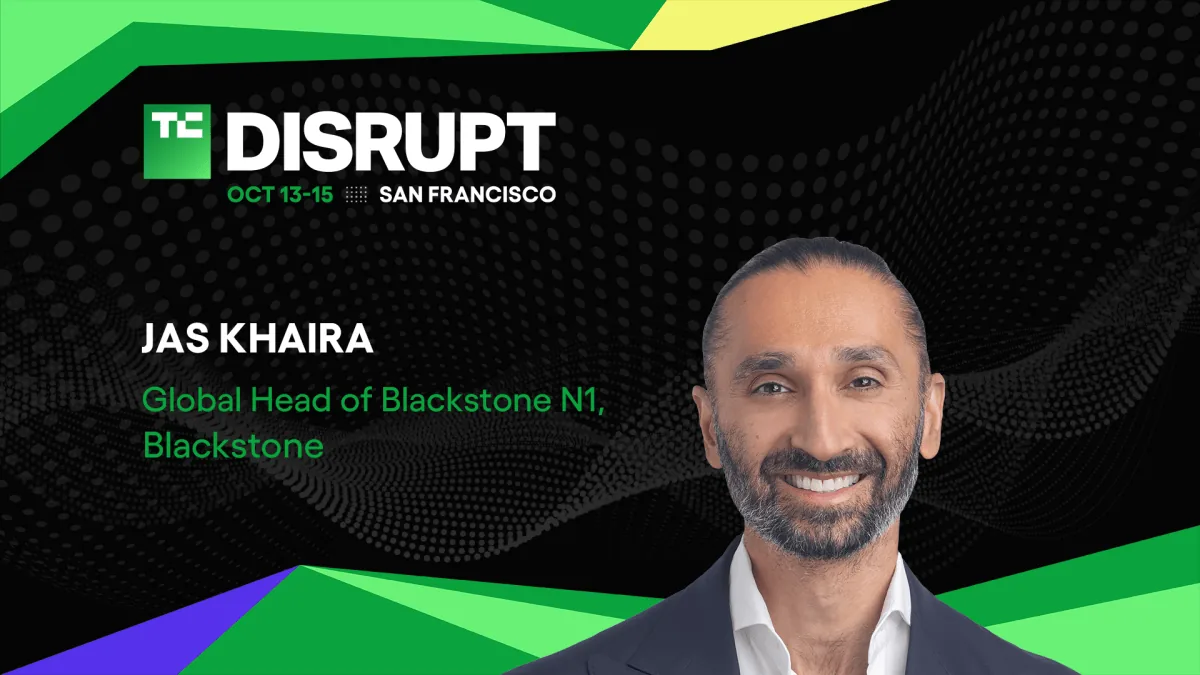
From October 13–15, 2026, TechCrunch Disrupt will take place at Moscone West in San Francisco. Jas Khaira, Head of Global N1 at Blackstone, will deliver a keynote on the Builder Stage, sharing an in-depth presentation titled “Building the Next Generation of AI Giants.” Here are the key facts:
- Speaker: Jas Khaira, Head of Global N1, Head of Growth Investing, and Head of Tactical Opportunities for the Americas at Blackstone
- Topic: “Building the Next Generation of AI Giants”
- Date & Venue: October 13–15, 2026, Moscone West, San Francisco, USA
- Ticket Policy: First ticket at standard price; second ticket at 50% off; teams of 4 or more receive additional discounts
- Source: Published via the TechCrunch AI column, URLs: https://techcrunch.com/2026/10/02/techcrunch-disrupt-2026-blackstones-jas-khaira-on-building-the-next-generation-of-ai-giants/
Khaira joined Blackstone in 2004 and established the N1 platform, which focuses on the AI ecosystem and next-generation high-growth companies. His talk will center on how capital can empower AI companies to build long-term competitive advantages rather than merely chasing short-term expansion.
Reshaping Capital Logic: AI Companies Require Far Greater Scale Than Traditional Models
Scaling AI companies faces an entirely new capital threshold. Unlike traditional software startups that primarily need product development and customer acquisition, today’s AI enterprises often must raise capital well in advance to fund massive investments in compute infrastructure, data centers, and other foundational resources — a so-called “infrastructure-first” growth model.
Two recent representative Blackstone investments underscore this trend:
- Neysa Deal: Blackstone and co-investors agreed to invest up to $600 million in equity in Neysa, an Indian AI infrastructure company, which plans to simultaneously raise an additional $600 million in debt financing;
- Anthropic Ode Project: In July 2026, Blackstone, together with Hellman & Friedman, Goldman Sachs, and other institutions, supported Anthropic’s launch of AI implementation company Ode through a $1.5 billion joint venture.
A striking contrast worth noting: Neysa’s equity and debt financing are exactly equal ($600 million each). This kind of “equity + debt” structural arrangement is becoming increasingly common in infrastructure-intensive AI sectors, reflecting capital providers’ risk-sharing mechanisms for asset-heavy, front-loaded models. It stands in sharp contrast to the lightweight, scalable model typical of consumer-facing applications.
Khaira will emphasize that “raising more money” does not equal “building a stronger company.” When Blackstone evaluates AI startups, it looks beyond short-term growth metrics (customers, revenue, user counts) and focuses on three long-term dimensions:
- Whether the company can build sustainable competitive advantages (e.g., data flywheels, architectural moats, talent retention);
- Capital efficiency and the health of unit economics;
- The leadership team’s ability to balance long-term vision against short-term pressures.
Real-World Challenges for AI Startups: Time Compression Between “Knowing” and “Doing”
Khaira points out that modern AI founders face multiple pressures from the earliest stages of entrepreneurship: while simultaneously building a product, assembling a team, competing for customers, and validating commercial sustainability, they must make critical financing decisions ahead of time — often without sufficient data to determine whether current growth will translate into long-term staying power.
From an investor’s perspective, he will share how Blackstone looks past “early eye-catching metrics” (such as funding amounts, customer counts, valuation growth) to identify companies with genuine longer-term staying power. The evaluation framework includes:
- Capital Structure Rationality: Whether equity financing aligns with the pace of long-term infrastructure investment;
- Technology-Capital Synergy: Whether foundational model capabilities form a positive feedback loop with commercialization goals;
- Team-Stage Fit: Whether founders can adapt their leadership style and organizational focus according to their stage of development.
These two cases also reveal Blackstone’s strategic intent: betting on both the infrastructure layer (Neysa) and the application deployment layer (Ode), forming an investment portfolio that spans the full AI stack.
Recommendations and Action Guide for Prospective Attendees
Who should buy tickets immediately:
- AI startup co-founders who have passed Series A and are planning their next funding round or scaling production;
- CEOs/CFOs of capital-intensive technology companies (e.g., large model training, specialized chips, AI-native platforms);
- AI entrepreneurs or corporate strategy leaders looking to understand institutional investors’ decision-making logic.
Who should hold off or reassess:
- Seed-stage teams that haven’t yet validated product-market fit (PMF): Khaira’s talk focuses on scaling-stage challenges; seed-stage teams would benefit more from product and user validation programs;
- Pure researchers interested only in technology trends without commercial goals: this content focuses on enterprise building rather than model technology itself.
The discount policy clearly encourages “bring your team” attendance: the second ticket at half price is ideal for co-founders, partners, or core business leads to attend together; teams of 4 or more receive additional discounts — signaling that both Blackstone and TechCrunch view this session as a team-level strategic learning opportunity.
Final Thoughts
While the industry at large cheers the short-term explosion of generative AI, Blackstone’s capital deployment has quietly shifted toward the long-cycle proposition of “building enduring companies.” The true barrier to becoming an AI giant has moved beyond technological sophistication to a compound competition of capital endurance and organizational evolution. This conversation at TechCrunch Disrupt 2026 may well serve as an anchoring point for industry understanding in the age of AI scaling.