The big story: Ann Arbor startup Laplace Intelligence uses “AI to attack AI” to provide pre-deployment automated red-teaming for robots and self-driving cars—and has already become slightly profitable.
- What it does: automated red-teaming for physical AI (i.e., stress-testing that deliberately makes systems fail to expose vulnerabilities)
- Origin: spun out of the University of Michigan about a year ago, headquartered in Ann Arbor, Michigan; CEO and co-founder Howie Sun, and co-founder and chief scientist Henry Liu, who was his PhD advisor
- Technology foundation: high-fidelity simulation post-trained on Nvidia Cosmos (an AI world simulation platform), plus AI agents that automatically design corner cases
- Pricing: the report did not disclose pricing; customer contracts are currently mostly project-based, and the company is pushing to turn them into recurring revenue
- When it will be available: the service is already commercially available; the report gives no public launch timeline and does not mention plans to open-source it or release the weights
- Debut: at TechCrunch Disrupt’s Startup Battlefield 200 in San Francisco from October 13 to 15 (20 finalists), taking the stage on Tuesday afternoon, the 13th
In simulation, “everyone is reacting”
Laplace’s engine has two layers. The first is simulation reconstructed from the real world: it is post-trained on Nvidia Cosmos and then fused with real map data to align scale, so a single street-view image can generate an entire street faithful to real-world scale—from an Arizona highway to a Paris crosswalk. Developers can modify scenes in real time with language prompts, such as adding afternoon traffic; Sun says traffic and congestion data comes from navigation providers like TomTom.
The second layer is the behavior of “other actors” in the simulation. In a demo, Sun made the vehicle under test suddenly swerve into oncoming traffic; the car that should have been hit actively swerved out of the way instead of being “clipped through,” as can happen with some generative world models. Sun describes it this way: “Everyone is reacting to everything… it’s more like a world model with interactive participants.”
But the real selling point is AI agents that automatically discover corner cases (rare, tricky scenarios that can trip up AI systems). These agents can draw on all kinds of information—“from news, from police accident reports”—to actively challenge self-driving vehicles and other physical AI. Most autonomous driving companies currently rely on recorded footage converted into simulation, or on humans thinking up scenarios; Waabi and others have begun using AI to generate edge cases, but Sun believes the need will become fully apparent only when general-purpose robots truly enter the real world: “There’s less data for general-purpose robots, and no one knows what real-world edge cases will look like.”
An academic team is already making money, while a rival is valued at $15 billion
The company name comes from “Laplace’s demon”: in 1814, French scholar Pierre-Simon Laplace posited that if one knew the precise state of every particle in the universe, one could fully predict the future. Sun says: “We are essentially using simulation to predict the future of the real world.” He spent the past eight years in academia researching how to challenge autonomous driving AI in simulation; in 2023, a paper by him and his advisor Liu made the cover of Nature, after which calls from autonomous driving companies started coming in.
Surprisingly, the two academic founders with no Silicon Valley résumé have already gotten the company to generate revenue and become slightly profitable. Revenue comes mainly from autonomous driving, with customers including Japanese truck maker Isuzu and Texas-based autonomous trucking company Bot Auto; Nvidia is also a customer, and the three are also working with T-Mobile on a free smart-city pilot in San Jose, California, providing high-level traffic operations. Laplace is also in early talks with warehouse humanoid robot makers.
| Comparison | Laplace Intelligence | Applied Intuition |
|---|---|---|
| Positioning | Automated red-teaming and interactive simulation for physical AI | The “main competitor” named in the report |
| Total funding | Not disclosed | $1.2 billion |
| Post-money valuation | Not disclosed | $15 billion |
| Stage | About a year old, already slightly profitable | Late-stage startup |
| Shared customer | Isuzu | Isuzu |
Sun isn’t too worried about competitors. He sees “using AI to test AI” as “a new paradigm that fundamentally changes how physical AI is tested,” turning testing into a “dynamic, interactive process.” “That will be the biggest moat.”
Who should use it, and who should wait

Who should use it: teams already at the real-vehicle or real-machine stage but lacking real-world edge-case data, especially autonomous trucking and warehouse humanoid robotics; teams whose tech stack is already built on Nvidia Cosmos will face lower migration costs; companies in the same space can also use the early examples of Isuzu, Bot Auto, and Nvidia to validate the methodology.
Who should wait: projects still stuck at the lab-prototype stage with no near-term deployment plans; because contracts are mostly project-based and there is no standardized subscription pricing yet, budgets need to be approved project by project; large autonomous driving companies that have already built large-scale edge-case generation pipelines of their own may want to wait and see for a round.
Final thoughts
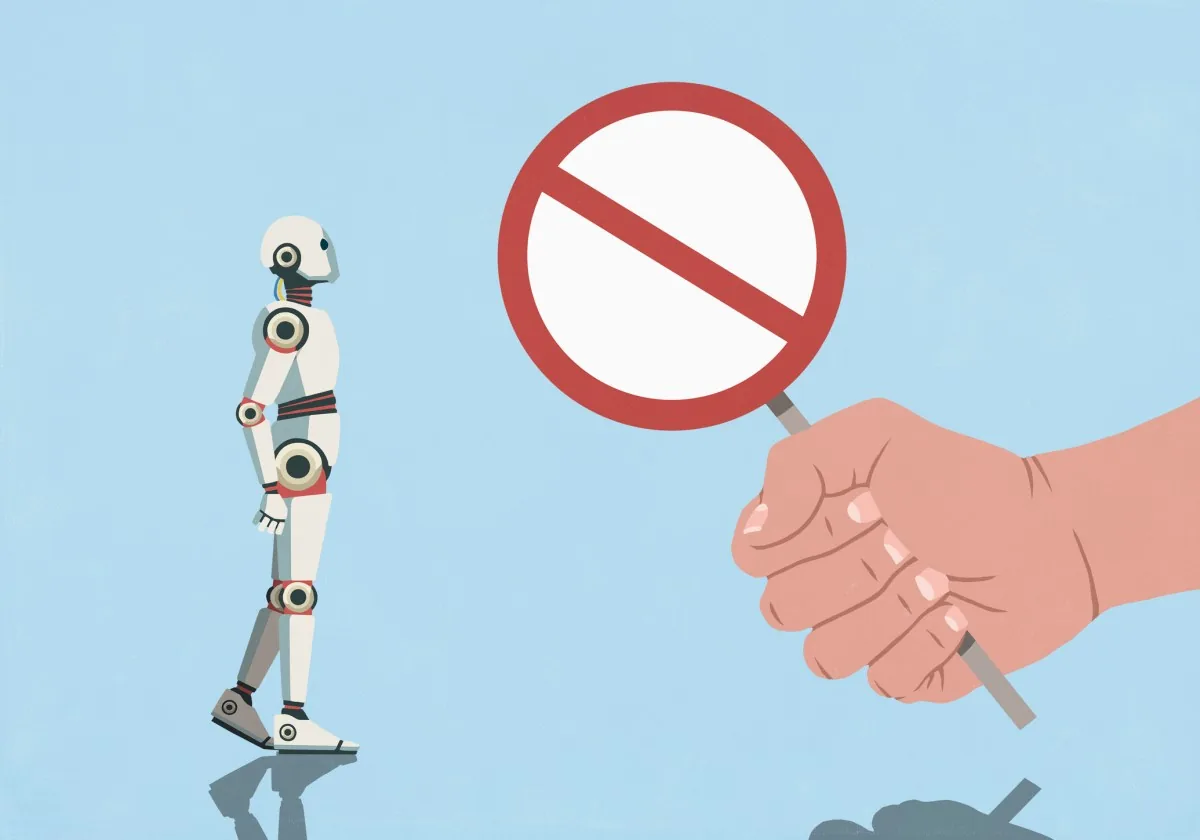
Safety validation for physical AI is shifting from “humans thinking up scenarios” to “AI generating scenarios,” and this step is inevitable sooner or later. Laplace shows that selling “evidence” may be a faster way to make money than selling “capability,” but the ceiling also depends on whether customers are willing to keep paying for a trust bill that is still taking shape. Whether using AI to test AI can become a moat depends on whether project-based work can turn into always-on infrastructure.