
Baidu’s 15-Year Chip Journey: From Cost-Driven Self-Reliance to a 30,000-Card Cluster Payoff
Core Event: Baidu’s Highest Technical Honor Reveals Long-Term Payoff
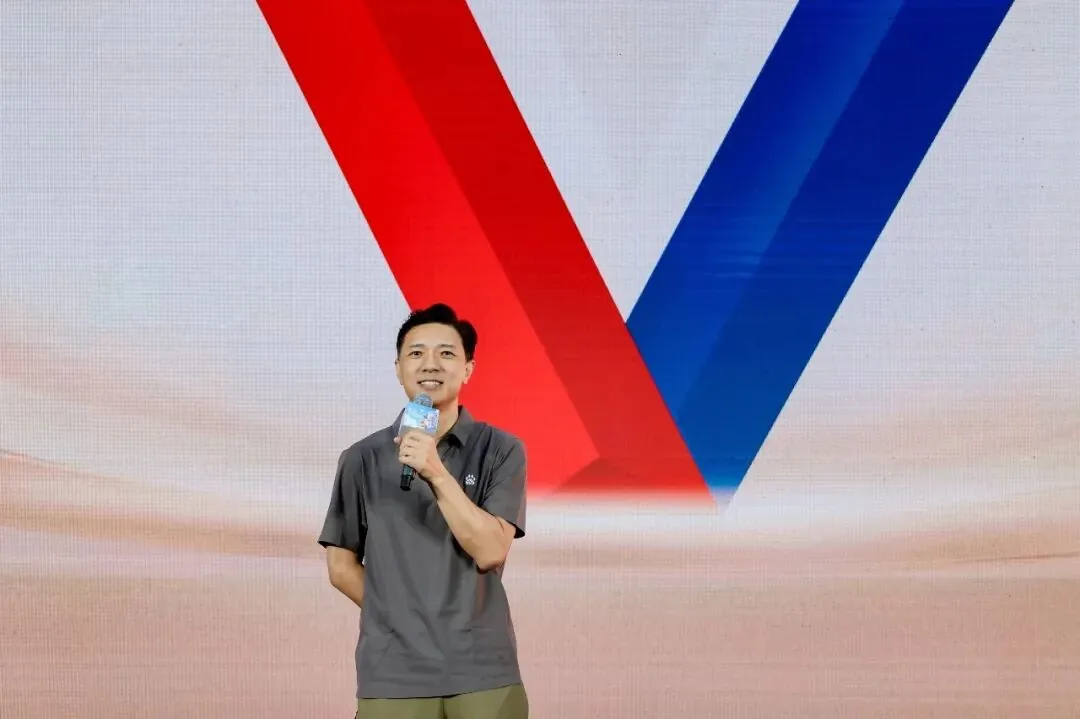
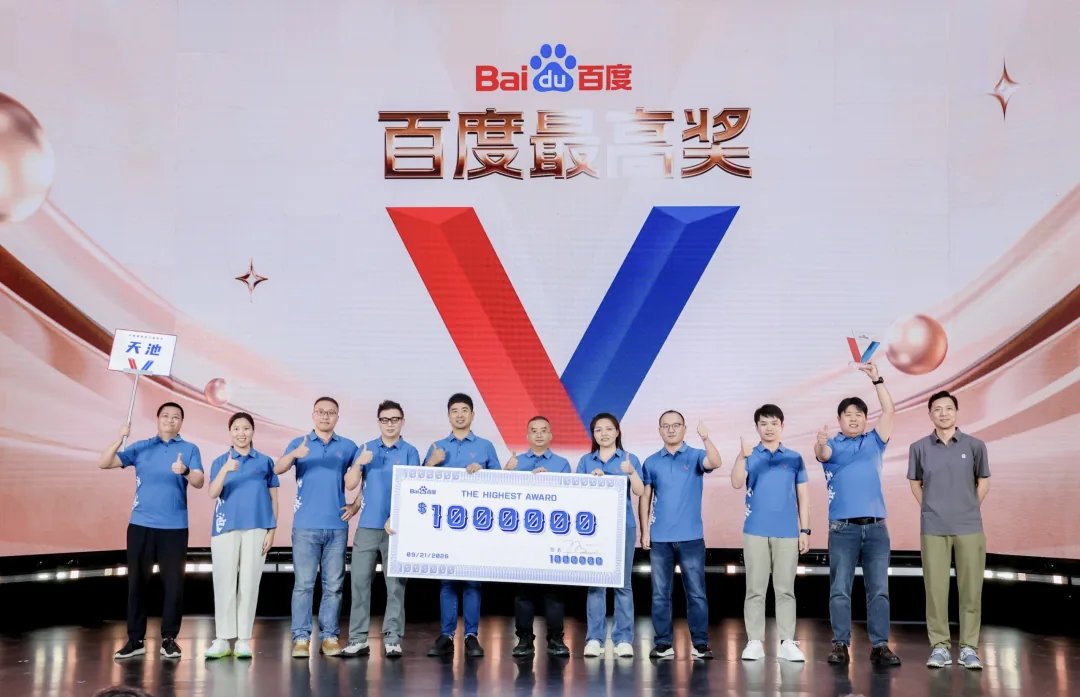
On September 21, 2026, Baidu founder Robin Li awarded the company’s “Highest Technical Prize” to two technology teams, each receiving a $1 million reward. The winning teams are:
- Tianchi Team: Self-developed Tianchi super-node architecture for trillion-parameter MoE large models
- Dodo Team: Enterprise AI employee solutions
Key Facts:
- Baidu’s Highest Technical Prize has been awarded for 16 years since 2010, with a cumulative prize pool approaching 400 million RMB
- Both Shortlisted teams won (no runners-up), each receiving $1 million
- Awarded projects represent Baidu’s two key technical tracks: Tianchi super-node and enterprise AI agents
- Kunlun Chip business submitted confidential application to HKEX for listing (early 2026)
A Cost Equation Set Off a 12-Year Chip Odyssey
Around 2010, Baidu’s search server clusters expanded rapidly with growing traffic. Imported chips cost over US$10,000 per unit, squeezing profit margins. The Unexpected twist: This 15-year journey began not from ambition for technological leadership, but from basic cost pressure.
Baidu’s massive, continuous, and evolving computing workloads (search, speech recognition, image identification) provided the ideal testing ground for chips. In a 2011 internal memo, Li stated the company should not pursue short-term profits at the expense of investing in new businesses and innovations.
Critical milestones:
- 2010-2012: Started with FPGA and other acceleration approaches, driven by engineering teams solving specific problems
- 2013: Founded the Institute for Deep Learning (IDL), with Li serving as director
- 2015: A chip team won the Highest Technical Prize (first award to chip-related projects)
- 2016: Built large GPU clusters; Li announced at Baidu World: “The mobile internet era has ended; the next act is artificial intelligence”
- 2018: First-generation Kunlun chip unveiled (8 years from initial team formation to launch)
- 2021: Second-generation Kunlun 2 entered mass production; chip business spun off into independent company with 1.3 billion RMB valuation post-Series A
- 2024: Third-generation chip mass-produced, deployed across energy, industrial, transportation, finance, and internet sectors, cumulative deployment reaching thousands of units
- 2025: Lit China’s first fully self-developed 30,000-card cluster
- 2026: Confirmed submission to HKEX for listing (confidential status)
Full-Stack Synergy: From Single Chip to System-Level Feedback
At scale of tens of thousands of chips, challenges shift beyond raw performance. Kunlun’s key hurdles became inter-chip communication, task scheduling, fault recovery, and software compatibility — these now determine overall system efficiency.
Baidu’s AI stack forms a closed feedback loop:
- KunlunChip provides底层算力 (fundamental computing power)
- Baidu Intelligent Cloud manages infrastructure
- ERNIE large models handle training and inference
- Agent applications generate continuous workloads, with operational data feeding back to底层 infrastructure
Li summarized the pattern in a 2025 interview: “Success probability increases when outcomes depend fundamentally on technological advancement—especially when many years of investment and iteration are required.”
From Chip Team to Robotaxi: Two Validates of Long-Termism
The history of Baidu’s Highest Technical Prize documents a roadmap of long-term technological bets. Beyond KunlunChip, the Lingyan Team (autonomous driving division) also endured over a decade of R&D, culminating in “Luobo Kuai Pao”, which ranks globally among the top-tier autonomous driving systems. These parallel decade-scale journeys validate Baidu’s patience with long-cycle technology.
Implementation Guidance and Potential Impact
Target Early Adopters:
- Enterprise clients requiring large-scale AI compute: KunlunChip deployed at China Merchants Bank, State Grid, China Steel Research, suitable for institutions needing supply chain security
- Technology investors: Listing imminent; watch commercialization progression from thousands-of-units deployment to revenue generation
Wait-and-See Scenarios:
- Performance-critical model training: Single-chip performance parameters undisclosed, need technical disclosures post-listing
- Small-scale deployments: Current cost-benefit advantage seems to emerge primarily at ten-thousand-card scale
Final Thoughts
KunlunChip’s journey began with commercial cost pressure and succeeded through sustained faith in technology. It demonstrates that Chinese enterprises now possess the depth of capability to build full-stack self-reliant AI infrastructure—while extending the innovation payoff timeline, reshaping how technological progress gets measured.