
Asus has launched its first Intel Arc discrete GPU — the UGen Intel Arc Pro B70 32GB GDDR6 — aimed at the AI inference and workstation market. According to an October 17 report from IT之家 citing Wccftech, this marks Asus’s return to the Intel Arc discrete graphics camp after sitting out several generations.
- Model: UGen Intel Arc Pro B70 32GB GDDR6
- Core specs: Intel Xe2 architecture Big Battlemage GPU, 32 Xe cores, 256 XMX AI engines
- Memory: 32GB GDDR6 ECC, 608GB/s memory bandwidth
- Compute and power: up to 367 TOPS INT8, 310W typical board power
- Price: Not listed on Asus’s product page; comparable Intel Arc Pro B70 cards typically sell for $1,299–$2,000 (roughly ¥8,701–13,397)
- Availability: No official pricing or launch date yet
What problem is this card trying to solve
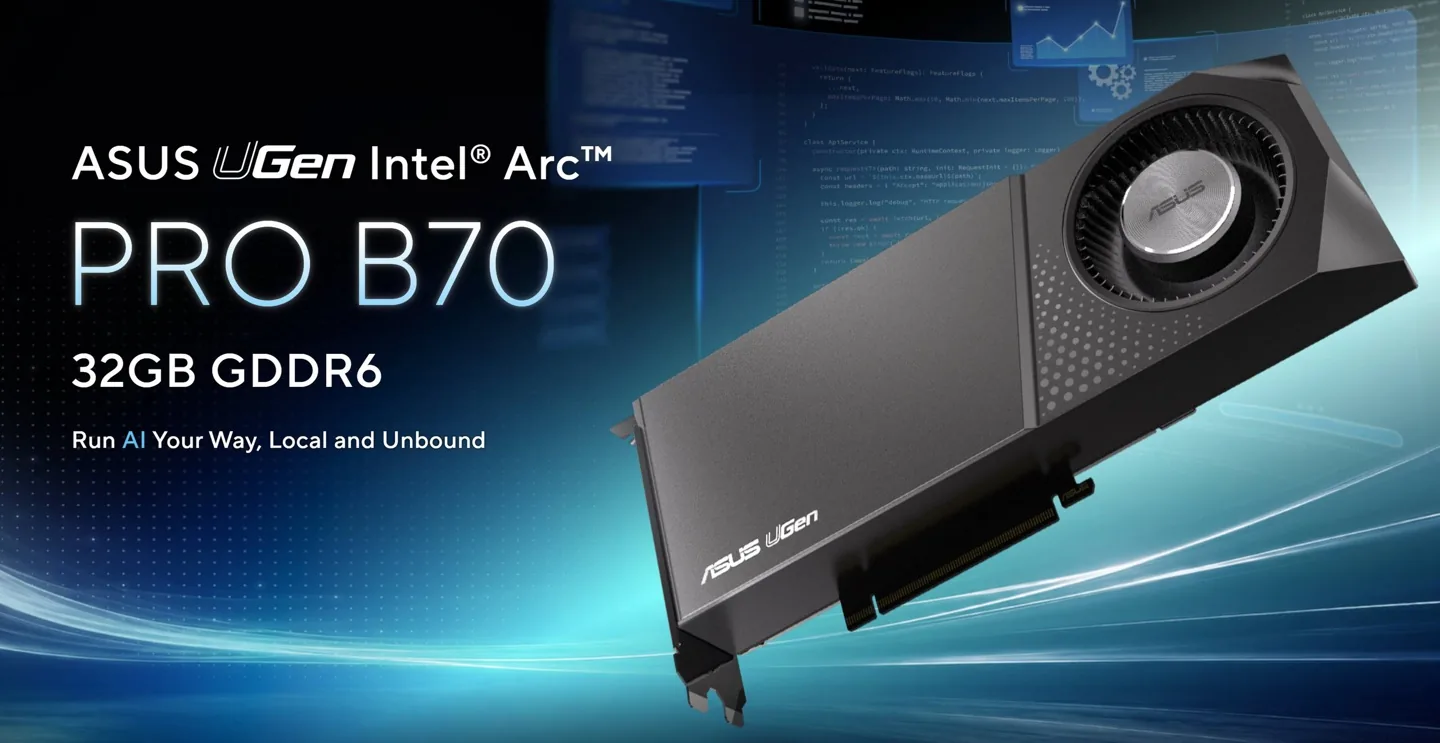
Judging by the specs, it isn’t built for gamers. XMX is the matrix-math unit inside Intel GPUs, purpose-built to accelerate AI compute; ECC memory automatically corrects bit flips, making it more reliable than ordinary memory over long model runs; TOPS measures integer throughput, and INT8 is the low-precision format commonly used for inference. The point of 32GB of memory is that a single card can hold larger models, cutting down on weights being shuttled back and forth between VRAM and system memory.
Asus’s compatibility list covers the mainstream local LLM toolchain: vLLM and llama.cpp handle inference serving and loading quantized models, Ollama is the local model runner most ordinary users reach for, PyTorch is the training and inference framework, OpenVINO and oneAPI are Intel’s inference acceleration and heterogeneous computing toolkits, and Vulkan covers graphics and general-purpose compute interfaces. In other words, the question this card is meant to answer is “can I just run it out of the box?”
Multi-GPU setups are another focus: up to four cards working together for a combined 128GB of memory, enough to run larger models. Physically, it uses a dual-slot design with a blower-style cooler, offers one HDMI and three DisplayPort outputs, and connects over PCIe 5.0 x16.
The most striking contrast is the price range. Asus hasn’t announced pricing for the UGen Intel Arc Pro B70, but comparable Intel Arc Pro B70 cards generally sell for between $1,299 and $2,000 — a ceiling about 50% above the floor, depending on model and sales channel. That kind of spread within the same GPU class shows that custom board designs, memory configurations, and cooling solutions still create meaningful tiers, and until Asus’s pricing lands, it’s hard to say where this card sits. The other contrast comes from Asus itself: as one of the largest board manufacturers by volume, it sat out multiple generations of Intel Arc discrete graphics, only now releasing its first product.
Key specs at a glance
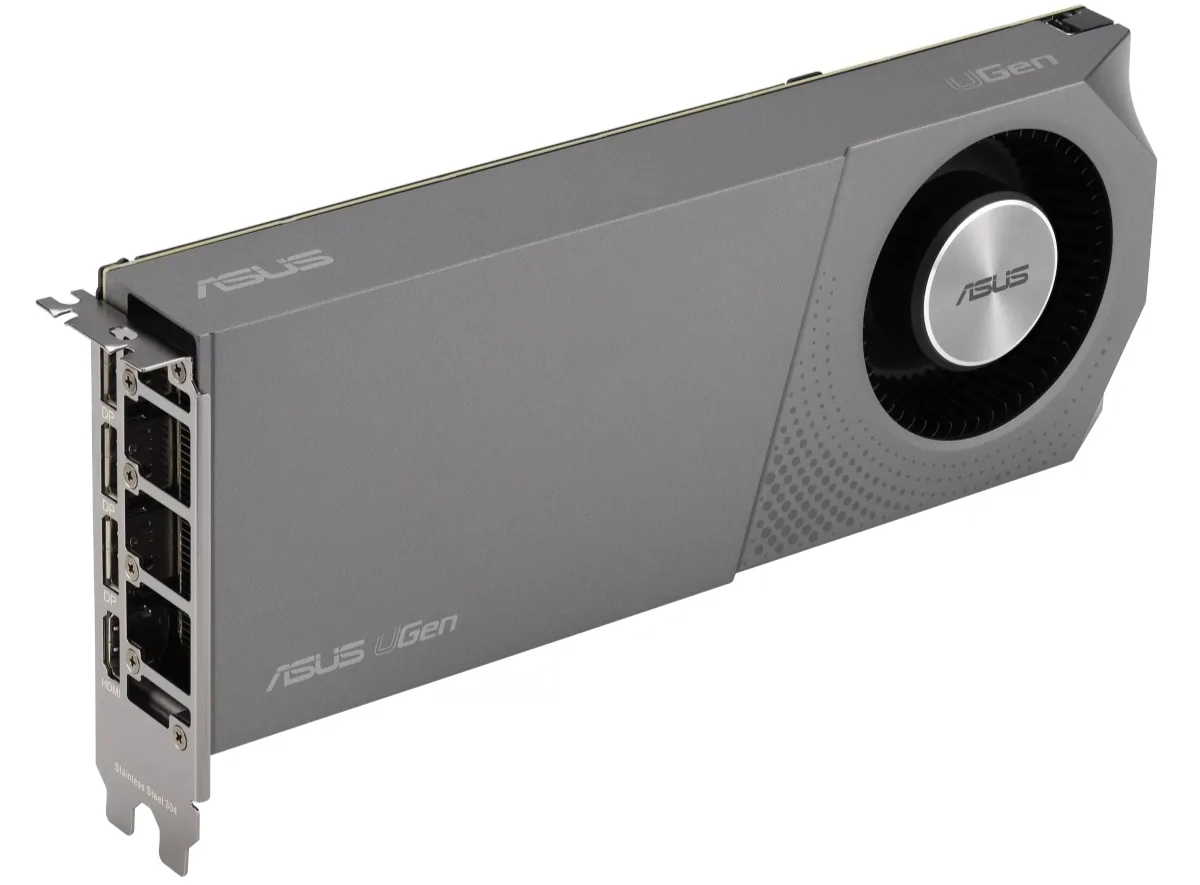
| Item | Spec |
|---|---|
| Model | UGen Intel Arc Pro B70 32GB GDDR6 |
| GPU architecture | Intel Xe2 (Big Battlemage) |
| Xe cores / XMX engines | 32 / 256 |
| Memory | 32GB GDDR6 ECC, 608GB/s bandwidth |
| INT8 compute | up to 367 TOPS |
| Typical board power | 310W |
| Bus and outputs | PCIe 5.0 x16; 1×HDMI, 3×DisplayPort |
| Cooling and size | dual-slot, blower-style cooler |
| Multi-GPU scaling | up to 4 cards, 128GB total memory |
| Price | Not announced; comparable cards ~$1,299–$2,000 |
| Supported frameworks | vLLM, llama.cpp, Ollama, PyTorch, OpenVINO, oneAPI, Vulkan |
Who should buy it, and who should wait
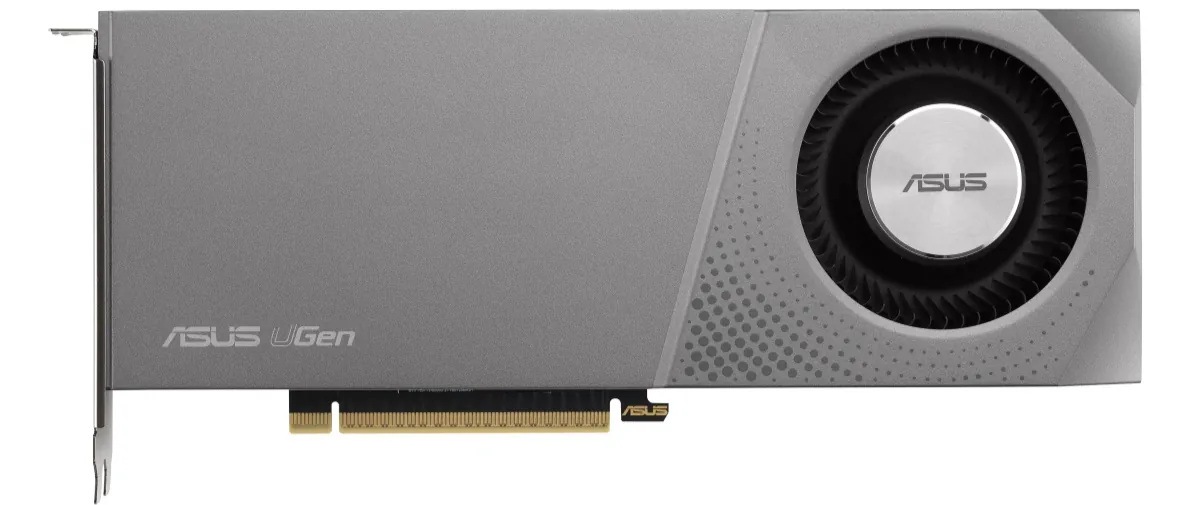
Who it’s for: workstation users who need to run AI inference locally or at the edge and are short on VRAM; machines whose cases can fit a dual-slot blower card, whose power supplies can cover 310W typical draw, and whose motherboards have a PCIe 5.0 x16 slot; and teams with concrete multi-GPU expansion plans who want to lock in 128GB of headroom from the start.
Who should wait: there’s no rush to order before pricing is announced — a $1,299–$2,000 spread among comparable products is too wide, so waiting for a firm number is the safer play; if you’re only running 7B-class quantized models, 32GB of ECC memory is plainly overkill; and pure gaming isn’t in this card’s target scope anyway. Before buying, you should also confirm that your framework and driver versions have been validated on Asus’s compatibility list.
Final thoughts
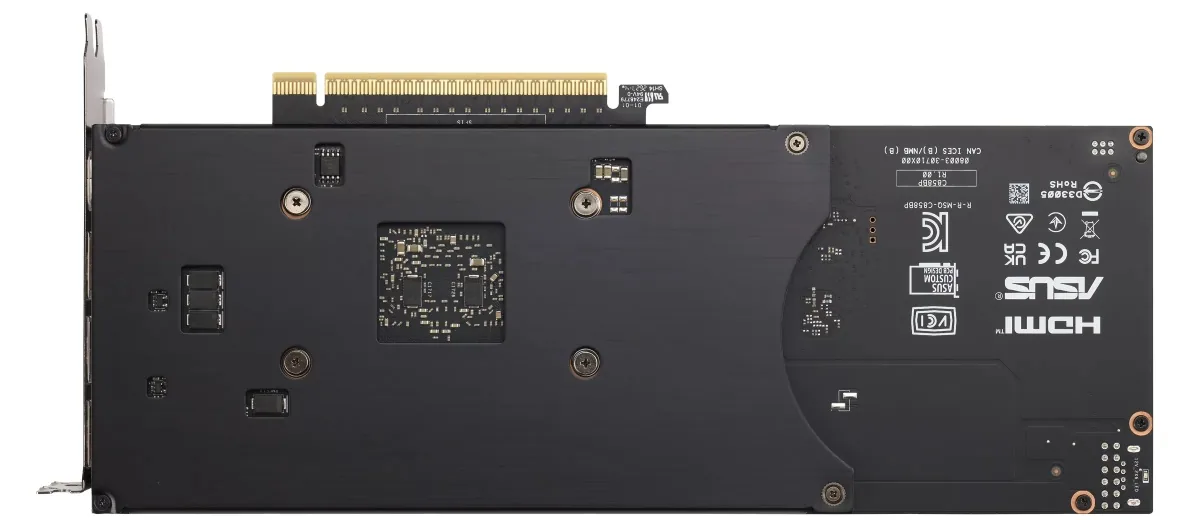
For Intel to establish a foothold in discrete graphics, it needs a heavyweight board partner, and Asus’s return is more noteworthy than the card’s specs. Competition in workstation AI cards is shifting from “does a product exist?” to “is the software stack smooth?” Until pricing is announced, this card leaves the market with a blank still waiting to be filled in.