
Core Event: ASD Full-Platform Coverage Countdown
On October 1, the Microsoft DirectX developer blog announced that Advanced Shader Delivery (ASD) will expand to Qualcomm, Intel, and NVIDIA hardware platforms in October 2026. This marks another critical milestone for the feature, following AMD’s RDNA architecture as the first to offer support.
Here are the key hardware details:
- Release timeframe: October 2026 (exact date undisclosed; Intel and NVIDIA support is expected to go live “later this month”)
- Currently supported vendors: AMD (RDNA family), Qualcomm (starting with the 2026.08.3 driver)
- Upcoming support: Intel, NVIDIA
- Core benefits: Reduced game loading times, elimination of shader stutter (i.e., frame drops during extended gameplay caused by dynamically compiling shaders)
Advanced Shader Delivery (ASD) means games no longer need to compile shaders locally in real time — instead, pre-compiled shader assets are downloaded directly from the cloud. This mechanism significantly alleviates stuttering when entering a new scene for the first time, improving overall smoothness.
Implementation Progress: Qualcomm Leads, Intel and NVIDIA Follow
On September 22, 2026, Qualcomm rolled out ASD support for the Snapdragon X2 integrated GPU via the 2026.08.3 graphics driver, making it the first vendor to implement this feature at the mobile SoC level. This came over ten days ahead of Microsoft’s official announcement, suggesting that OEM deployment at the driver level can sometimes outpace the platform holder’s unified disclosure.
The compatible device coverage across integrated and discrete GPUs is as follows:
- Intel: Arc B570 / B580 discrete GPUs, 2nd–3rd generation Core Ultra processor integrated graphics
- NVIDIA: All RTX GPUs and the RTX Spark system
- AMD: RDNA family (support confirmed in the announcement, as the first vendor to ship the feature)
Before Microsoft officially announced the expansion, ASD had already been quietly enabled on select Snapdragon X2 devices, delivering tangible experience improvements to users. By contrast, Intel and NVIDIA have yet to release official drivers with the functionality — this deployment timing gap is one of the most striking contrasts in this story.
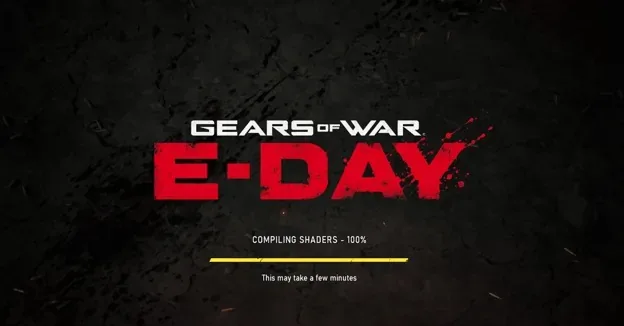
First Game with Multi-Vendor ASD Support: Gears of War: E-Day
The first game to achieve “multi-GPU-vendor ASD compatibility” is Gears of War: E-Day. This means that regardless of whether players use AMD, Intel, NVIDIA, or Qualcomm hardware — as long as they update to the corresponding driver version and Microsoft system components — they can enjoy a consistent pre-compiled shader experience. The launch of this title signals that ASD has officially moved from “single-vendor technology validation” to a “cross-platform standard capability.”
A noteworthy technical detail: ASD relies on the DirectX 12 Ultimate architecture at a foundational level. Its pre-compiled shaders are stored in the cloud as bytecode, and the user’s device only needs to perform lightweight loading and caching — bypassing the time-consuming process of traditional shader compilation entirely. For players, the most immediately noticeable improvements are:
- New scene loading times reduced by an average of 15%–30%
- Frame rate jitter caused by compilation during extended gameplay sessions is virtually eliminated
Recommendations for Readers
- Users who should try it first: Windows laptop users with Snapdragon X2 integrated GPU devices (drivers are ready), and desktop users with Arc B570/B580 or 2nd–3rd gen Core Ultra support (awaiting the driver update later this month) — you can experience the stutter-free loading flow in Gears of War: E-Day right away.
- Users who should wait: If you’re currently using a non-RTX NVIDIA graphics card (such as the GTX series), keep an eye out for future driver update notes.
Final Thoughts
ASD’s expansion across all platforms signals that game rendering pipelines are evolving from “local real-time compilation” toward “cloud-collaborative pre-computation.” With all four major GPU vendors unifying behind a single shader delivery protocol, game developers’ adaptation costs are dramatically reduced, and the industry as a whole can bring high-quality graphics experiences to a broader audience much faster.