
JPMorgan: Apple Is Locking In 1.4nm Capacity Two Years Early
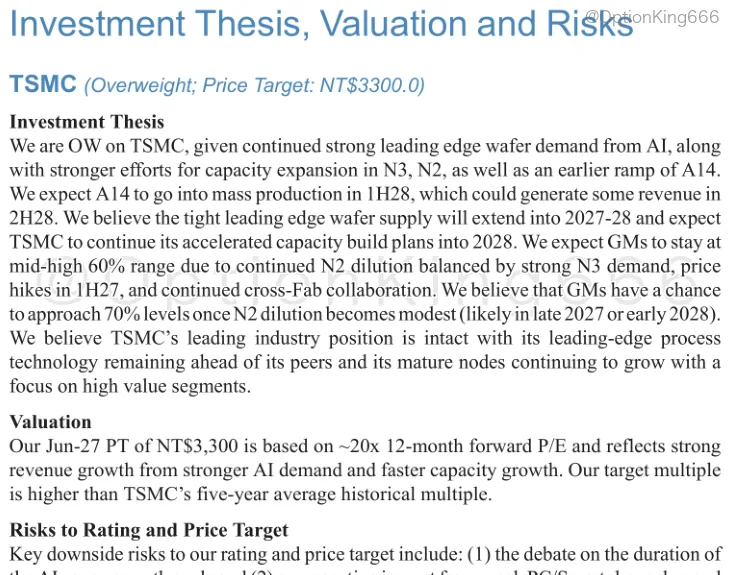
A new JPMorgan research note says Apple plans to pay up front to secure TSMC’s first 1.4nm capacity, with the 2028 iPhone expected to be among the first devices to carry an A-series chip built on that node. The claim was relayed by IT之家 on October 20, and it comes from an investment-bank report rather than an official announcement from Apple or TSMC.
The hard facts, as stated:
- Who: Apple, targeting TSMC’s most advanced 1.4nm lines
- What: locking in first-batch capacity at that node — the report calls it a large spend, but no dollar figure, wafer volume or contract term is disclosed
- When it lands: the 2028 iPhone is expected to debut it
- Where things stand now: Apple launched its 2nm A20 Pro last month, used in iPhone 18 Pro, iPhone 18 Pro Max and the foldable iPhone Duo
- Who gets it: the material only covers Apple’s own A-series chips, with no mention of other customers
One term worth unpacking: “1.4nm” is a process-node name, the industry’s label for a generation of manufacturing technology. A smaller number generally means more transistors packed into the same die area — it does not mean any structure is physically 1.4nm wide.
2nm Just Shipped; 1.4nm Is Already Queued
Apple only launched the 2nm A20 Pro last month, and by product cadence it is still the newest flagship silicon. Yet the report says Apple has not slowed down after 2nm volume production and is already laying groundwork for 1.4nm two years out. Booking the next generation while the current one is barely on shelves is the real story here.
According to the note, moving from 2nm to 1.4nm typically means more transistors in the same area, which could bring stronger performance, lower power draw and better thermals. In practical iPhone terms, that may translate into smoother on-device AI, longer battery life and room for thinner designs. Those are expectations, not measured results — and no multipliers or percentages are given. The report also does not say what share of total 1.4nm capacity Apple would hold, or whether the arrangement is exclusive.
The second layer is capacity competition. JPMorgan frames the early booking as a key move in the AI compute race: as Nvidia and other AI chipmakers compete heavily for TSMC’s most advanced capacity, Apple could otherwise face tight supply and delayed delivery. In other words, TSMC’s leading-edge lines are themselves a scarce resource, and Apple is no longer queueing only against phone makers. For a company long seen as one of TSMC’s largest customers, having to reserve a slot two years ahead says something about how tight leading-edge supply has become.
2nm vs 1.4nm: What the Source Actually Says
| Item | A20 Pro (2nm) | Next A-series (1.4nm) |
|---|---|---|
| Node | 2nm | 1.4nm |
| Status | Launched last month | Report says Apple has reserved first-batch capacity |
| Devices | iPhone 18 Pro, iPhone 18 Pro Max, foldable iPhone Duo | 2028 iPhone (expected first) |
| Expected gains | — | More transistors per area; better performance, power and thermals; possibly smoother AI, longer battery, thinner designs |
Except for the already-launched node and devices, everything in the table is JPMorgan’s expectation. Neither Apple nor TSMC has published official specifications.
Who Should Care, Who Should Wait
Worth tracking now: if you plan to replace your phone around 2028 and care about on-device AI and battery life, treat 1.4nm as a rough timing marker. If you follow the semiconductor supply chain, this is more about capacity allocation than about any single product.
Fine to wait: anyone buying an iPhone 18 Pro, iPhone 18 Pro Max or iPhone Duo need not hold off — a node two years away has no bearing on a purchase today. And with a single bank report as the only source, no dollar figure, no capacity numbers and no official confirmation, it is safer to read this as a roadmap hint than as a settled product plan.
Final Take
From 2nm to 1.4nm, Apple is moving further ahead of the process roadmap. With AI chipmakers all chasing capacity, leading-edge nodes are shifting from a technical choice into a resource you have to reserve. Whether the 2028 iPhone really debuts it, and how much it improves, still awaits official word and real-world testing.