
M5 Ultra Chip Mac Studio Emerges on Geekbench
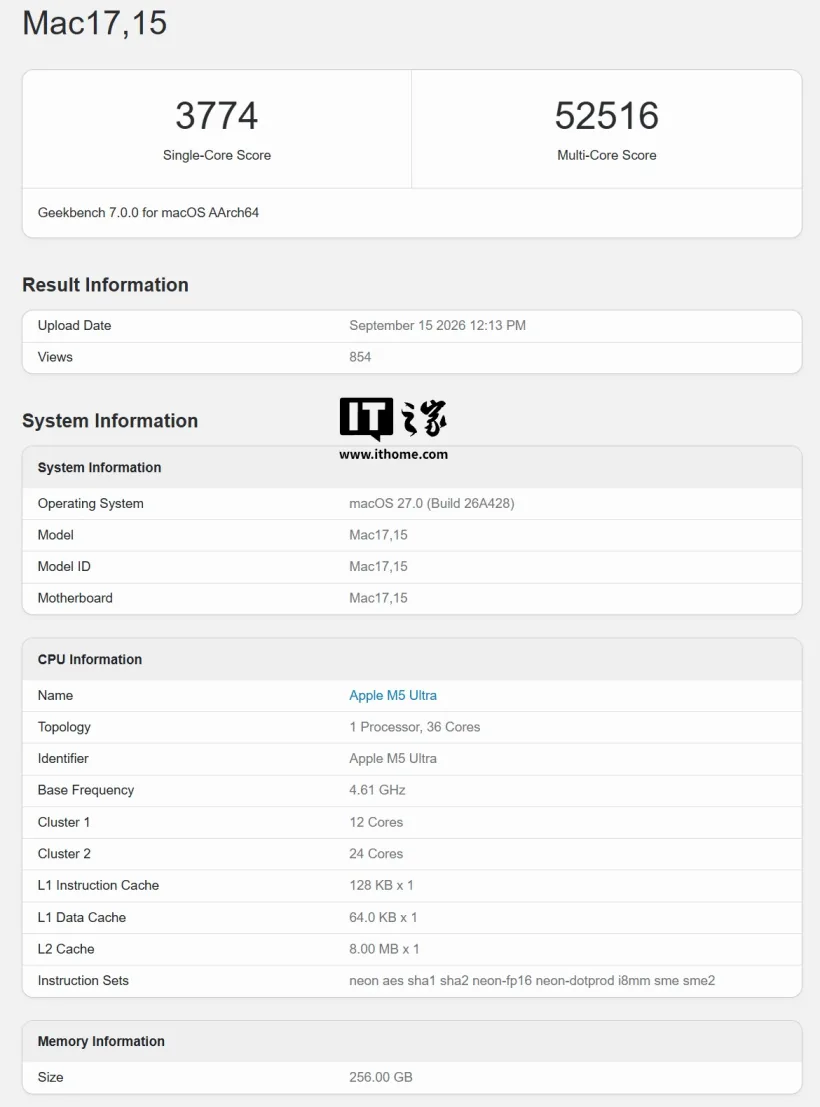
A new Mac Studio credited with the M5 Ultra chip appears on the Geekbench benchmark database under device identifier “Mac17,15”. Based on benchmark data recorded on September 15, the tested unit features a 36-core CPU and 256GB of memory configuration with the following results:
- Single-core CPU: 3,774 points
- Multi-core CPU: 52,516 points
- Metal GPU: 360,019 points
- OpenCL GPU: 216,619 points
Notably, IT Home’s comparison reveals the GPU performance increase of 56.2% over the M3 Ultra model, setting a new record for Mac Studio’s graphics capabilities.
Performance Details and Historical Context
The current benchmark dataset includes only a single machine configuration, with no additional variant details disclosed. However, cross-referencing with previous M3 Ultra data enables a direct performance comparison:
| Metric | M5 Ultra (Current) | M3 Ultra (Baseline) | Improvement |
|---|---|---|---|
| GPU (Metal) | 360,019 | ~232,980* | +56.2% |
| CPU (Single-core) | 3,774 | Not publicly available | — |
| CPU (Multi-core) | 52,516 | Not publicly available | — |
Estimated based on reported improvement percentage.
The GPU performance leap significantly outpaces CPU gains, underscoring Apple’s intensifying focus on parallel processing optimization within its unified memory architecture—benefiting video rendering, 3D modeling, and other compute-intensive workflows.
Metal is Apple’s low-overhead graphics API designed specifically for its ecosystem, enabling more efficient GPU scheduling and full utilization of the unified architecture. OpenCL, as a third-party cross-platform standard, sees limited practical adoption on Apple Silicon, making Metal scores the more reliable performance indicator.
CPU: Steady Gains, Not Headline Numbers
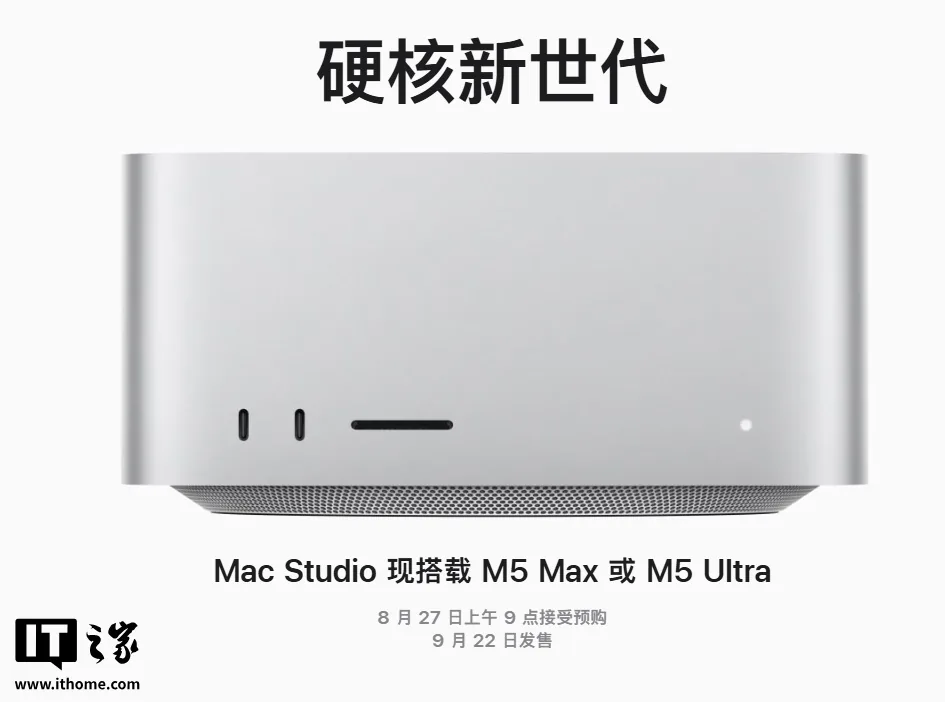
The current M5 Ultra multi-core score (52,516 points) shows modest improvement over the M3 Ultra (no comparative figure published), indicating Apple is pursuing incremental refinements rather than radical architectural overhauls. The company appears to be optimizing within thermal and power constraints through micro-architecture adjustments and enhanced cache management, prioritizing sustainable performance delivery. IT Home notes that the recently exposed M6 Mac mini—another device seeded from the same product family—suggests Apple may be concurrently advancing both M5 and M6 chip iterations.
Who Should Buy Now? Who Should Wait?
Buy now if you: Rely heavily on GPU-accelerated professional workflows—8K video editing, real-time 3D rendering, or on-device AI model training. If your current M3 Ultra model frequently throttles under heavy workloads, the Metal performance uplift delivers tangible day-to-day benefits.
Wait if you: Primarily use your machine for general office tasks or light media consumption. With Mac Studio’s premium starting price, M2 Ultra or M3 Ultra models remain compelling value propositions for non-rendering workloads; additionally, Apple’s traditional fall launch timeline suggests final specifications and pricing may differ from this pre-release benchmark configuration.
The Bottom Line
The M5 Ultra’s pronounced GPU enhancement aligns with Apple’s years-long investment in unified architecture optimization. As generative AI tasks increasingly demand parallel computation power, Metal API refinements will directly shape professional software responsiveness and workflow efficiency.