
Apple Intelligence China Beta lands later this month, Siri AI missing at launch

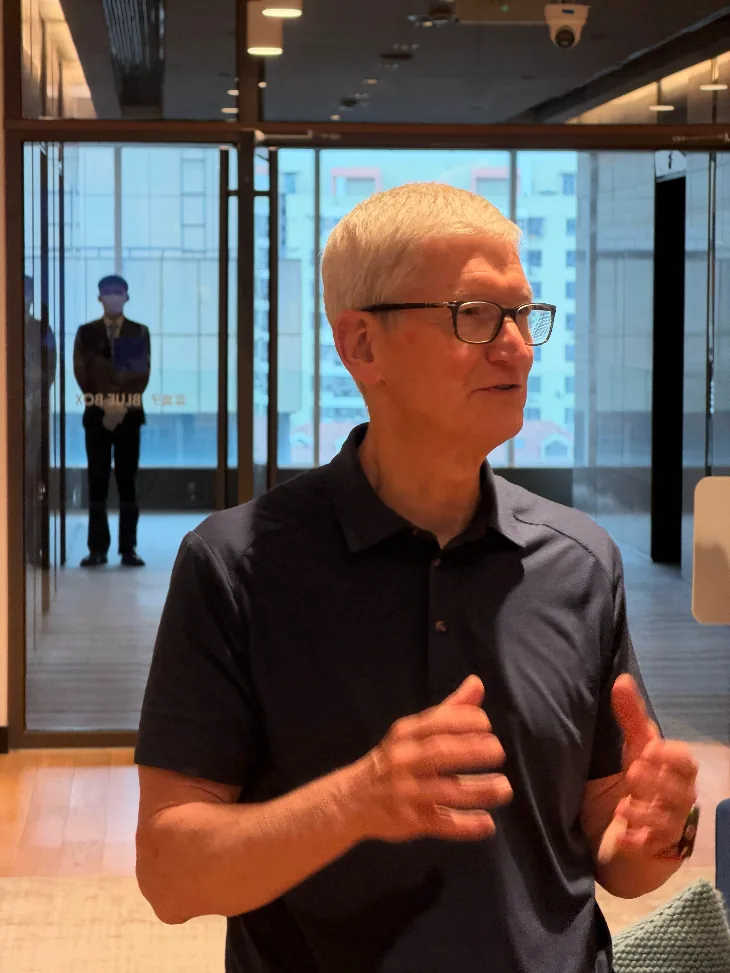
On October 15, during a media event where Tim Cook visited Blue Box Sleep, in response to questions from reporters present, Apple’s CEO gave a timeline for Apple Intelligence in China: the Beta version will launch later this month. The confirmed hard facts are as follows:
- Launch time: later this month, first pushed as a Beta version
- Initial features: real-time translation, erase tool in Photos app, writing tools
- Notably missing: Siri AI; Tim Cook said it is “also being worked on”
- Supported models: iPhone 15 Pro, iPhone 15 Pro Max and later, including iPhone Air, iPhone 18 Pro series, and iPhone Duo, which opened for pre-order that evening
- Compliance progress: according to the Ministry of Industry and Information Technology (MIIT) telecom equipment network access license information, multiple China-market iPhones completed network access license renewal on September 29
Two terms deserve a brief explanation. “Network access license” is the network entry qualification a phone must obtain before it can be legally sold in China; “large model filing” is the registration process before a generative AI can offer services to the public. In other words, Apple has passed both gates: hardware qualification and model compliance.
Why are two Alibaba models on the filing list?
What really deserves a closer look is that this license renewal added three filing numbers, not just one.
Besides Apple Intelligence itself, Tongyi Wanxiang and Tongyi Qianwen also appear in the filing information. Their numbers are Shanghai-AppleZhiNeng-202506160057, Shanghai-TongYiWanXiang-202410090024, and ZheJiang-TongYiQianWen-20230901. The filing information does not specify which functions each one handles, but it is certain that Apple Intelligence in China does not rely on a single model source in the cloud.
The contrast is exactly here: Apple put the feature modules that can be delivered in stages first, and left the most anticipated Siri AI for later. What users will encounter first are relatively “quiet” capabilities like translation and photo editing, rather than a voice assistant capable of continuous conversation. There was also an easily overlooked piece of information at the same event—Tim Cook said that the iPhone Duo is exclusively produced and manufactured in China.
Five more announcements on the same day, with hard numbers in the table
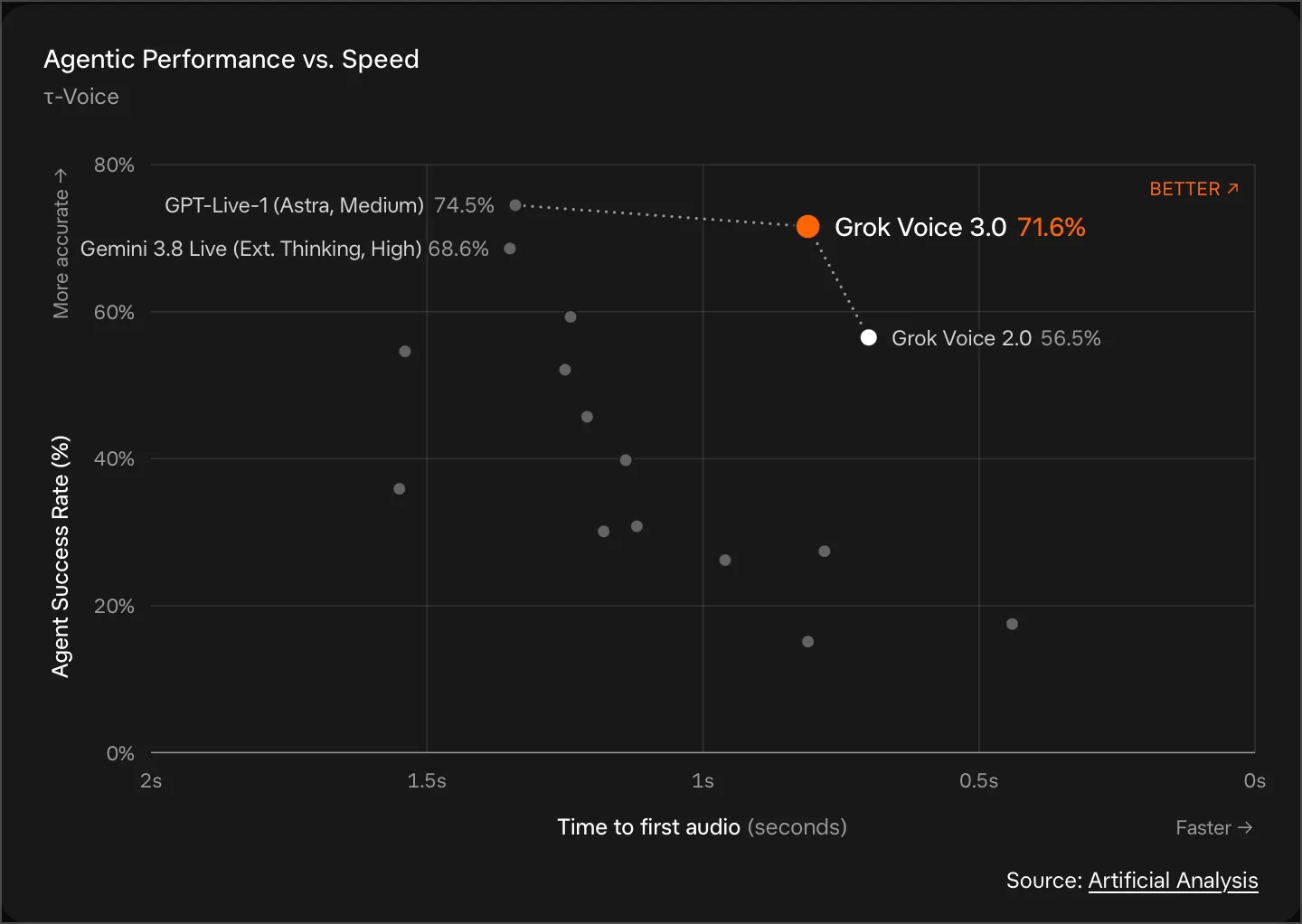
Besides Apple, several other products and models were announced from October 14 to 15. Key information is summarized below:
| Product | Key numbers | Availability |
|---|---|---|
| Grok Voice 3.0 voice model | 86.9 on composite leaderboard, latency under 1 second, $0.08/minute | Live via API |
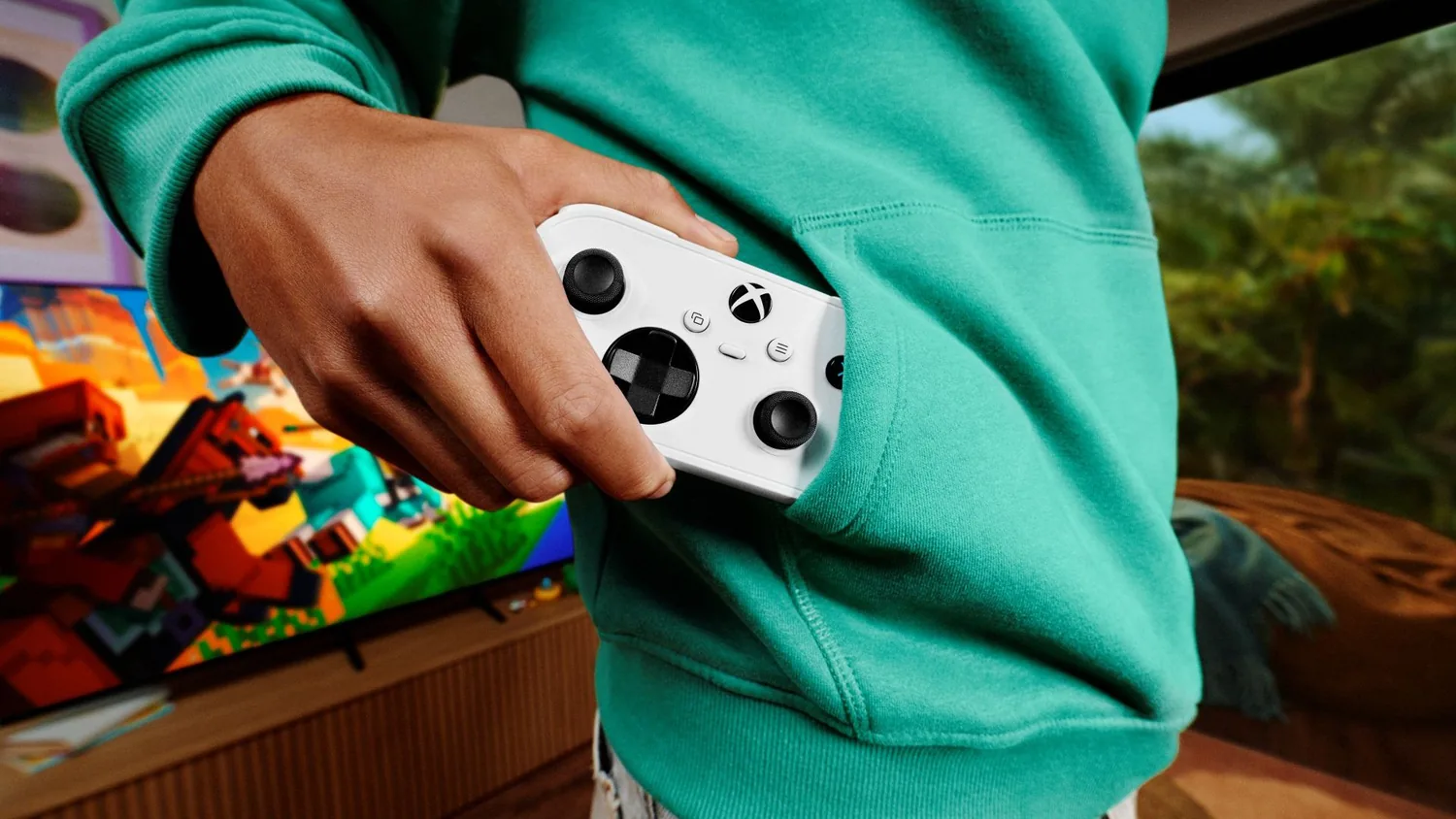
| Xbox Nano wireless controller | China price 329 yuan, about 12.7 cm long, about 99 g, retains 18 inputs | Pre-order, shipping from November 4 |
| Defender for Endpoint Linux desktop | Requires Plan 2 or Microsoft 365 E5/E7 subscription | Public preview |
| EliteBoard G2a keyboard computer | From $3,028, up to 64GB RAM/2TB storage, 50 TOPS NPU | Available in the US market |
| Step 5 Preview large model | 600 billion total parameters, 27 billion activated per token, 1 million token context, AA index 44 | Weights live on Hugging Face, ModelScope |
Two contrasting data points are worth mentioning. Grok Voice 3.0’s price of $0.08 per minute is exactly the same as the previous generation, yet its score ranks first on the Artificial Analysis speech-to-speech composite leaderboard; the Starlink customer service center uses it to handle about 20,000 calls per day, with about 70% of issues requiring no human intervention. The price hasn’t changed; what has changed is the score and the replacement rate.
A quick explanation of the “sparse mixture-of-experts (MoE) architecture”: inside the model there are many “expert” sub-networks, and only a small portion is activated per inference, so the total parameter count is large while the computation per pass remains manageable—this is the relationship between Step 5 Preview’s 600 billion total parameters and 27 billion activated parameters.
Who should act now, and who should wait
- Who should follow up now: users with an iPhone 15 Pro or newer who want to try out translation and photo-editing AI features can wait for the Beta later this month; if you care about long-context agent tasks, Step 5 Preview’s BF16 and FP8 weights are already directly deployable, supporting vLLM, SGLang, and Transformers.
- Who should wait longer: if your core need is to converse naturally with Siri in Chinese, this update won’t solve that—Siri AI is explicitly not in the first batch; for enterprises looking to purchase Defender for Endpoint Linux desktop, it’s also advisable to wait for the official release, as Microsoft has not yet announced a date.
Final thoughts
Apple Intelligence in China chose to release features first and add Siri later, effectively prioritizing compliance and modules that can be delivered in stages. The three filing numbers also show that its cloud capabilities do not come from a single source. For users in China, the Beta launch is only the starting point; completeness will depend on when Siri AI is fully added.