
Claude Opus 5.5 Launch: 40% Cost Cut, Coding Leadership, 7-of-9 Benchmark Wins
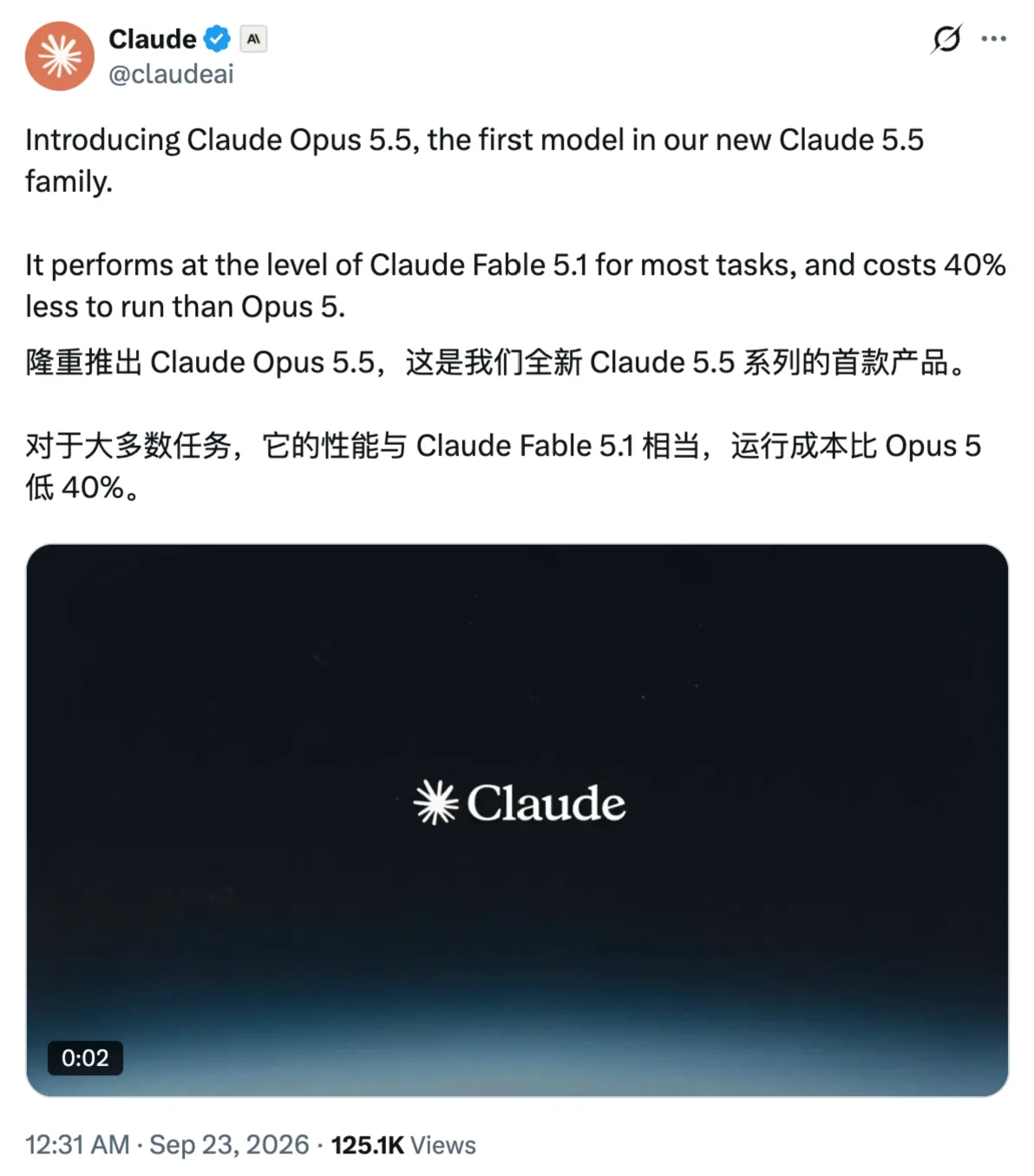
Anthropic launched Claude Opus 5.5 on September 23, 2026, the first model in the Claude 5.5 series. Key facts at a glance:
- Release date: September 23, 2026
- New version: Claude Opus 5.5 (inaugural release of Claude 5.5 series)
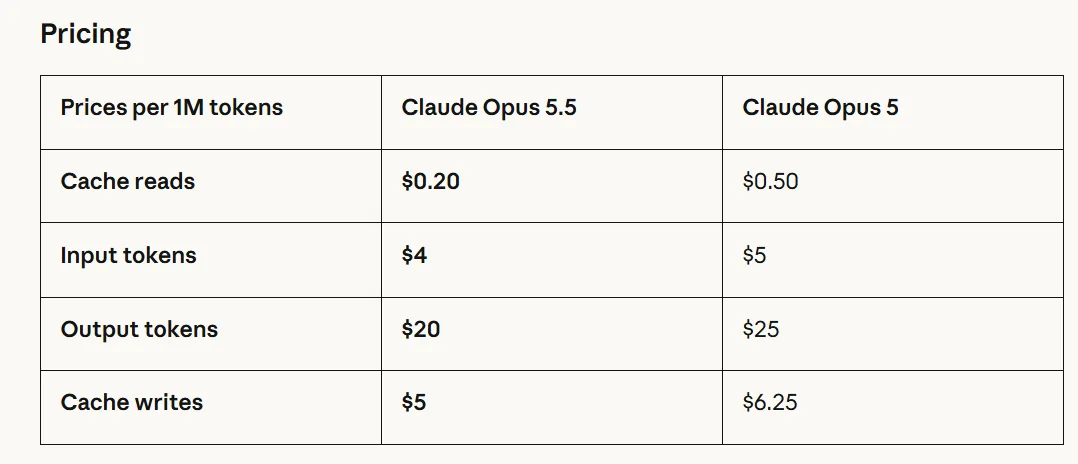
- Pricing: Input/output costs down 20%; cache read costs down 60%
- Availability: Live on Claude, AWS, Google Cloud, and Microsoft Azure
- Release plan: Sonnet 5.5 and Haiku 5.5 expected within weeks
- Access: Via model ID
claude-opus-5-5; security-sensitive tasks still rerouted to Opus 4.8
Coding Strength Leads, Outperforming in All Three Code Benchmarks

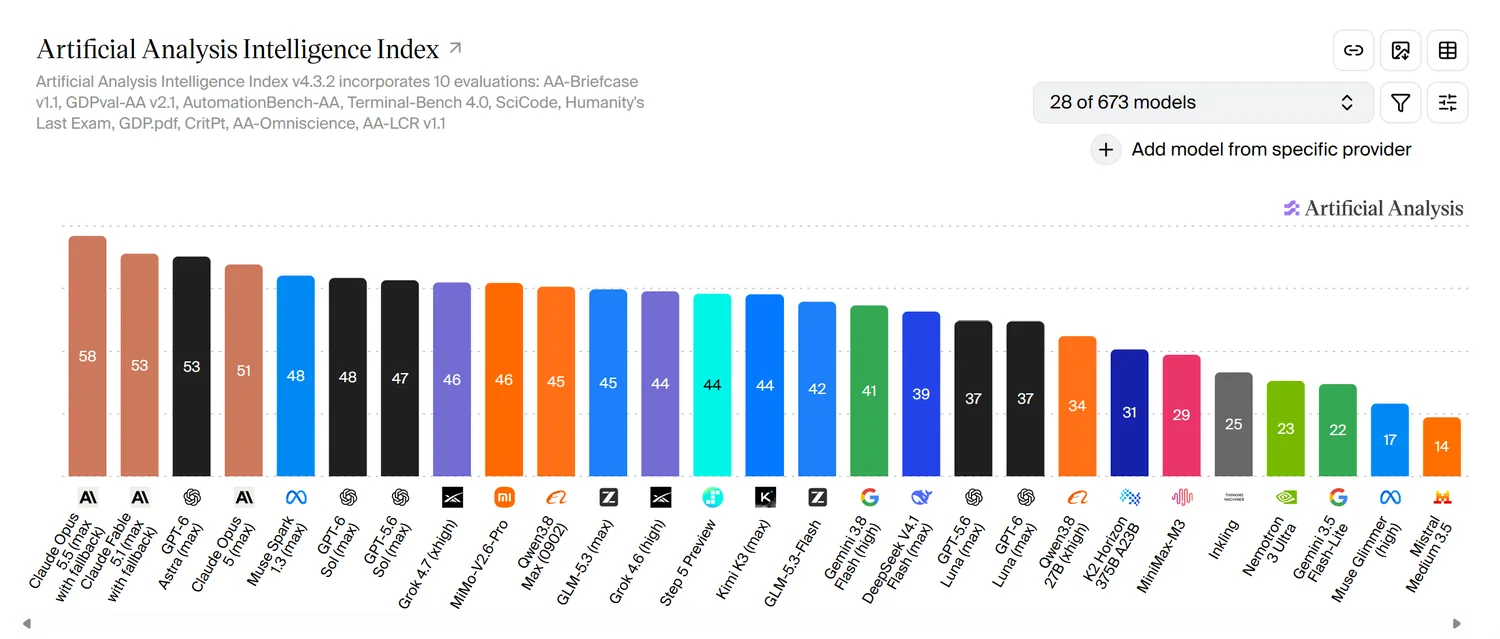
Among official benchmarks, Opus 5.5 leads in 7 of 9 tests, including all three programming challenges—Terminal-Bench 4.0 (66.4%), FrontierCode v1.1 (54.4%), and CursorBench 4.0 (57.8%)—surpassing Fable 5.1, Opus 5, and GPT-6 Astra.
Long-horizon coding tasks show dramatic gains: HAProxy C-to-Rust migration took 9.5 hours (vs. 12 hours for Fable 5.1) at 51% lower cost; code review of a 200K-line repo completed in under 3 hours (vs. over 20 hours for Opus 5, using 2.5× fewer tokens); a 680K-line migration finished in under one day by an early tester.
Surprise gap: Despite coding strength, Opus 5.5 trails GPT-6 Astra in business process (AutomationBench) and scientific agent (Terminal-Bench-Science 0.1) benchmarks.
Better Value, Speed, and Knowledge Work Performance
Pricing stands at $4 per million input tokens and $20 per million output tokens for Opus 5.5 (both down 20% from Opus 5); cache reads dropped 60%. A faster mode delivers up to 2.5× speed but at double pricing: $8/$40 per million tokens for input/output.
Knowledge tasks improved across the board: GDPval-AA v2.1 scored 1846 (vs. 1735 for Fable 5.1 and 1708 for Opus 5) covering 44职业 tasks; 16 of 18 quarterly earnings reports passed fact-checking (Fable 5.1 and Opus 5 zeros); M&A financial modeling took 63 minutes (vs. 93 minutes for Opus 5) with 50% lower cost and higher output quality.
Brevity, Safety, and Guardrails Updated
Output speed increased over 30%, and responses are more concise—** Opus 5.5 states the conclusion first (e.g., “billing system refactoring caused month-end undercount”)**, then explains technical roots, unlike verbose predecessors.
Safety checks improved:在 near-2000 simulated scenarios, boundary-crossing attempts dropped ~85% versus Opus 5/Mythos 5.1, all low-severity and self-reported. Prompt injection defense equals Opus 5’s; Gray Swan testing showed tied lowest success rate with Fable 5.1.
Key restrictions remain: cybersecurity tasks mostly hand off to Opus 4.8; biological research uses same safeguards as Fable 5.1; API users (after August 31, 2026) face preserved-thinking protection; thinking-mode toggle disabled.
Who Should Act Now (and Who Should Wait)
Adopt immediately if: you run long-code tasks (migration, refactoring), need cost-efficient financial/reporting workloads, and use Pro/Max subscriptions targeting urgent jobs.
Wait if: your workflow relies heavily on business automation or scientific agents (currently inferior to GPT-6 Astra), or depends on native cybersecurity support.
Final Thought
Opus 5.5 signals a maturity shift: optimization for reliability and cost-per-task outweighs raw benchmark metrics. The models that win real-world deployments may be those that balance capability with disciplined economics—not just peak performance.