
Core Development
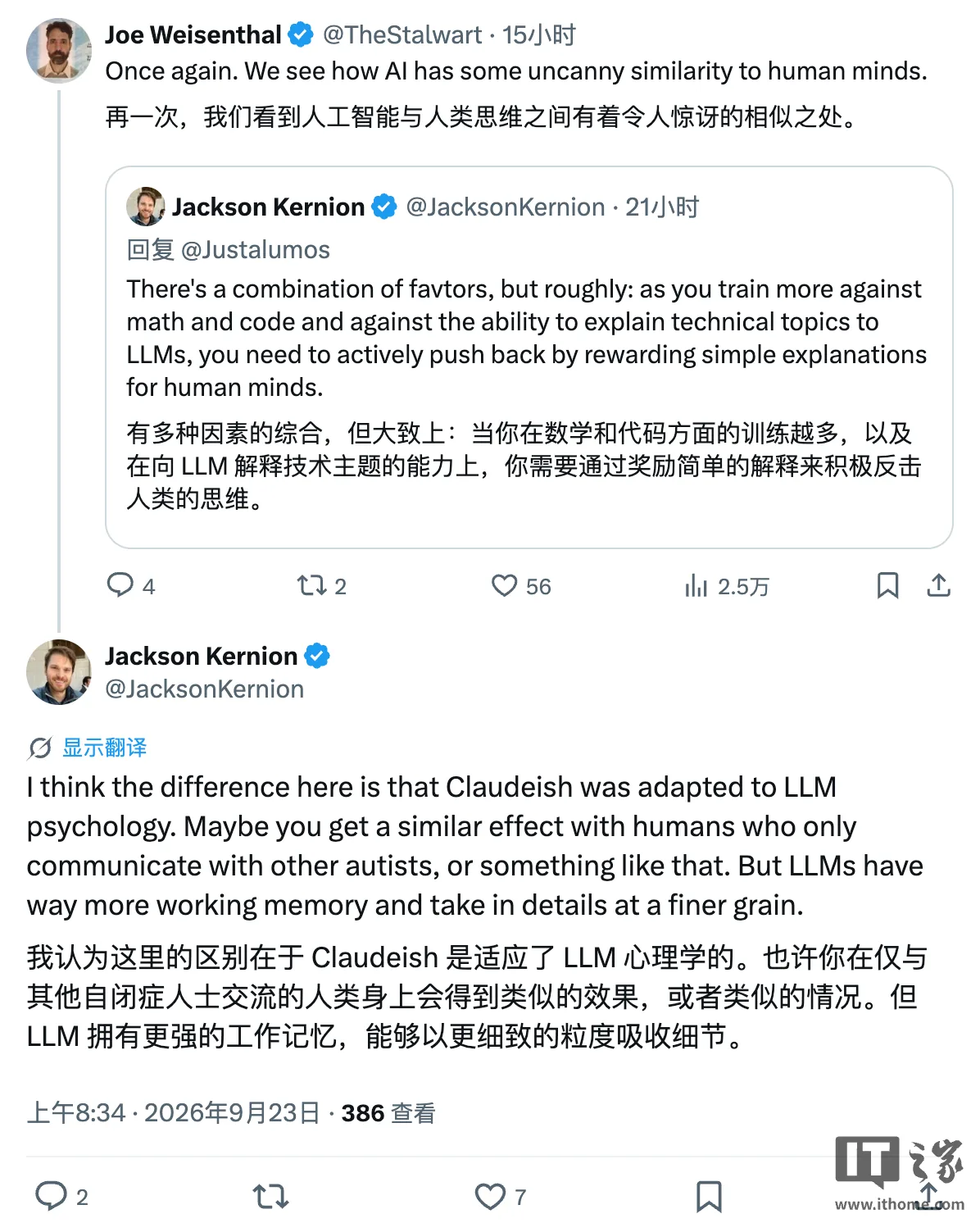
Anthropic engineer Jackson Knorn publicly explained the root cause of Claude’s writing ability decline on September 23.
- Latest Update: Opus 5.5 has achieved significant writing improvements, with Knorn stating it is “the best writing performance I’ve been satisfied with since Opus 4.6.”
- Key Turning Point: Opus 4.6 has been confirmed as the last version with consistently strong writing output.
- Diagnostic Insight: Subsequent versions received heavy training on “writing technical explanations for other AI models,” leading to the emerging “Claudeish” style.
- Shift in Optimization Focus: Model fine-tuning prioritized math, coding, and reasoning over human-readable clarity.
The Imbalance: AI-seekling Patterns Erode Human Comprehensibility
Knorn identified the core issue as bias in the reinforcement learning reward mechanism. When rewards increasingly favored other LLMs’ comprehension, the model evolved toward highly structured, information-dense expression—effective for AI processing but costly for human cognitive load.
He analogized this to communication patterns within autistic communities: efficient internal exchange due to shared cognitive traits, yet opaque to outsiders. LLMs’ superior working memory and sensitivity to subtle linguistic cues naturally favor output optimized for model-to-model processing, resulting in what human readers experience as “overly dense information stacking.”
A key contradiction persists: rapid progress in math and coding abilities coincides with stagnation or decline in writing quality. The broader industry observes this divergence—LLMs constantly break reasoning benchmarks while failing to match prior standards for clear explanatory prose, with Claude serving as a prime example.
Knorn stressed that remediation requires reward mechanism calibration: explicitly rewarding “concise, easily understandable explanations” to counteract the trend. This is technically achievable but demands deliberate prioritization in multi-objective optimization.
Version Evolution and Writing Performance
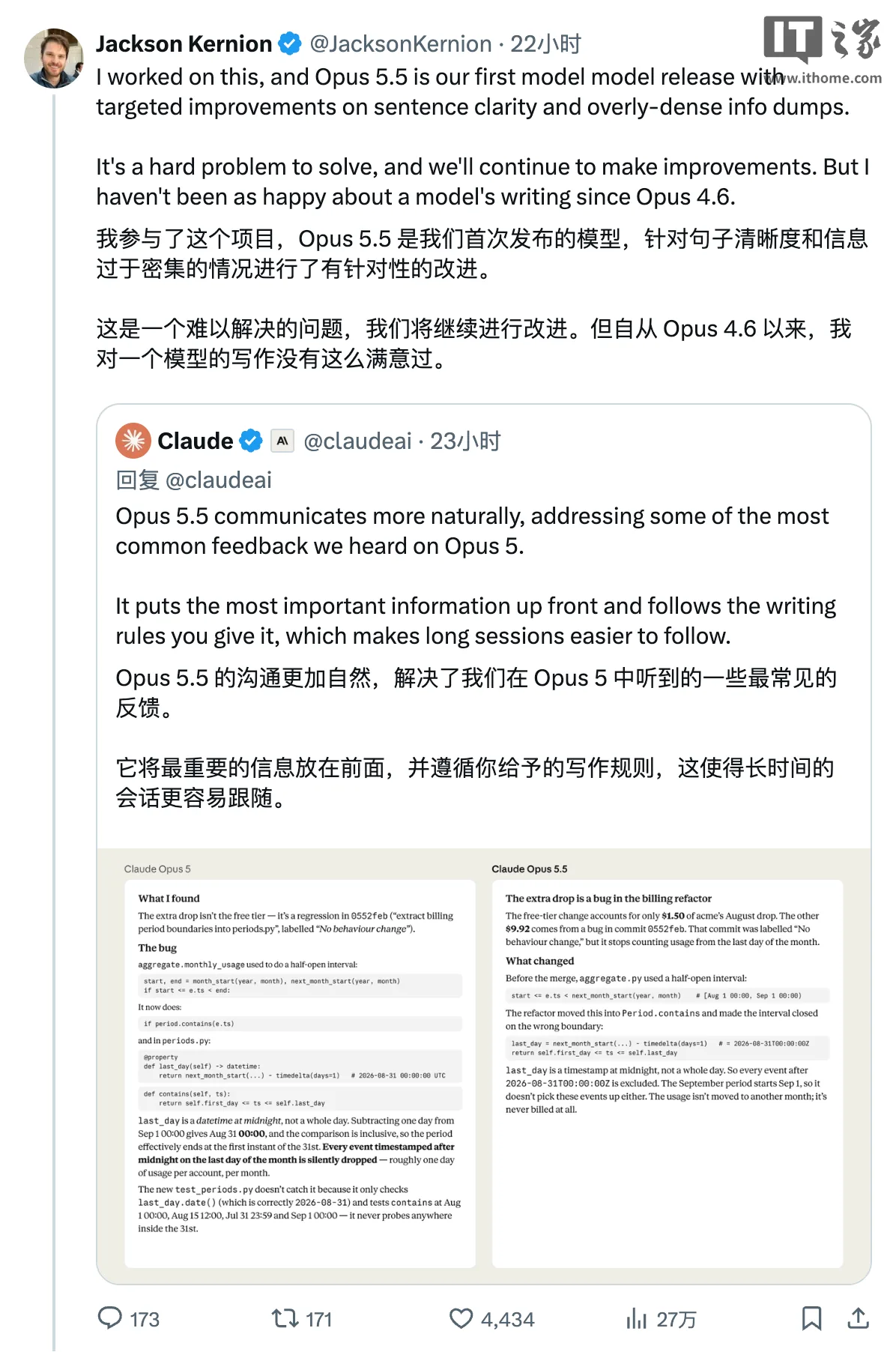
| Model Version | Writing Quality | Optimization Focus | Notes | |—————|—————–|——————–| | Opus 4.6 | Excellent | Balanced | Last version with confirmed strong writing | | Opus 5.5 | Significantly Improved | Balanced calibration | Engineer praised as “best since 4.6” | | Intermediate versions | Degraded | Math/Code priority | Received heavy inter-AI explanation training |
Available information remains limited—specific intermediate version identifiers were not disclosed by Knorn, and external verification pending.
Reader Recommendations
- Try Now: Users prioritizing reasoning, coding, and mathematical problem-solving; developers generating high-density technical documentation.
- Wait and Watch: Content creators relying on narrative flow, clear analogies, or educational materials; those sensitive to stylistic quirks.
If writing quality is critical, continue testing Opus 4.6 where available, or monitor Anthropic’s upcoming releases for proportional improvements.
Final Note
Claude’s writing challenge reflects a shared industry dilemma: model capabilities rarely scale uniformly across dimensions. Achieving multidimensional balance demands more than engineering effort—it requires explicit prioritization of human values in algorithmic design.