
AMD Unveils All-New AI Computing Platform, Ushering in the Era of Localized Agents
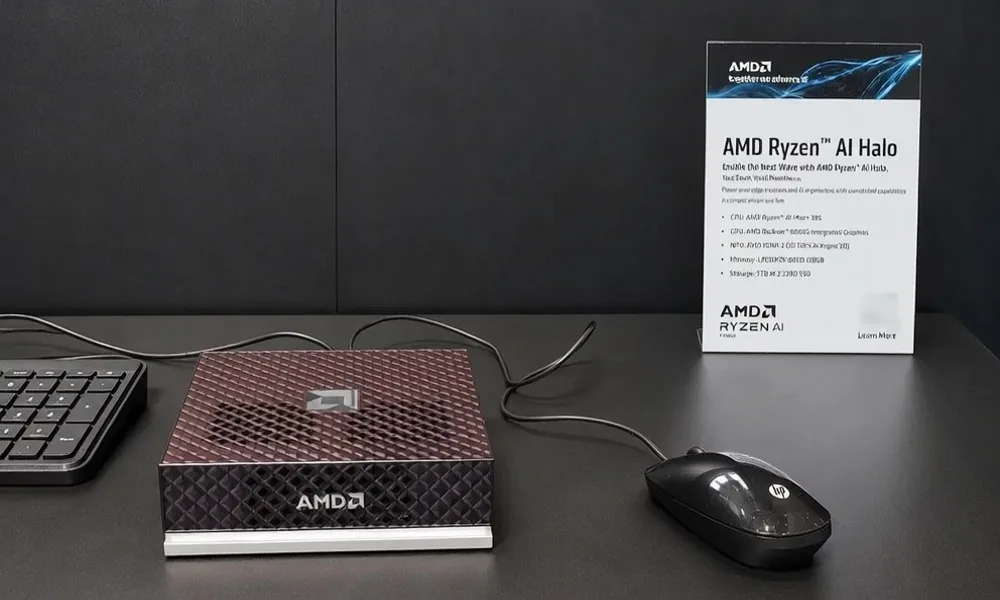
On September 4, 2026, AMD officially unveiled a brand-new computing platform designed for AI Agent scenarios at the IFA trade show in Berlin. Two flagship products — Ryzen AI Halo and Threadripper Halo Station — debuted simultaneously, signaling AMD’s strategic shift from traditional performance competition toward AI endpoint computing. The key specs are as follows:
- Launch date: September 4, 2026 (opening day of IFA)
- Ryzen AI Halo: Supports up to 192GB of unified memory, capable of running 300-billion-parameter models
- Threadripper Halo Station: Equipped with a 192-thread Threadripper PRO 9995WX, supporting 2TB of system memory and 288GB of HBM3E VRAM, expandable to a total of 576GB VRAM
- Availability: HP and Lenovo have confirmed adoption;具体上市时间未披露
- Open status: Developer platforms are simultaneously open for model testing and Agent workflow deployment
Ryzen AI Halo: 300-Billion-Parameter Capability on Compact Devices

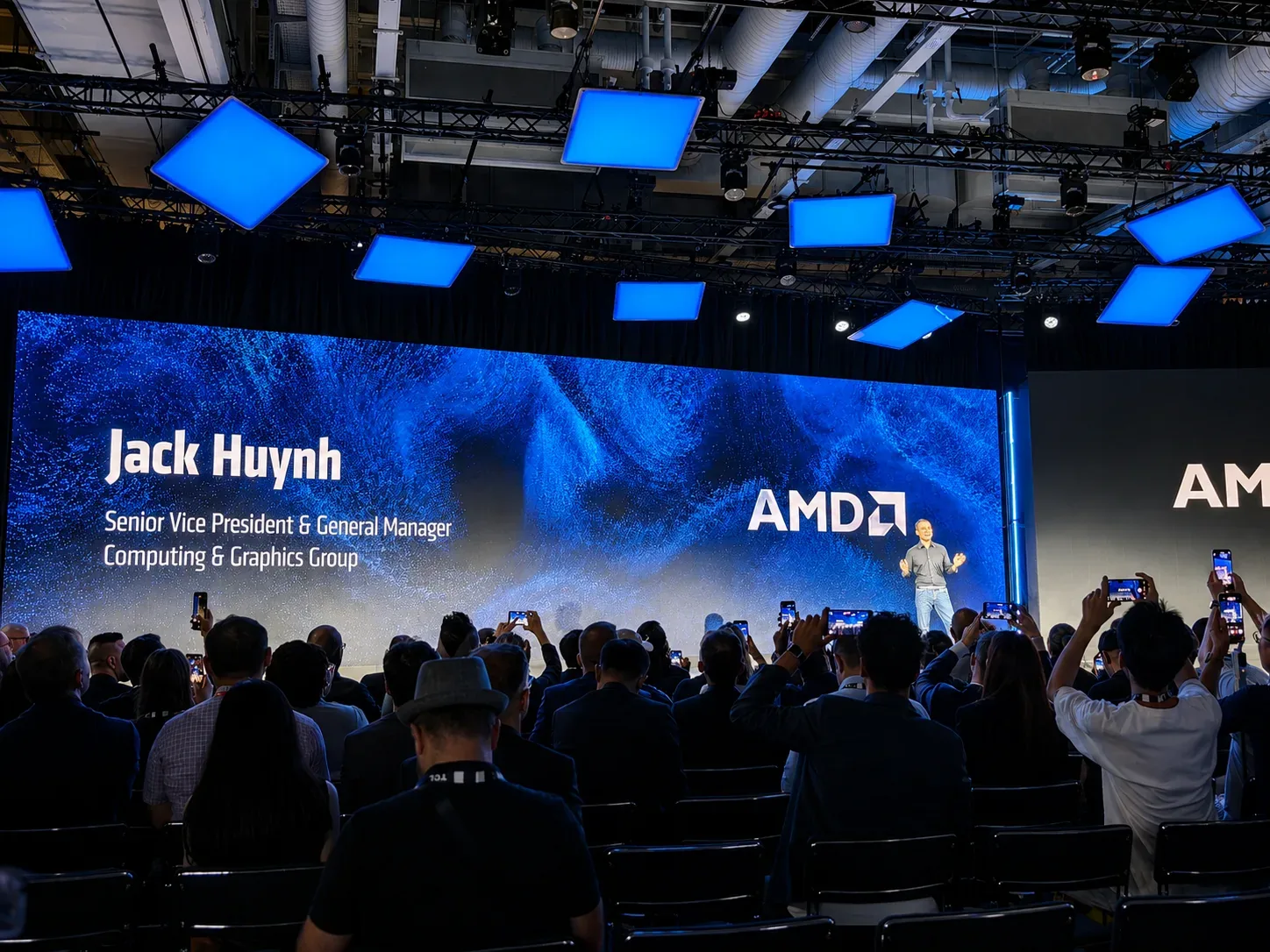
Jack Huynh, Senior Vice President of AMD’s Computing and Graphics Business Group, emphasized in his keynote that PCs are evolving from “instruction-executing tools” into “proactive, learning-oriented intelligent endpoints.” As the core platform, Ryzen AI Halo features a unified memory architecture of up to 192GB, making it possible to run large language models entirely off-cloud. The actual product form factors include compact developer boxes and endpoint laptops. HP’s next-generation ZBook “Sundance” series and Lenovo ThinkCentre X desktops have confirmed adoption of this platform, with the ZBook’s memory configuration topping out at 190GB. Notably, the unified up/down memory approach sacrifices the traditional CPU/GPU memory isolation architecture in exchange for improved cross-module data flow efficiency — a rarity in conventional PC design, but advantageous for the frequent memory swaps typical of inference-state workloads.
Threadripper Halo Station: Workstation-Grade AI Server
Even more eye-catching is the Threadripper Halo Station, positioned as a mini-PC form factor AI server for small and medium-sized businesses. Its hardware configuration includes:
- CPU: Ryzen Threadripper PRO 9995WX (96 cores, 192 threads)
- Accelerator cards: Dual Instinct MI350P (scalable to 4 cards, total VRAM 576GB)
- Memory combo: 2TB system RAM + 288GB HBM3E VRAM
The system claims to be capable of running models with over 1 trillion parameters. While no real-world benchmark data has been released, compared to mainstream industry GPUs (such as the H100 with 80GB VRAM), its initial VRAM capacity represents nearly a 4x increase. It’s worth noting that the product carries no announced price and is explicitly excluded from the consumer market, focusing entirely on enterprise and developer scenarios.
| Platform | CPU Cores | Unified Memory | VRAM | Single Card/Expanded VRAM | Target Scenario |
|---|---|---|---|---|---|
| Ryzen AI Halo | Undisclosed | 192GB | - | - | Ultrabook/Compact Developer Box |
| Threadripper Halo Station | 96 cores, 192 threads | 2TB | 288GB | 2 cards/576GB | Enterprise AI Server |
Who Should Get on Board Quickly?
- Developers and SMBs: Ryzen AI Halo provides a desktop-grade model testing platform, while Threadripper Halo Station is suited for local privatized deployment and training scenarios, eliminating cloud API call costs
- Privacy-sensitive industry professionals: In sectors like finance and healthcare where local data processing is required, 192GB of memory can support mainstream LLMs running without API key dependencies
- Those who should wait: General consumers have no need to pay a premium for this hardware right now — HP/Lenovo endpoint pricing has not been announced, and the local Agent experience is highly dependent on the maturity of the software ecosystem
Final Thoughts
AMD’s all-in strategy on local AI is, in essence, a proactive workaround for cloud computing bottlenecks — once parameter counts cross the hundred-billion threshold, round-trip latency and bandwidth costs become natural obstacles to real-time Agent interaction. From 192GB of unified memory to the 576GB VRAM combination, the hardware fills the gap between cloud-dependent inference and truly local AI execution, laying the foundation for an era where Agents run entirely on your desk.