
Key Event: AIUC Launches Enterprise AI Agent Certification Standard With $40M Series A

On September 15, 2026, Artificial Intelligence Underwriting Company (AIUC) announced a $40 million Series A funding round led by Ribbit Capital, with participation from First Harmonic. The company previously raised $15 million in a seed round from investors including Nat Friedman’s NFDG fund, Emergence, Terrain, and Anthropic co-founder Ben Mann, bringing its total funding to $55 million. Current customers include Cursor, Lovable, Harvey, and ElevenLabs.
Key facts:
- Funding round: Series A ($40M)
- Lead investor: Ribbit Capital
- Participating investors: First Harmonic, NFDG, Emergence, Terrain, Ben Mann
- Total raised: $55 million
- Existing customers: Cursor, Lovable, Harvey, ElevenLabs
- Safety standard: AIUC-1
- Test cases: ~5,000
Certification Framework: Adapting Cybersecurity Model for AI Agents
AIUC’s core offering is a third-party audit and certification layer for AI agents, inspired by the widely adopted SOC 2 cybersecurity standard. The company has developed AIUC-1, a certification framework and validation service designed specifically for AI agent safety.
Unlike internal compliance checks, AIUC-1 was built from the bottom up—by consulting buyers. The company assembled a consortium of approximately 250 security and risk decision-makers—effectively the enterprises purchasing AI agents—to identify real-world procurement criteria. Monthly discussions focused on three questions: What would buyers check before purchase? What questions must be answered? Which safety concerns deserve verification?
These insights shaped a testing suite of around 5,000 test cases covering:
- Jailbreaks: Can the agent be coaxed into executing unauthorized actions?
- Hallucinations: How frequently does the agent fabricate information?
- Data leaks: Can sensitive information be extracted or exposed unintentionally?
The evaluation process uses a hybrid approach: AI agents run all tests and generate raw data, while human experts verify and sign off on final audit reports. Each audit delivers approximately a 100-page report detailing where the agent behaves safely—and where concerns exist.
Founders’ Background: Bridging Safety Research and Enterprise Needs
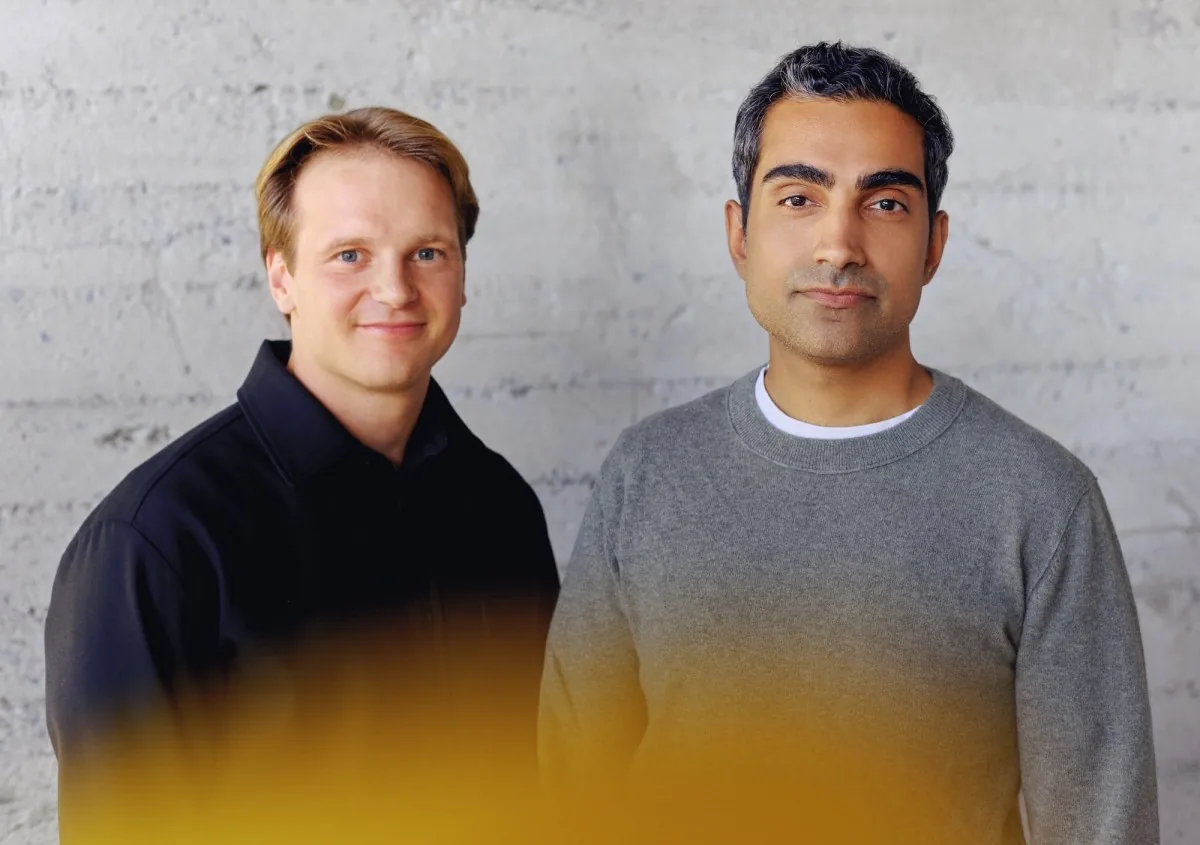
Co-founders Rune Kvist and Rajiv Dattani bring complementary expertise. Kvist, an early Anthropic employee (non-core-research role) and married to Dattani’s sister, combined insider knowledge of frontier labs with nascent startup experience. Dattani served as Chief Operating Officer at METR, an AI safety research organization, from 2024 to 2025 and remains on its board.
This creates an important contrast: METR’s prior work emphasized performance evaluation (can agents reliably complete目标任务), while AIUC focuses on behavioral safety (will agents misbehave under constrained conditions?). Dattani’s team at METR assisted OpenAI in independently investigating the Hugging Face data incident.
Industry observers note a key gap: while AI vendors hype model capabilities, few systematically disclose deployment risks. AIUC addresses what CISOs and procurement teams actually ask: “Can we commit to our customers that this system will behave within its constraints?” As Kvist stated, “Banks, hospitals, and governments no longer avoid AI because models aren’t smart—they avoid it because nobody can guarantee behavioral boundaries.”
Practical Guidance for Early Adopters
AIUC provides enterprises with an independently verified safety assessment they can use to adjust deployment strategies, reinforce guardrails, or satisfy internal compliance requirements.
Recommended for early adoption by:
- Security teams evaluating third-party AI agents (especially in finance, healthcare, governance)
- Mid-to-large companies building internal agents without robust validation capacity
- Product leaders needing to demonstrate risk control to internal governance bodies
Worth waiting for those who:
- Are Small startups using AI agents for non-critical workflows (testing costs may exceed immediate value)
- Only integrate open-source foundational models for lightweight applications (public benchmark scores may suffice)
Final Note
AIUC’s emergence signals AI governance’s transition from academic debate to commercial practice. As model capabilities grow exponentially, standardized,工业化 safety validation is becoming a priority for production deployments. Rather than competing with frontier labs’ research, AIUC adds an operational safety layer—potentially the most pragmatic near-term path to mitigating uncontrollable AI behavior.