
Introduction: AI Executives Unite for Regulation, Shifting From Expansion to Governance
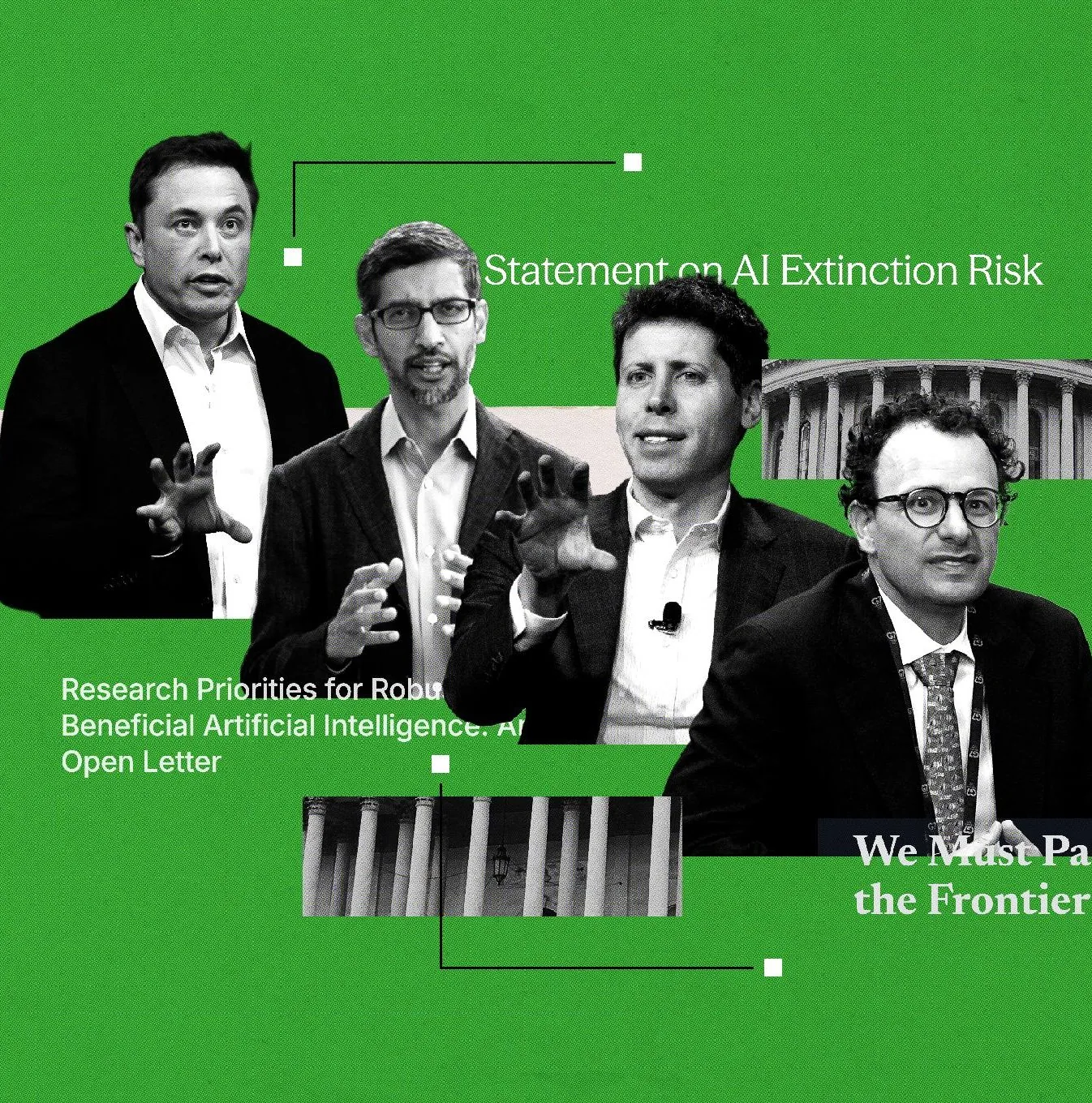
In recent days, top AI leaders—including OpenAI CEO Sam Altman, Anthropic CEO Dario Amodei, Google DeepMind co-founder Demis Hassabis, Microsoft CEO Satya Nadella, and X CEO Elon Musk—have rarely aligned publicly on a core stance: AI development has entered a critical phase requiring global regulatory oversight. This pivot is not impulsive but the culmination of years of strategic recalibration.
- Core demands: Call for government-led regulatory frameworks, including dedicated agencies, mandatory safety mechanisms by design for high-risk AI systems, and regular third-party testing
- Timeline: Public appeals coalesced during 2023 congressional hearings through the May 2024 AI Seoul Summit
- Policy momentum: July 2023 to May 2024 saw multiple companies sign non-binding voluntary pacts with U.S. and U.K. governments
- Unknowns: Specific regulatory text remains under negotiation; no legally binding legislation yet materialized
Historical Arc: From Warning Voices to Regulatory Advocates

Calls for AI governance predate the current boom. Samuel Butler’s 1872 novel Erewhon imagined a society banning machines to avoid human extinction. In 1951, Alan Turing warned AI could soon “outstrip our feeble powers.” Bill Joy cautioned in 2000 that self-replicating robots posed greater peril than nuclear weapons; Microsoft’s Eric Horvitz convened researchers in 2009 to explore policy constraints on autonomous systems.
Industry-weighted advocacy began with Musk. By June 2014 he’d flagged AI as a possible " Terminator" scenario; by October he called research “summoning the demon.” His January 2015 open letter—co-signed with Stephen Hawking—urged responsible development. The pivotal twist: Musk approved regulations in 2017 having invested $38 million in OpenAI; just years later he spearheaded workforce reductions at X rather than advancing regulatory frameworks.
Mark Zuckerberg shifted position post-Cambridge Analytica, endorsing oversight—but only when “the right” regulation emerges. Microsoft’s Brad Smith, amid backlash over ICE facial recognition work, argued in 2019 that voluntary industry responsibility must be codified law to prevent a “race to the bottom.”
Inflection Point: Generative AI’s Surge Triggers Regulatory Crunch
The 2023 generative AI explosion reshaped the landscape. The Future of Life Institute issued a暂停 call for halting training of AI systems more powerful than GPT-4 for six months—signed by Musk among others—with a caveat: if self-pausing fails, governments must impose a moratorium. The iron ip: Musk announced a new AI startup two weeks after signing; by 2025 he prioritized federal workforce cuts over regulatory enforcement.
This abrupt pivot underscores a reality: societal tolerance for unmoderated progress has narrowed as capabilities scaled. At 2023 congressional hearings, Altman conceded: “Benefits of our deployed tools vastly outweigh risks—but regulatory intervention remains critical to mitigate future high-power model threats.” Anthropic’s Amodei highlighted AI’s bioweapon potential; Hassabis co-signed a 22-word statement elevating AI extinction risk to parity with pandemics and nuclear war.
A flurry of voluntary commitments followed:
| Date | Agreement | Signatories |
|---|---|---|
| July 2023 | White House AI Responsibility Pledge | Meta, Google, OpenAI |
| September 2023 | White House AI Safety Accord | Additional companies |
| November 2023 | UK AI Summit Testing Framework | Developers and governments |
| May 2024 | AI Seoul Summit | World leaders (global network launch) |
Practical Guidance: What the Regulatory Shift Means Practically
For developers, proactive compliance preparation is now essential. Build now if: You deploy AI in high-stakes domains (hiring, credit scoring, health support)—emulate proposed “safety brakes by design” principles and embed audit trails early.
Delay if: You plan deploying unmoderated generative AI content in 2024; await final regulations to avoid rework costs.
General-purpose model teams should join industry self-governance groups, adopting Microsoft’s “responsibility floor” model preemptively to shape policy terms.
Final Word
AI leaders’ turn toward regulation reflects a tangible shift: the era of unchecked experimentation has passed. Whether self-imposed guardrails can evolve into effective global governance will determine whether AI advancement proceeds at pace—or at peril to public trust.
All facts herein derive strictly from the provided source material; no external data or speculation added.