
ECC: An Automated Engineering System for AI Agents
Today on the GitHub Trending leaderboard, a project called ECC surged to the top with 1,314 new stars—a number that fittingly echoes the Chinese romantic symbolism of “forever and always.” ECC stands for Engineered Coding Capture, and its creators describe it as an “automated engineering operating system for agents.” In short, it’s not yet another AI coding tool; rather, it provides a complete engineering collaboration framework for agents like Claude Code, Cursor, and Opencode—enabling AI not just to write code, but to think, plan, test, and reuse like a seasoned engineer.

Core Capabilities: Giving AI Complete Engineering Thinking
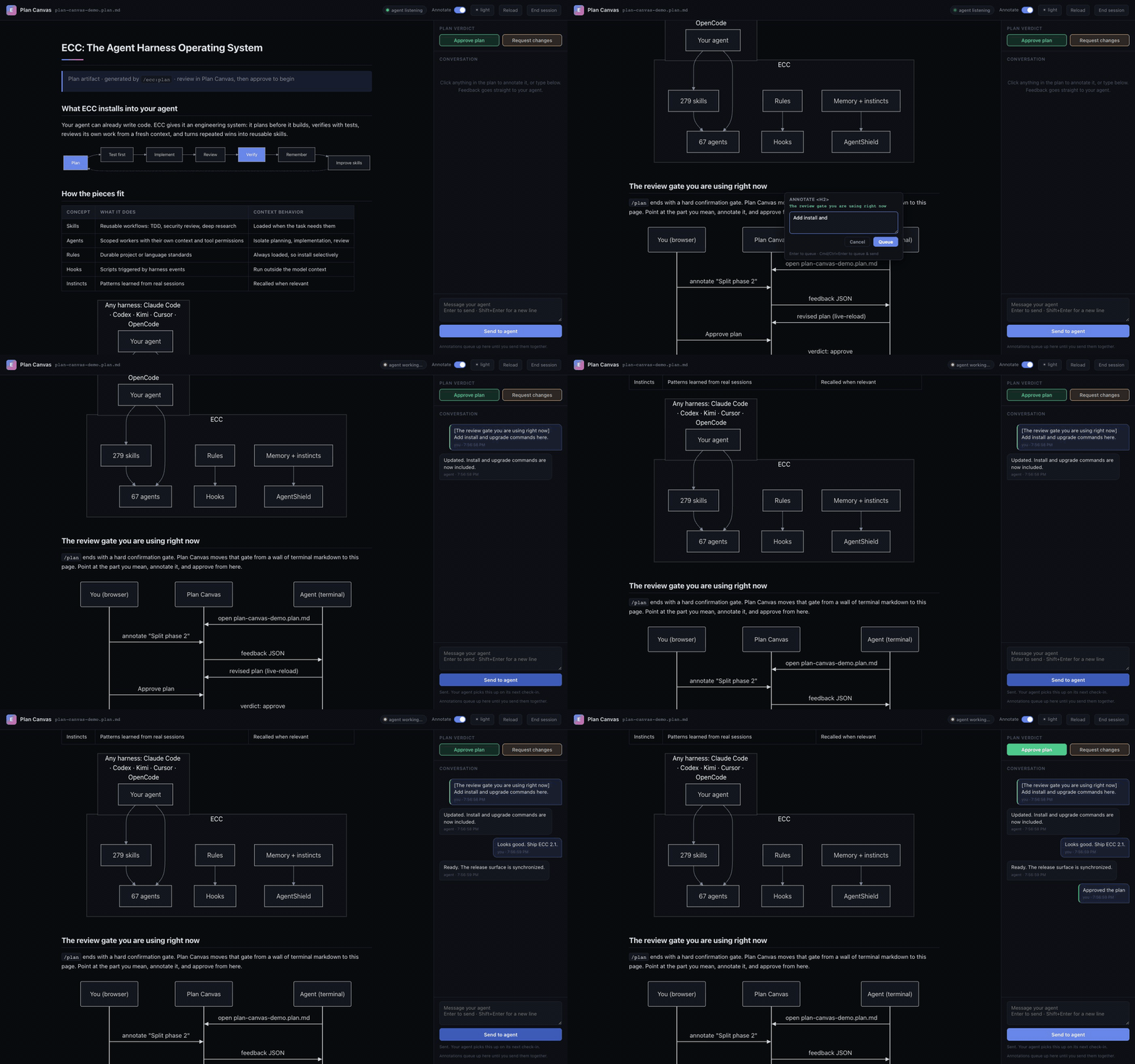
Traditional AI coding tools typically stop at responding to a single request. ECC’s design philosophy, by contrast, is to build “continuously evolving agents.” It encompasses five core engineering capabilities:
- Planning: Formulating an execution strategy before writing any code, weighing the pros and cons of different approaches
- Testing instinct: Automatically writing test cases to verify the correctness of changes
- Self-review: Examining its own code from a fresh perspective to catch potential design flaws
- Memory consolidation: Distilling recurring effective patterns into reusable “skill packs”
- Safety guardrails: Built-in security mechanisms to prevent AI from generating malicious or dangerous code
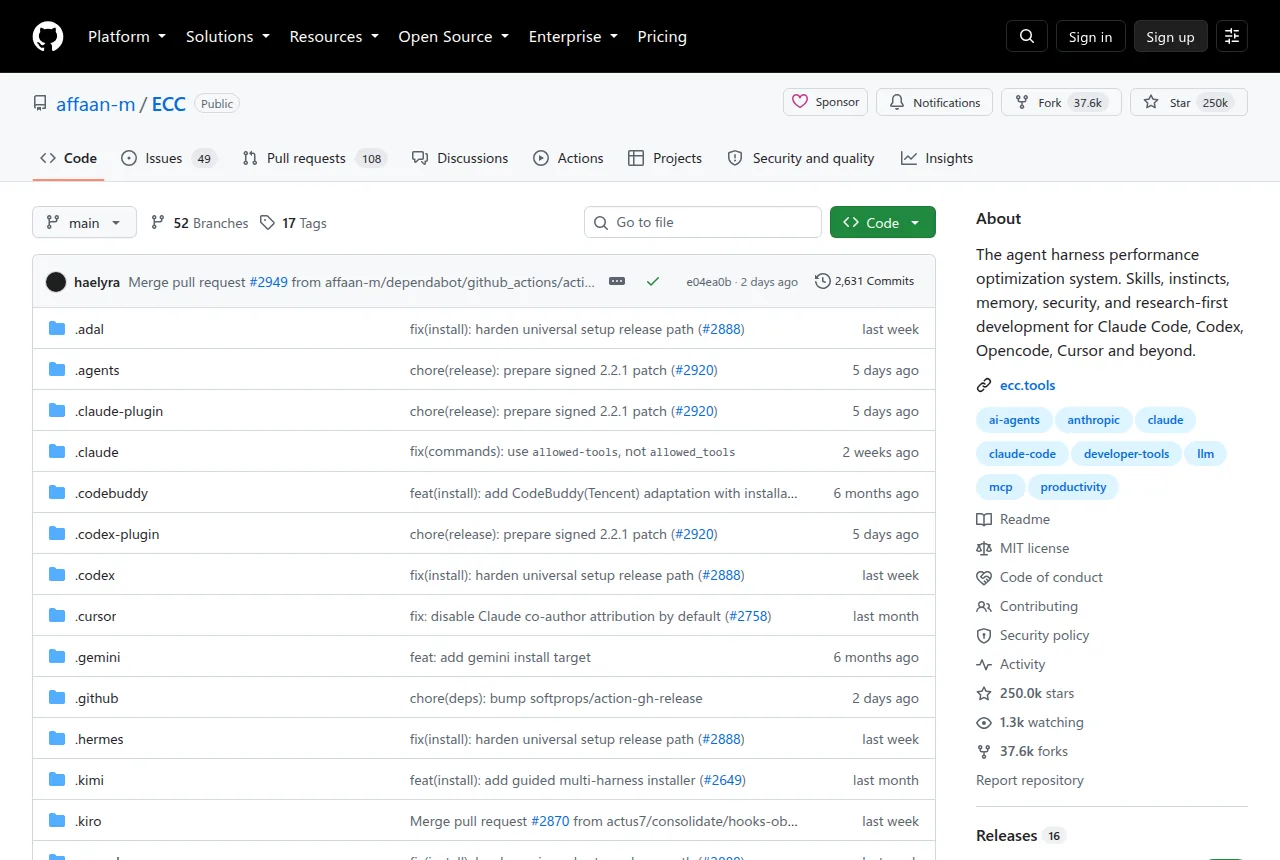
Getting Started: Set Up an Agent Workflow in Three Steps
ECC supports multiple installation methods. The simplest is through the Claude Code plugin marketplace:
- Run
npx ecc-universal setupin your terminal and follow the prompts to configure hooks - Or execute
/plugin marketplace add https://github.com/affaan-m/ECCwithin Claude Code - Then enter
/plugin install ecc@eccto complete the installation
Once installed, the agent will automatically enable ECC’s engineering capabilities. The development team also provides a command-line toolkit called ecc-agentshield, supporting multiple language environments including Node.js, Python, Go, Java, and Perl.
| |
Technical Highlights: The Thinking Behind a Modular Architecture
ECC’s technical design involves several trade-offs worth pondering:
Multi-language hooks ecosystem: Rather than tying itself to a single language, ECC uses shell scripts as a unified entry point, with TypeScript powering the core logic. This means any tool that can run scripts can tap into ECC’s capabilities.
Skill reuse mechanism: It abstracts effective patterns that AI discovers during development into “skill packs,” which can be reused by subsequent tasks—creating a feedback loop of continuous improvement.
Non-intrusive integration: ECC works through plugin hooks without requiring modifications to the agent’s own code. This makes it compatible with different platforms like Claude Code, Codex, and Cursor, and even allows you to customize your own LLM framework.
Who Is It For? vs. Similar Tools
- Team collaboration scenarios: When you need unified AI behavior standards and consistent code quality
- Continuous development workflows: Mid-to-large projects that frequently require planning, testing, and review
- Knowledge consolidation needs: When you want to turn one-off conversation experiences into team assets
- Security-sensitive environments: Situations that demand built-in code review and protection mechanisms
Unlike single-purpose tools such as Cursor or Codeium, ECC doesn’t chase “faster one-shot responses”—it pursues “more reliable long-term engineering capability.” It’s more like outfitting an agent with an engineering gear system: slightly slower to start, but capable of consistently delivering high-quality results.
Final Thoughts
What makes ECC special is that it doesn’t mythologize AI’s capabilities. Instead, it acknowledges the current limitations of large language models: they need external planners, testing frameworks, and memory systems. It takes a more pragmatic path—building a pluggable engineering infrastructure layer. For developers looking forward to AI evolving from a “toy” to a “productivity tool,” this path may well be the more promising one.