
Core event: 19-year-old founder launches a new AI assistant
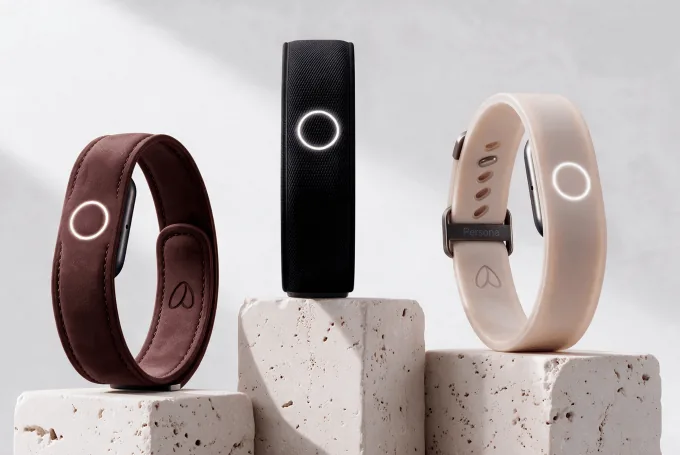
Zach Yadegari, 19, co-founder of Cal AI, has launched a new AI assistant product, Persona, and closed a $10 million seed round. The round was led by Vine Ventures, with participation from Cory Levy, founder of Z Fellows, and Collective Global.
The key hard facts are as follows:
- Product launch timing: Free beta is now live (text-based interaction via iMessage)
- Hardware device: $179 wearable band, expected to ship in December 2026
- Current status: Thousands of beta users; hardware preorder revenue has reached four figures
- Open weights: No plans to open model weights were mentioned
Product details and design contrast: A privacy-first AI assistant

Persona is positioned as a personal AI assistant, with features similar to Instinct and Meta’s Muse, but with a hardware component. Yadegari highlighted three key design features:
Non-ambient listening design: Unlike ambient AI (always-on listening and recording), Persona’s band requires button activation or is triggered only by a wrist flick. This design provides a privacy safeguard.
Cloud-side processing architecture: Persona does not run models or store data locally on the device. Instead, it encrypts requests and sends them to cloud AI models. All data is encrypted in transit and at rest; users can delete historical data at any time.
Balance between business and privacy: Although it promises not to sell user data to advertisers, its current model still monetizes by displaying ads in shopping research scenarios. The key contrast is that Yadegari says the assistant itself cannot identify which products are paid promotions, so recommendation results do not directly reveal the advertiser’s identity; what users see is still a list matched to their own preferences (including a small number of sponsored items).
Product comparison and pricing reference
| Feature | Persona | Bee (acquired by Amazon) | Instinct / Muse |
|---|---|---|---|
| Hardware form factor | $179 wearable band | $199 wearable device | No proprietary hardware / phone-based |
| Activation method | Button / wrist flick | Continuous ambient listening | Button / voice trigger |
| Data processing | Cloud-based + encrypted | Primarily on-device | Mostly cloud-based |
| Ad strategy | Undercover sponsorship (assistant unaware) | Not officially disclosed | Not officially disclosed |
Practical recommendations for readers

Who it’s for now: Younger users willing to try new beta products (can use it for free via iMessage); privacy-sensitive tech enthusiasts willing to pay $179 for AI convenience.
Who should wait: Users who want local data processing (to avoid uploading); users who need a full voice interaction experience (the current beta is text-only); or those waiting for the iOS app to launch (the hardware experience may be constrained by interoperability).
Persona has opened beta user recruitment, with target tasks covering high-frequency scenarios such as ride-hailing, food ordering, note-taking, travel booking, and email handling. Yadegari predicts that in the future, the various everyday apps on phones will “collapse” into a unified AI assistant super app.
Final thoughts
Persona’s biggest highlight is that it turns privacy protection from marketing rhetoric into technical architecture design (encrypted transmission, cloud processing, and the assistant being unaware of sponsored placements). However, its commercial sustainability remains to be verified—if ad revenue becomes the main source, whether it can maintain the promise that “the assistant doesn’t know about sponsorships” over the long term is worth watching closely.