
The Verge senior reviewer Victoria Song, in the latest installment of the Optimizer column, documented her roughly 100-day process of using an AI “digital twin” (a virtual body model built from personal data and continuously updated over time) to manage her metabolism.
- Product form: Twin Health’s digital twin metabolic management program. It isn’t a downloadable app, but a bundled service of hardware + blood tests + human coaching.
- Timeline: Her twin was “born” in June, when a big box arrived at her doorstep; she then documented roughly 100 days.
- Price: Not disclosed in the original article.
- When it will be available: Not yet open to the general public. It remains an experimental service, available only through employer health plans or private health insurance, and usually aimed at people with chronic metabolic problems.
- Are the weights open? Not applicable. The system does not open-source its model or data interface; what you hand over is your blood glucose, weight, blood pressure, and blood markers.
It read a bad lab report

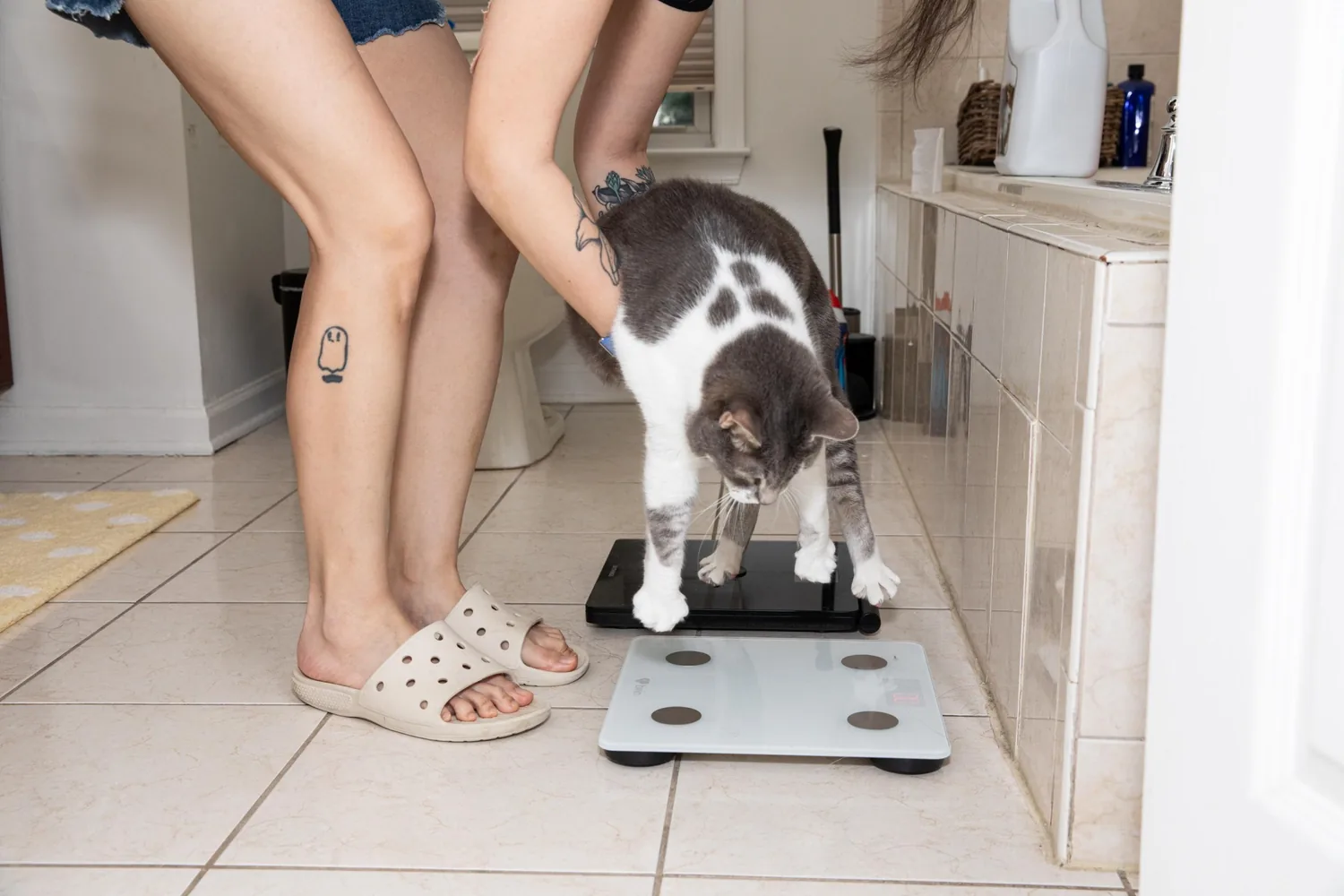
The kit in the box included a 90-day supply of the Dexcom G7 continuous glucose monitor (CGM, a sensor worn on the skin that reads blood glucose in real time), a smart scale, a smart blood pressure monitor, and three bottles of multivitamins and magnesium glycinate, and it was meant to be paired with an Apple Watch. She later went to Quest Diagnostics for blood tests.
A few days later, she had a Zoom call with her human coach, Amanda, and a doctor. On the screen were her numbers: her liver was inflamed (she had already been diagnosed with moderate nonalcoholic fatty liver disease); although her HbA1c and fasting glucose were ideal, insulin resistance was clearly present; her pancreas was “working overtime,” but the number of insulin-secreting β cells was temporarily normal; her triglycerides were high, while her other blood lipids were normal.
There was a contrast here: she was no novice when it came to health data, having reviewed CGMs for a year, and she already knew her metabolic baseline was poor. Even so, the intensity of the system’s data collection still wore her down. During a follow-up, her coach told her that “tracking fatigue” is common feedback from Twin Health users.
More striking was the result. Over the 100 days, her behavior did change: whenever she had to log food, she instinctively avoided unhealthy snacks—“I don’t want to get lectured by the app.” Yet her weight did not drop meaningfully, and her original goal of “reducing medication” didn’t go smoothly either. What actually improved was her lab work: her metabolic health score rose by 9 points, all but one liver enzyme returned to normal, triglycerides fell by 70 mg/dL, hs-CRP—a marker of systemic inflammation—dropped significantly, and insulin resistance remained but was somewhat reduced. She also ran a full 5K without stopping again.
Are the red, orange, and green ratings accurate?

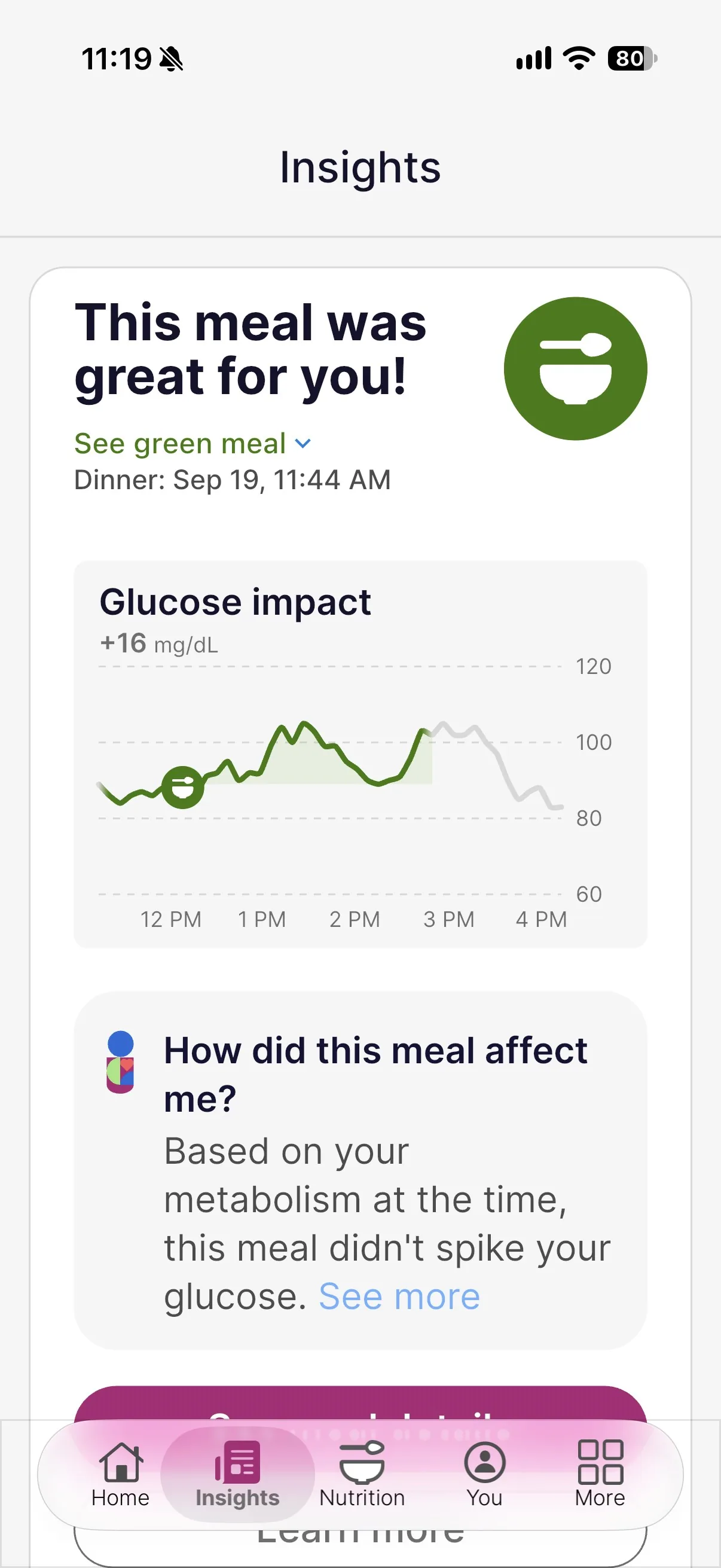
The twin doesn’t give abstract advice; it gives foods a red (not ideal), orange (so-so), or green (ideal) rating. A few of the readings the author recorded are below:
| Food | Eaten alone | After post-meal activity |
|---|---|---|
| Protein Cheerios cereal + milk | Orange | Green |
| Pineapple | Orange | — |
| Turkey hot dog + ketchup + pickles | Green | — |
| Korean soft tofu stew + white rice | Green or orange, depending on whether there was post-meal activity | — |
The author admits these predictions were not surprising to her—she had tested too many CGMs and AI nutrition apps; but for people new to metabolic issues, this kind of rating “should be useful.” Her mindset was changing too: on one hand, she was glad the twin had no visual avatar; on the other, she felt that every time she “fed” it, it drained her—she even thought of the clones in Kazuo Ishiguro’s Never Let Me Go.
Who should use it, and who should wait
Good for: people who have already qualified through an employer or private insurance and do have chronic metabolic issues (fatty liver, insulin resistance, prediabetes, etc.); and people who need external accountability to stick with the program—the author admits that reporting her progress to a real person who wasn’t a family member activated her “inner overachiever.”
Should wait: longtime CGM users who know their glucose curves inside out will get limited marginal information; nor is it suitable for people prone to tracking fatigue or those who treat it as a shortcut to weight loss—she didn’t lose weight over the 100 days. Also, the original article doesn’t give a price, so figure out whether you’ll have to pay out of pocket first.
Final thoughts
The entire logic of the digital twin is built on trust: you hand over extremely private physiological data in exchange for a prediction that is still experimental. Metabolic management is the lowest-risk, most directly rewarding use of this technology, and her blood test results did indeed back her up. But the goals that went unmet in her subjective experience are also part of the experiment.